1095 — 1291 · MEDITERRANEAN AND LEVANT
Research the Crusades
through places and events.
Explore events ranging from major expeditions and local sieges to captivity, ransom and treaties; compare them by person, period and event type.
Open full-screen map134event records
117people
197years covered
COMPARATIVE CASE INDEX
Research field
Combine several criteria. Review results chronologically, then open each record for its research angle and principal sources.
134 cases shown
List view
View on map ↗No cases match these criteria.
Widen the date range or remove a filter.
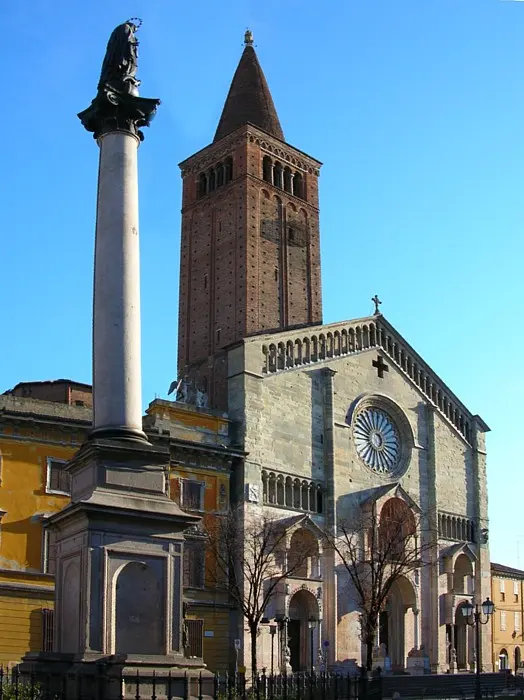 Historical site
1095
Council of Piacenza and the Byzantine appeal
At the council Pope Urban II held in Piacenza, envoys of Alexios I Komnenos asked the West for military help against the Turkish advance in Anatolia. Their appeal formed the immediate background to the call at Clermont later that year.
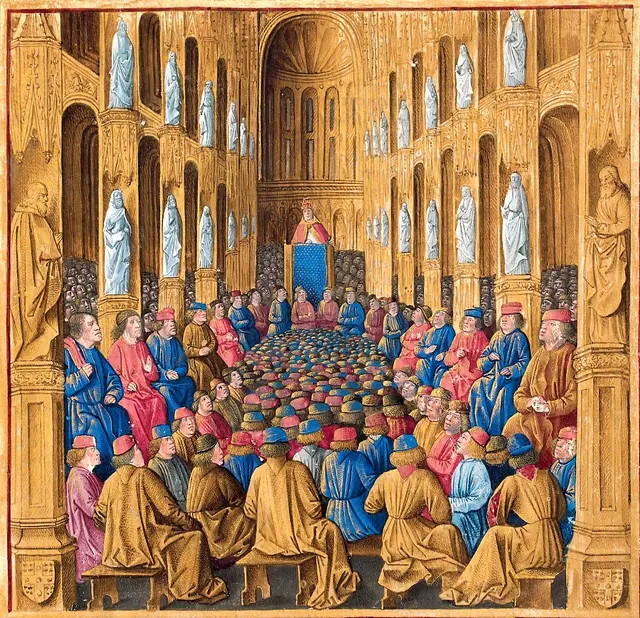 Event depiction
1095
Council of Clermont and the call to crusade
At the close of the Council of Clermont, Pope Urban II called for aid to Eastern Christians and an armed journey to Jerusalem. The council granted those who went a remission that replaced all their penance; the First Crusade began with this call.
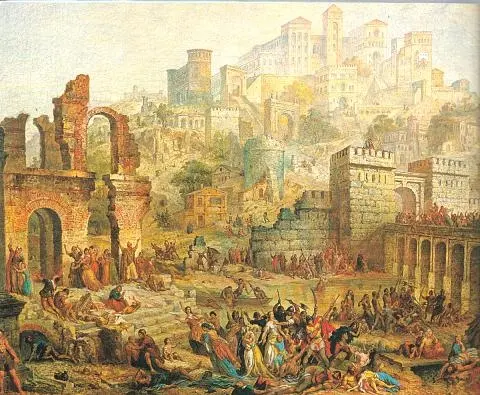 Event depiction
1096
Rhineland massacres
In the spring and summer of 1096, some armed bands roused by the crusade appeal attacked the Jewish communities of the Rhineland. Hundreds were killed in Speyer, Worms, Mainz and Cologne, and many were forcibly baptised.
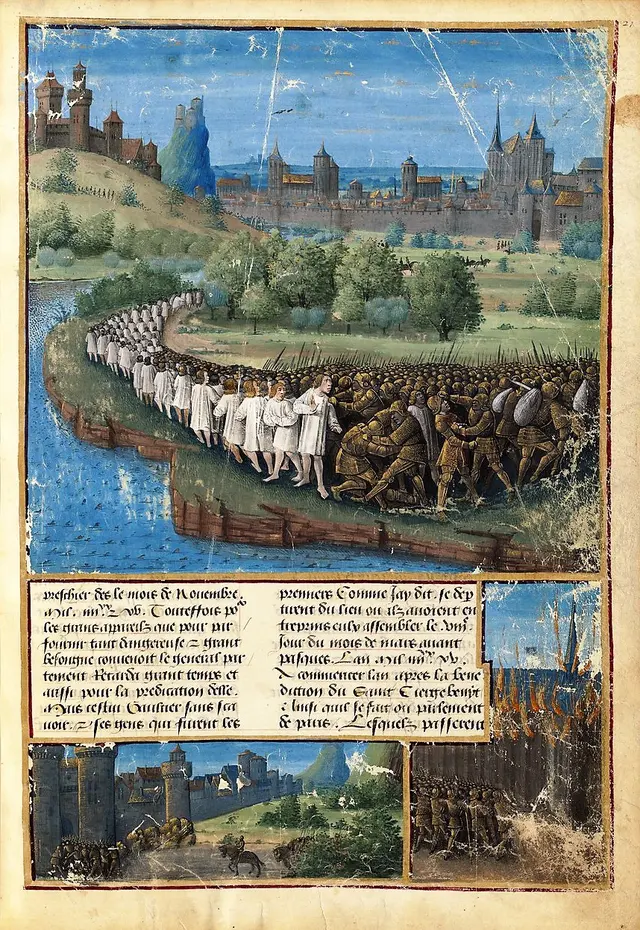 Contextual historical image
1096
People's Crusade reaches Constantinople
The disorderly bands around Peter the Hermit and Walter Sans-Avoir reached Constantinople in August 1096. Because of their excesses in the Balkans, Alexios I soon ferried them across the Bosporus to the camp at Kibotos (Civetot).
Event depiction1096
Defeat at Civetot
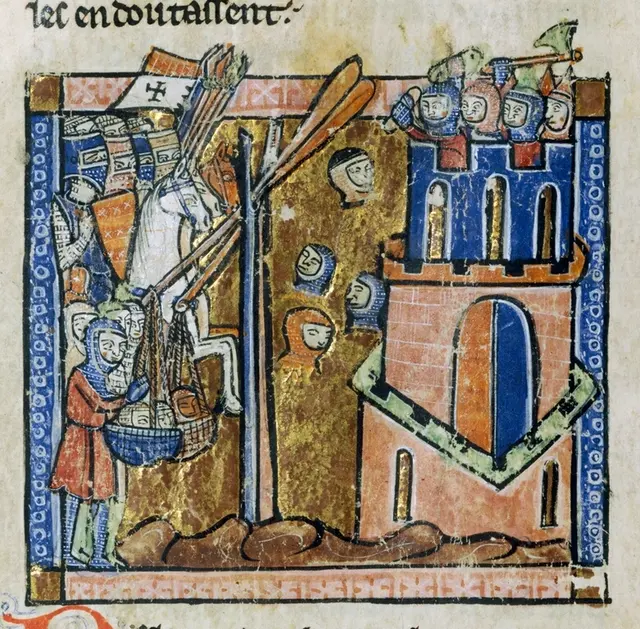
On 21 October 1096 the main force of the People's Crusade, leaving Kibotos (Civetot), was ambushed on the road to Nicaea by the Seljuk forces of Kilij Arslan I. The army was destroyed; some survivors were captured and others rescued by Byzantine ships.
 Contextual historical image
10961097
Princes' armies assemble at Constantinople
From autumn 1096 to spring 1097 the crusading princes' armies reached Constantinople by different routes. Alexios I took oaths from the leaders that they would return former Byzantine territory; over Antioch in particular, this oath became a lasting dispute.
Event depiction1097
Siege of Nicaea
From 14 May 1097 the crusader army and Byzantine forces besieged Nicaea, capital of the Anatolian Seljuks. Kilij Arslan I's relief attempt was repulsed, and on 19 June the city surrendered to Byzantium through a secret agreement before the crusaders could storm it.
 Event depiction
1097
Battle of Dorylaeum
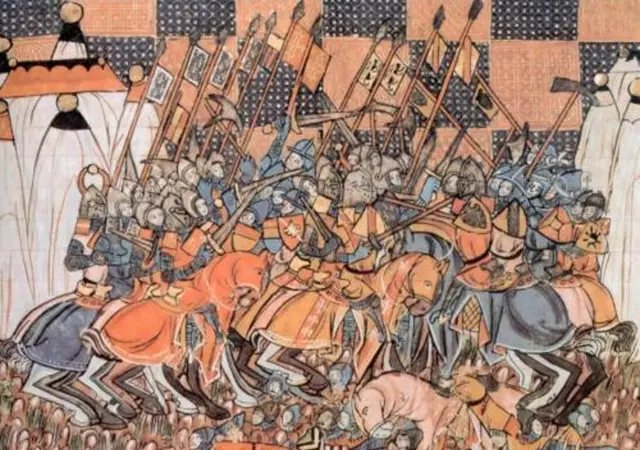
After Nicaea the crusader army advanced in two columns. On 1 July 1097 the vanguard was attacked near Dorylaion (Eskişehir) by Kilij Arslan I and his allies. The second column's arrival in the afternoon forced the Turkish forces to withdraw and opened the road through Anatolia.
 Contextual historical image
1097
Detachments leave the main army in Cilicia
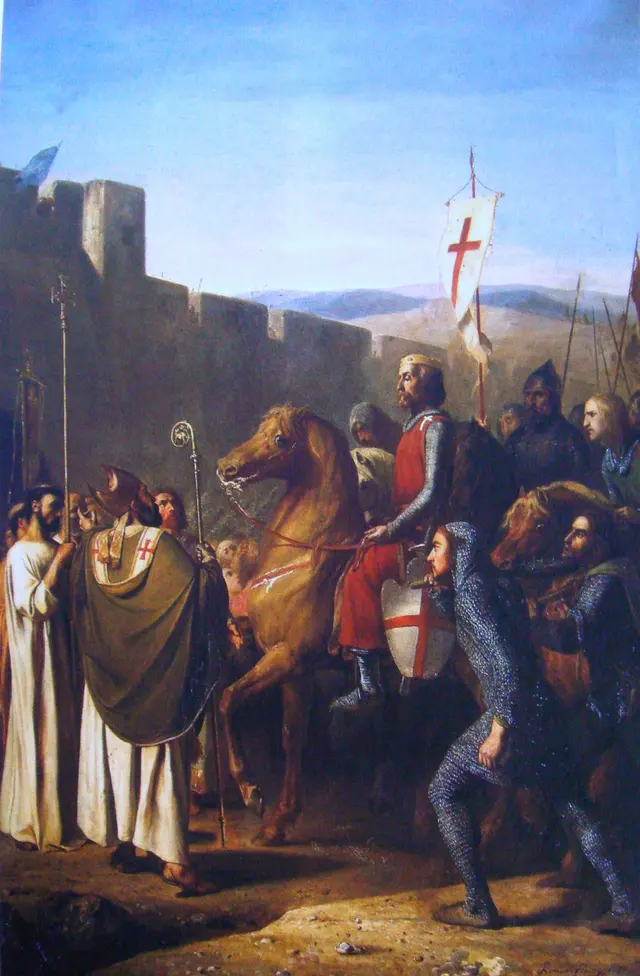
In September 1097, after Ereğli, Tancred and Baldwin of Boulogne left the main army and entered Cilicia. Their campaign for Tarsus, Adana and Mopsuestia produced alliances with local Armenian powers but also open rivalry between the two Latin leaders.
 Event depiction
1098
Siege of Antioch
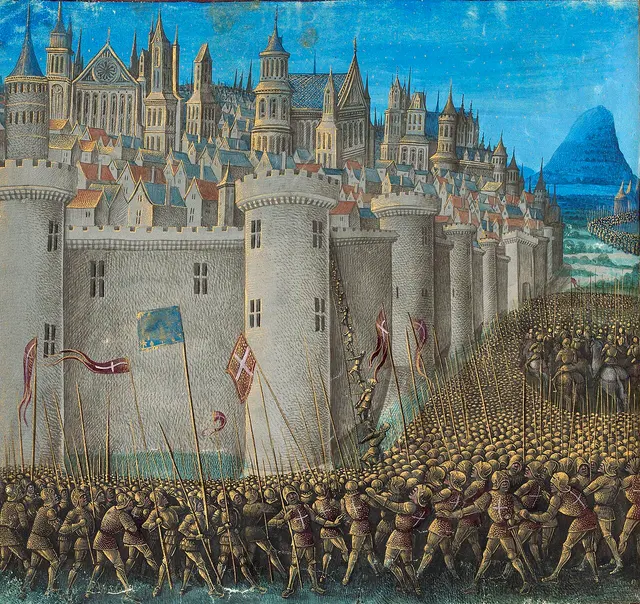
The crusader army besieged Antioch from October 1097. After a winter of severe famine, the city was taken on 3 June 1098 through a tower opened from within; the crusaders were then besieged by Kerbogha's relief army, which they defeated in battle on 28 June.
Event depiction1098
Foundation of the County of Edessa
Invited and adopted by the Armenian ruler Thoros, Baldwin of Boulogne came to Edessa in February 1098. After Thoros was killed in an uprising, Baldwin took over on 10 March 1098 and founded the County of Edessa, the first crusader state in the East.
Contextual historical image1098
Foundation of the Principality of Antioch
After Antioch was taken, Bohemond refused to return the city to Byzantium and established his own rule. His dispute with Raymond of Saint-Gilles was settled in his favour in early 1099, and the Principality of Antioch took shape as a separate crusader state.
 Historical site
1098
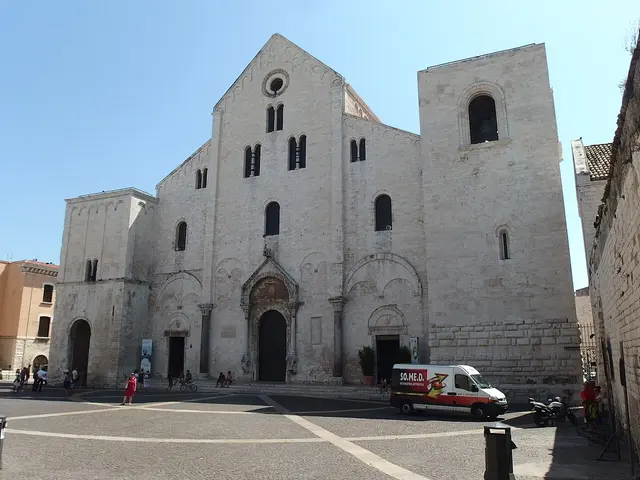
Council of Bari
While the First Crusade was under way, a council met at Bari in October 1098 under Pope Urban II to discuss the filioque dispute between the Latin and Greek churches. Archbishop Anselm of Canterbury defended the Latin position; religious rapprochement with Byzantium remained limited.
 Event depiction
1099
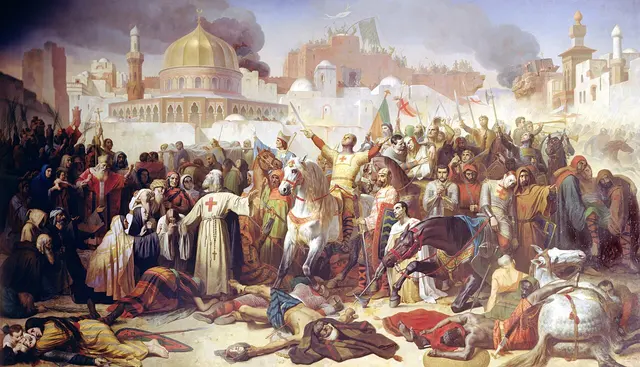
Capture of Jerusalem
The crusader army arrived before Jerusalem on 7 June 1099. After a month-long siege it broke in through the northern walls on 15 July; the Fatimid governor Iftikhar al-Dawla surrendered the Tower of David and withdrew, while most of the city's inhabitants were killed.
Contextual historical image1099
Political foundation of the Kingdom of Jerusalem
A week after the capture of Jerusalem, on 22 July 1099, the crusade leaders chose Godfrey of Bouillon as ruler of the city. Godfrey used the title “Advocate of the Holy Sepulchre” instead of king, laying the foundation of Latin rule in Jerusalem.
 Event depiction
1099
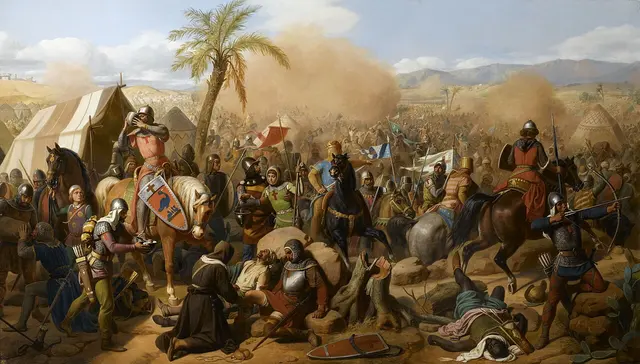
Battle of Ascalon
The army that the Fatimid vizier al-Afdal Shahanshah brought to retake Jerusalem was scattered by a surprise crusader attack before Ascalon on 12 August 1099. The victory saved the newly founded Latin government from its first great threat, but Ascalon remained Fatimid until 1153.
 Historical figure
11001103
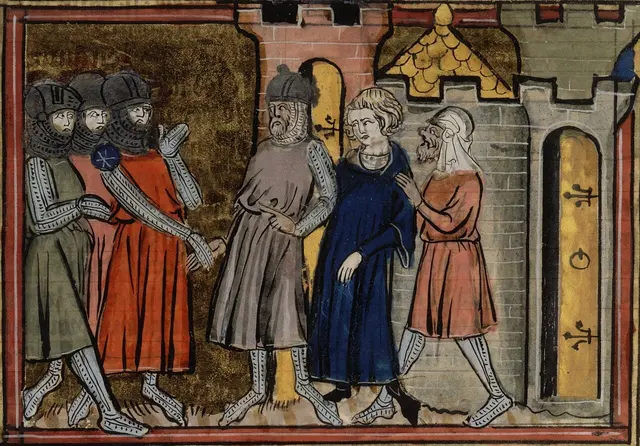
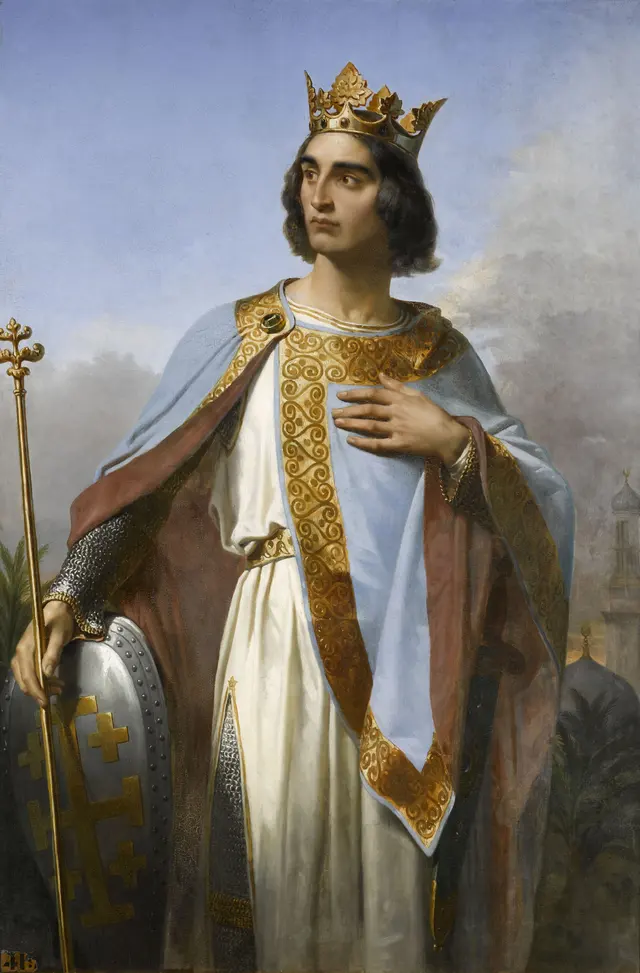
Captivity of Bohemond I
Bohemond I, prince of Antioch, was ambushed and captured by the Danishmend Gümüştegin in August 1100 while going to the aid of Melitene. Held at Niksar for nearly three years, he was released in spring 1103 for a high ransom.
 Historical figure
1100
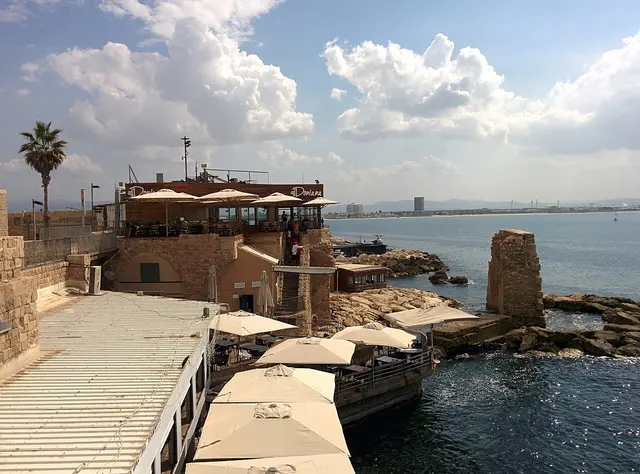
Baldwin I becomes king of Jerusalem
After Godfrey of Bouillon's death in 1100, his brother Baldwin came from Edessa to Jerusalem and took over the government. Crowned by Patriarch Daimbert at Bethlehem on 25 December 1100, he became the first Latin king of Jerusalem.
 Historical site
1101
Capture of Caesarea and Acre
With the support of the Genoese fleet, Baldwin I took Arsuf and Caesarea in 1101 and Acre in 1104. These conquests gave the Kingdom of Jerusalem secure harbours on the Mediterranean and began the commercial privileges of the Italian maritime cities in the kingdom.
 Geographical record
1101
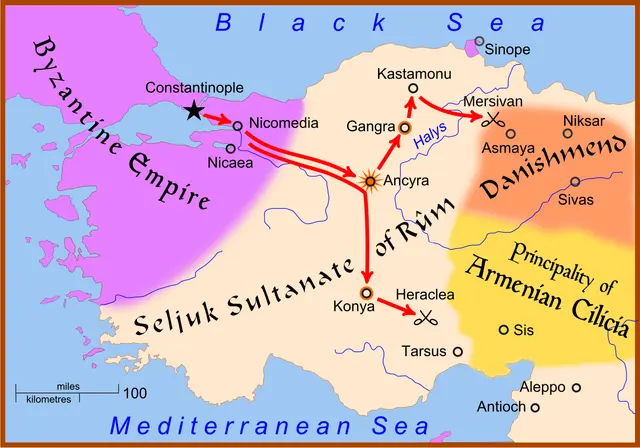
Crusade of 1101: Merzifon
A large, mainly Lombard army that set out from the West after the capture of Jerusalem turned toward northern Anatolia to free Bohemond. In early August 1101 it was destroyed near Merzifon by Kilij Arslan, the Danishmend Gümüştegin and their allies.
Contextual historical image1101
Armies of 1101 dispersed at Konya and Heraclea
The army of Count William of Nevers, and that of Duke William IX of Aquitaine and Duke Welf of Bavaria, entered Anatolia by routes separate from Merzifon. Both were destroyed on the Konya–Ereğli line in late August and September 1101 by thirst and Seljuk attacks.
Contextual historical image1101
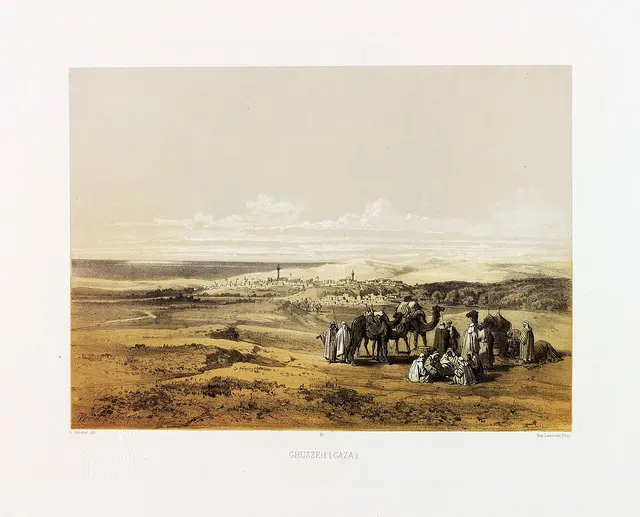
First Battle of Ramla
On 7 September 1101 an army sent by the Fatimid vizier al-Afdal met the much smaller force of Baldwin I near Ramla. Despite heavy losses, Baldwin's cavalry charge scattered the Fatimid army and the southern approach to the Kingdom of Jerusalem was held.
 Contextual historical image
1102
Second Battle of Ramla
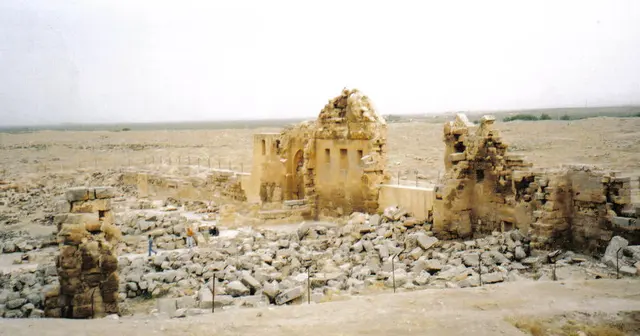
In May 1102 Baldwin I, mistaking a new Fatimid army near Ramla for a small force, attacked with about two hundred knights and suffered a heavy defeat. The king escaped, but many nobles remaining from the 1101 crusade were killed or captured.
 Historical site
1104
Battle of Harran
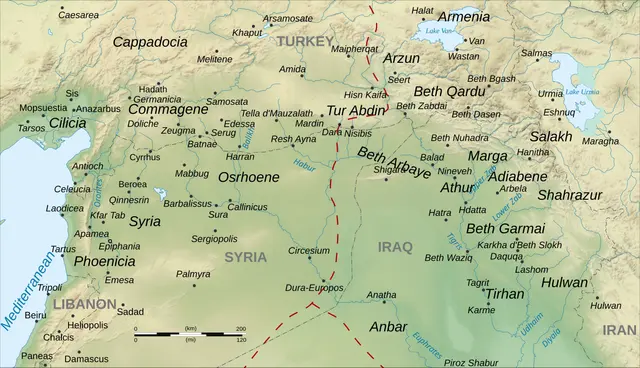
On 7 May 1104 near Harran, the combined army of Antioch and Edessa was defeated by the forces of Sökmen, lord of Mardin, and Jikirmish, ruler of Mosul. Count Baldwin II of Edessa and Joscelin I were captured, and crusader expansion east of the Euphrates came to a halt.
Contextual historical image1105
Third Battle of Ramla
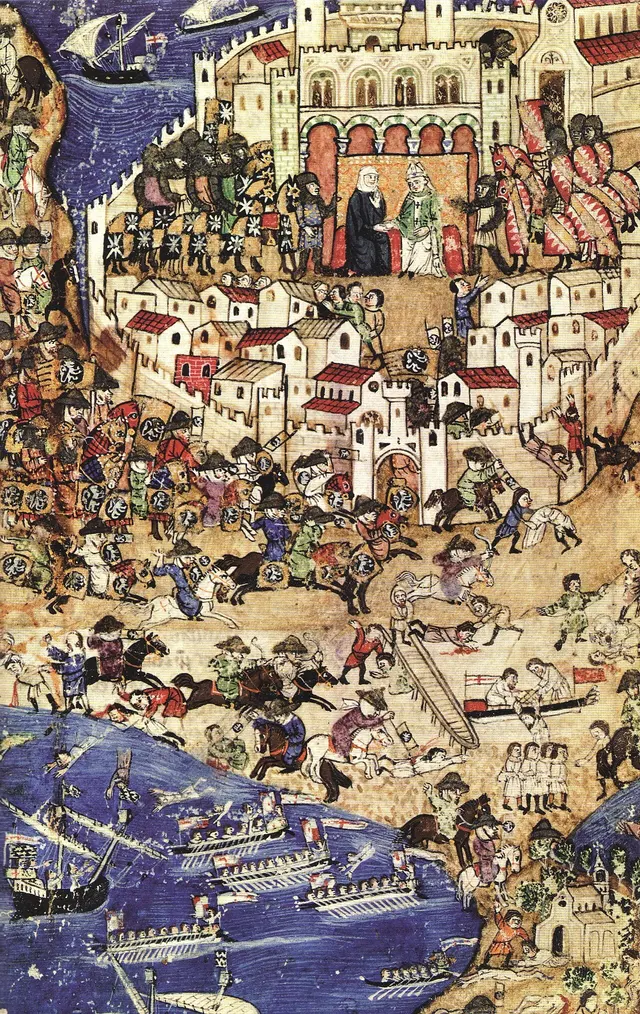
On 27 August 1105 near Ramla, Baldwin I defeated the combined force of a Fatimid army and Turkish archers from Damascus. The victory effectively ended the era of major Egyptian land campaigns against the Kingdom of Jerusalem.
 Contextual historical image
1109
Capture of Tripoli and foundation of the county
The siege of Tripoli begun by Raymond of Saint-Gilles in 1102 ended with the city's surrender on 12 July 1109, after his son Bertrand arrived with a Genoese fleet. The County of Tripoli was founded as the fourth and last major Latin state in the East.
 Geographical record
11101113
Mawdud's campaigns against Edessa
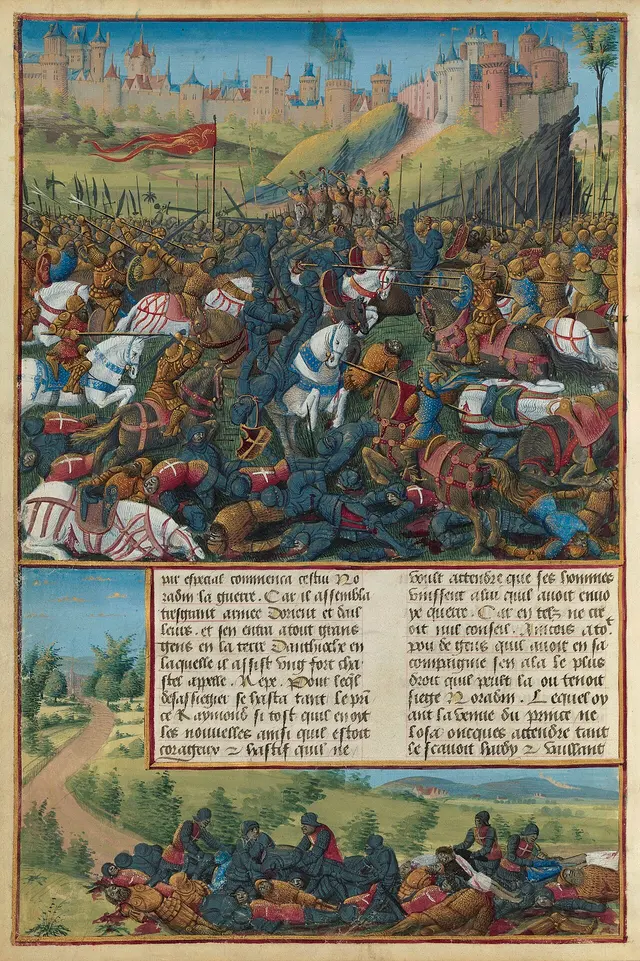
Appointed by the Great Seljuk sultan Muhammad Tapar, Mawdud, atabeg of Mosul, led repeated campaigns against the County of Edessa and Frankish lands between 1110 and 1113. Edessa was not taken, but Frankish territory east of the Euphrates was devastated and much of the Armenian population was forced to flee.
 Contextual historical image
1115
Battle of Tell Danith
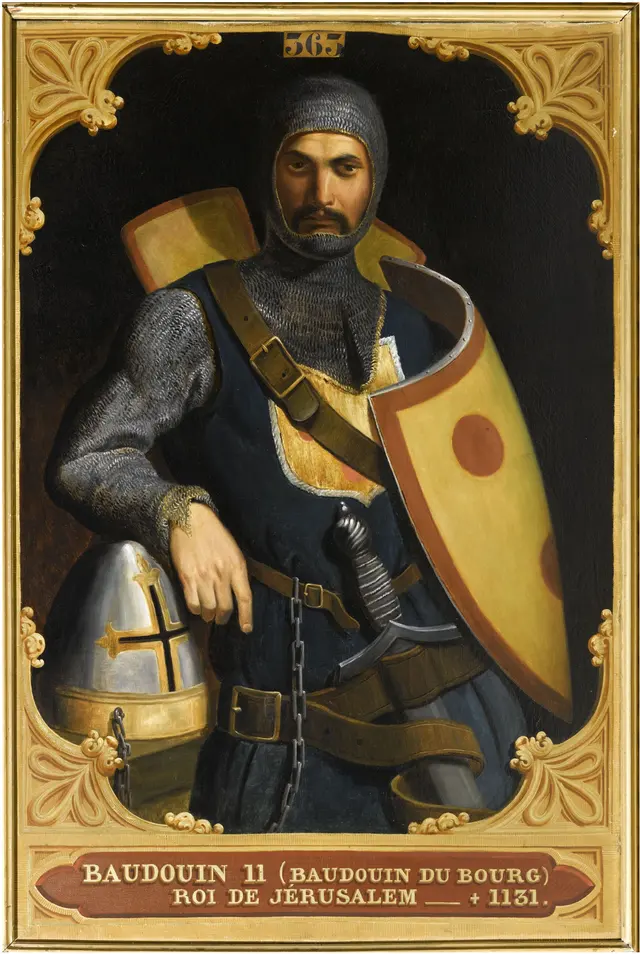
On 14 September 1115 Roger of Salerno, regent of Antioch, defeated the army sent by the Great Seljuk sultan under Bursuq ibn Bursuq with a surprise attack near Tell Danith (Sarmin). The victory strengthened the Frankish position in northern Syria for several years.
 Historical figure
1118
Baldwin II becomes king of Jerusalem
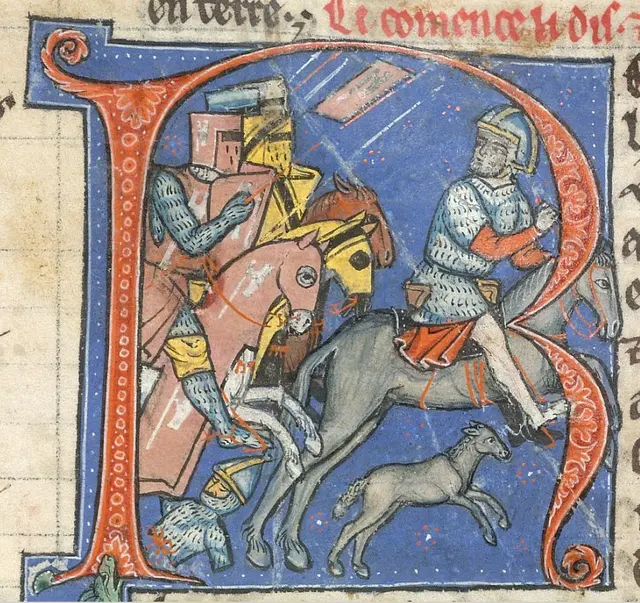
After Baldwin I died in April 1118, the barons of Jerusalem put Count Baldwin of Bourcq of Edessa on the throne instead of the late king's brother Eustace. The election of Baldwin II strengthened the bond between the kingdom and the northern Latin states.
 Contextual historical image
1119
Battle of the Field of Blood
On 28 June 1119 the army of Roger of Salerno, regent of Antioch, was surrounded near Sarmada by the forces of Ilghazi, ruler of Mardin, and almost entirely destroyed. Roger died in the battle; Latin sources called the battlefield “Ager Sanguinis”, the Field of Blood.
 Historical site
1120
Council of Nablus
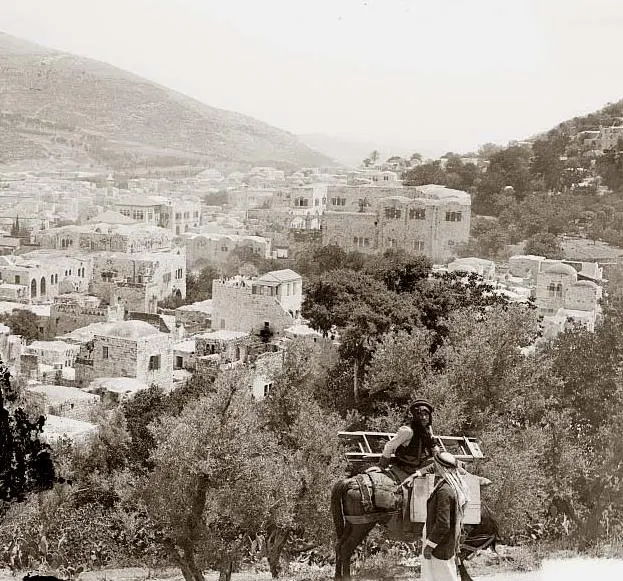
The council held at Nablus on 16 January 1120 under Baldwin II and Patriarch Warmund adopted twenty-five canons for the Kingdom of Jerusalem. They regulated tithes, marriage, sexual offences, theft and relations between Latins and Muslims, with secular penalties.
 Historical site
11221124
Balak's captive-taking campaigns
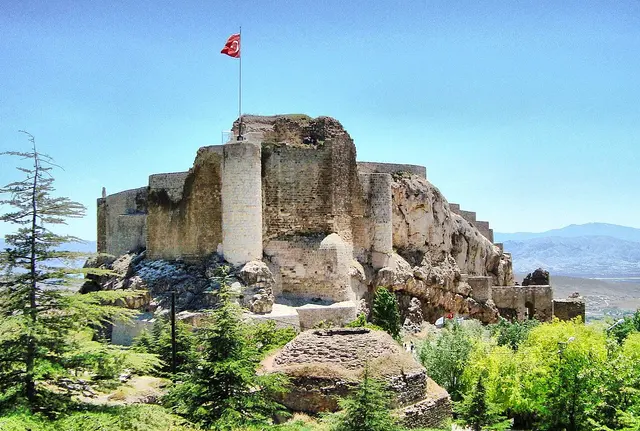
The Artuqid lord Belek Ghazi captured Count Joscelin I of Edessa in September 1122 and King Baldwin II of Jerusalem in April 1123. A revolt by the captives at Kharput, aided by Armenians, was crushed; the king was ransomed after Belek's death in 1124.
 Historical site
1123
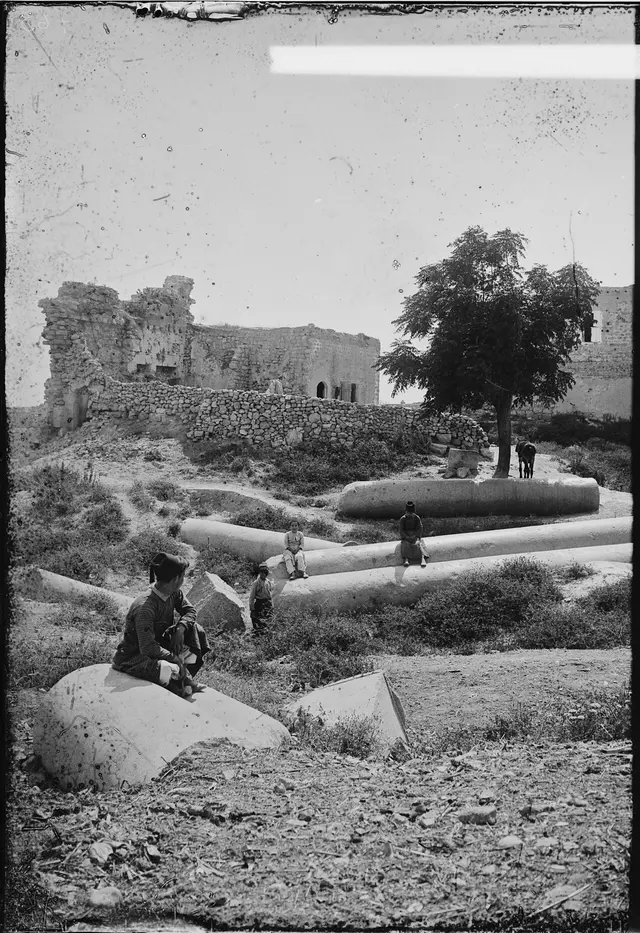
First Lateran Council
The First Lateran Council, held by Pope Calixtus II in Rome in March 1123, confirmed the Concordat of Worms that ended the Investiture Controversy. It also adopted a canon confirming the privileges of those who took the cross for Jerusalem or Spain.
 Historical site
1124
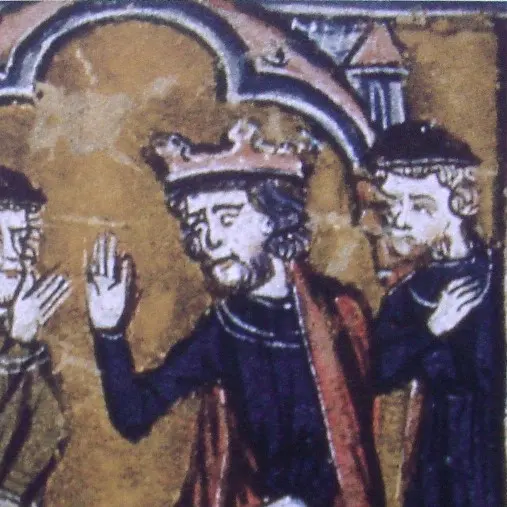
Capture of Tyre
While King Baldwin II was a captive, the Kingdom of Jerusalem, supported by the Venetian fleet, besieged Tyre by land and sea in February 1124. After a five-month siege the city surrendered by agreement on 7 July 1124; Venice received a third of the city and extensive commercial privileges.
 Contextual historical image
1129
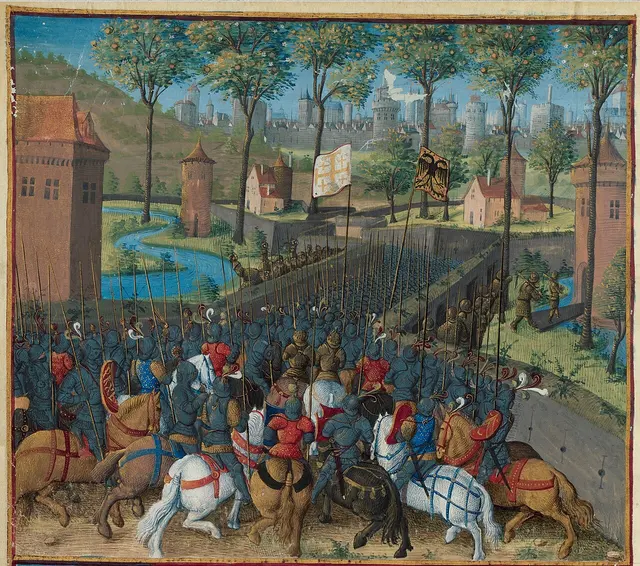
Council of Troyes and the Knights Templar
The council held at Troyes on 13 January 1129 formally recognised the brotherhood of the Knights Templar founded by Hugh of Payns and gave it a rule (regula). With Bernard of Clairvaux's support, the first military order, combining military service with monastic life, was institutionalised in the Western Church.
 Contextual historical image
1129
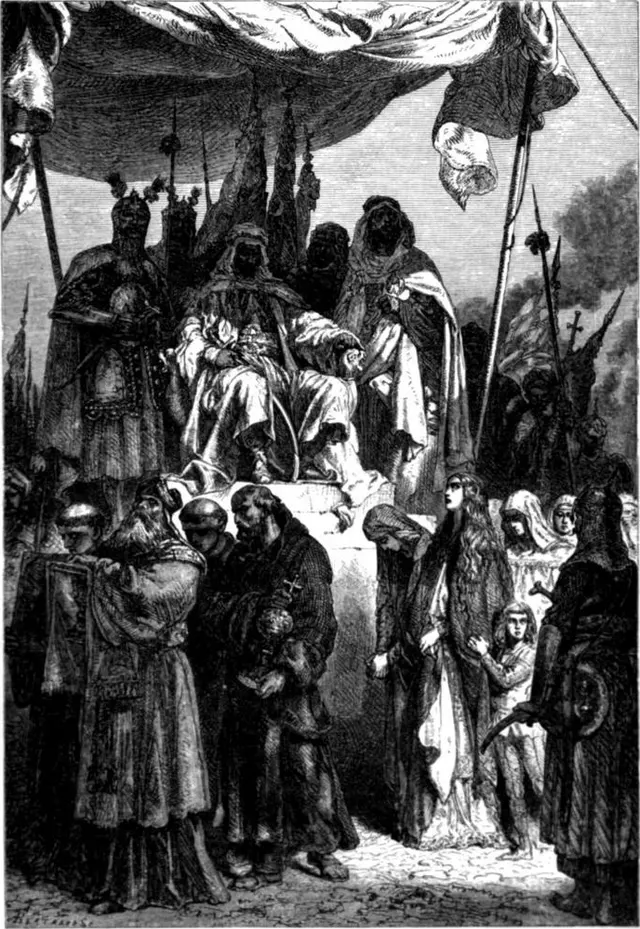
Damascus campaign
In November 1129 Baldwin II set out with newly arrived Western soldiers to take Damascus. The campaign failed after a secret agreement with the Batinis inside the city was exposed, foraging units were defeated, and heavy rains set in.
 Contextual historical image
1131
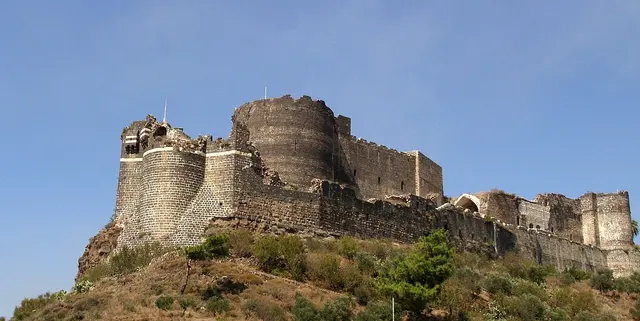
Reign of Fulk and Melisende begins
After Baldwin II died in August 1131, his daughter Melisende and her husband, Count Fulk of Anjou, were crowned together in the Church of the Holy Sepulchre on 14 September 1131. Fulk's attempt to rule alone led to a crisis in 1134, and Melisende's share in government became clear.
 Contextual historical image
1137
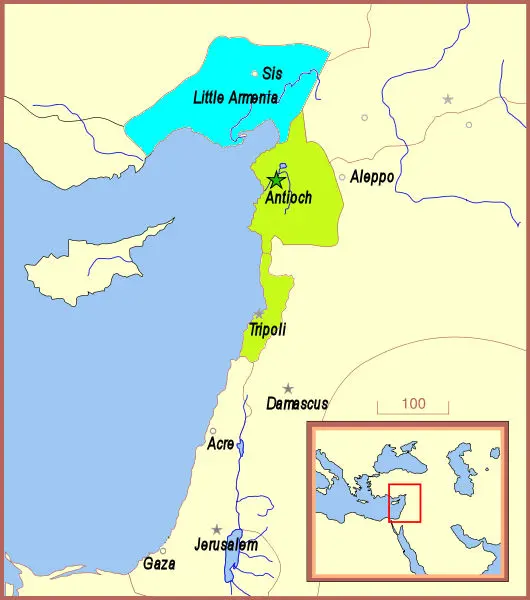
Surrender of Montferrand
In August 1137 Imad al-Din Zengi besieged the castle of Montferrand (Ba'rin) near Homs, defeated the relief army of King Fulk of Jerusalem and forced him to shut himself in the castle. The king and his companions were released in exchange for the castle and a heavy ransom.
 Contextual historical image
1138
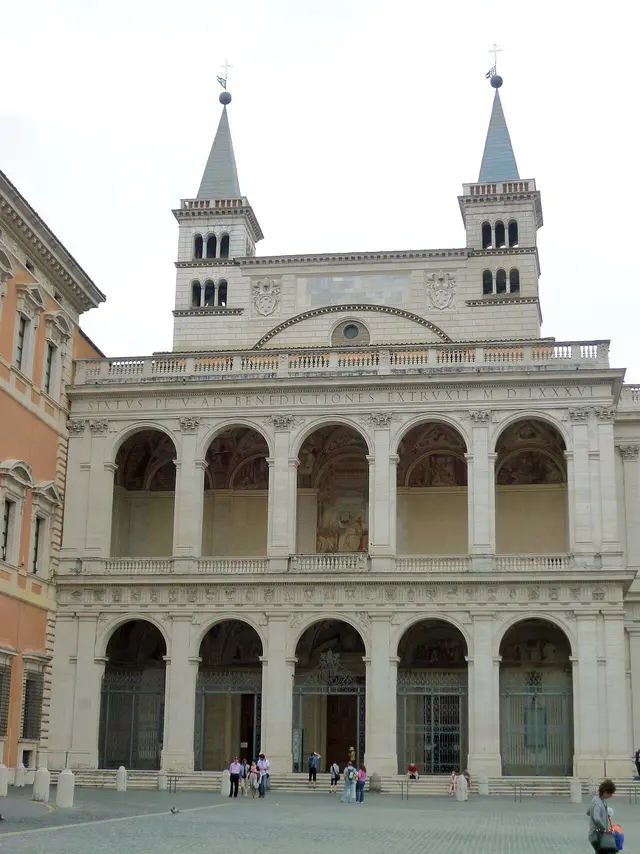
Byzantine emperor enters Antioch
In 1137 the Byzantine emperor John II Komnenos besieged Antioch and forced Prince Raymond of Poitiers to swear allegiance. In spring 1138 he campaigned against Shaizar with the Frankish leaders, but Latin reluctance limited the results and the emperor left Antioch.
 Historical site
1139
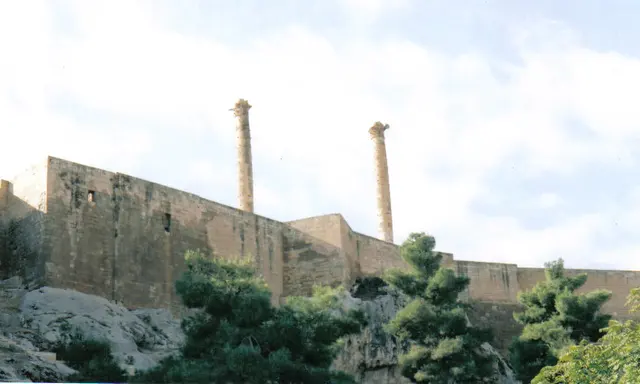
Second Lateran Council
The Second Lateran Council, held by Pope Innocent II in April 1139, aimed to restore church unity after the Anacletan schism and tighten clerical discipline. It did not proclaim a new expedition, but adopted canons strengthening the general framework of church law in the crusading age.
 Historical site
1144
Zengi's capture of Edessa
While Count Joscelin II was away from the city, Imad al-Din Zengi besieged Edessa in November 1144. The city was entered on 24 December through walls brought down by mining, and the citadel surrendered two days later. The fall of the first crusader state's capital gave rise to the Second Crusade.
Contextual historical image1145
Call for the Second Crusade
In response to the fall of Edessa, Pope Eugenius III issued the bull Quantum praedecessores, addressed to King Louis VII of France, on 1 December 1145. It called for a new expedition and granted participants privileges such as remission of sins, protection of their families and property, and exemption from interest on debts.
 Historical site
1146
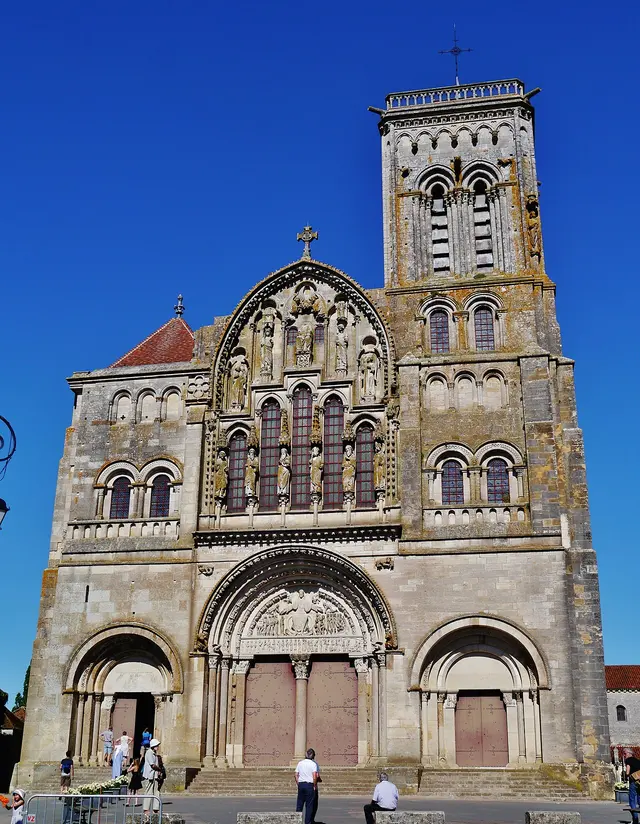
Assembly of Vézelay and the preaching of the Second Crusade
On Easter Day, 31 March 1146, at Vézelay, Bernard of Clairvaux preached the Second Crusade before King Louis VII and a great crowd. The king, Queen Eleanor and a large part of the French aristocracy took the cross there.
 Event depiction
1146
Second capture of Edessa
After Zengi's death in September 1146, Joscelin II entered Edessa in October 1146 with the support of its Armenian population but could not take the citadel. Nur al-Din Zengi soon arrived and routed the Franks and the inhabitants trying to flee with them; the city's Christian population suffered heavy losses.
 Historical site
1147
Assembly of Étampes and the crusade route
The assembly Louis VII held at Étampes in February 1147 decided that the Second Crusade would travel overland through Hungary and Byzantium. In the king's absence the government of France was entrusted to Abbot Suger of Saint-Denis and Count Ralph of Vermandois.
 Contextual historical image
11471149
Second Crusade
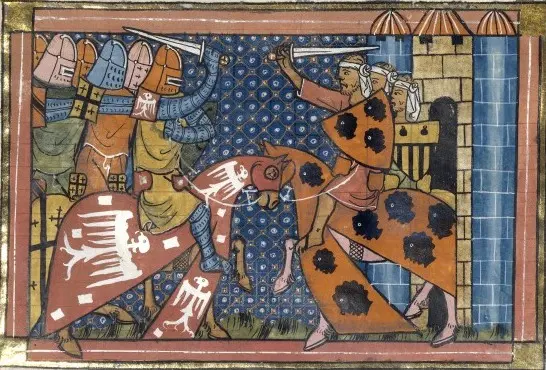
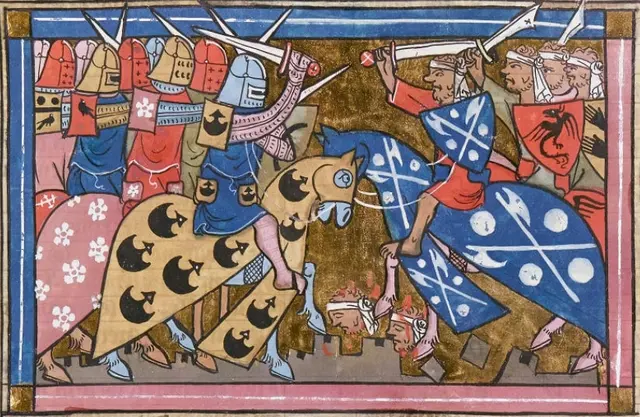
In the Second Crusade, launched after the fall of Edessa, the armies of Conrad III and Louis VII advanced east separately and suffered heavy losses in Anatolia. In the Levant, Damascus rather than Edessa became the target, and the siege of July 1148 failed. In the same period Lisbon was taken in Iberia.
Event depiction1147
Defeat of the German army at Dorylaeum
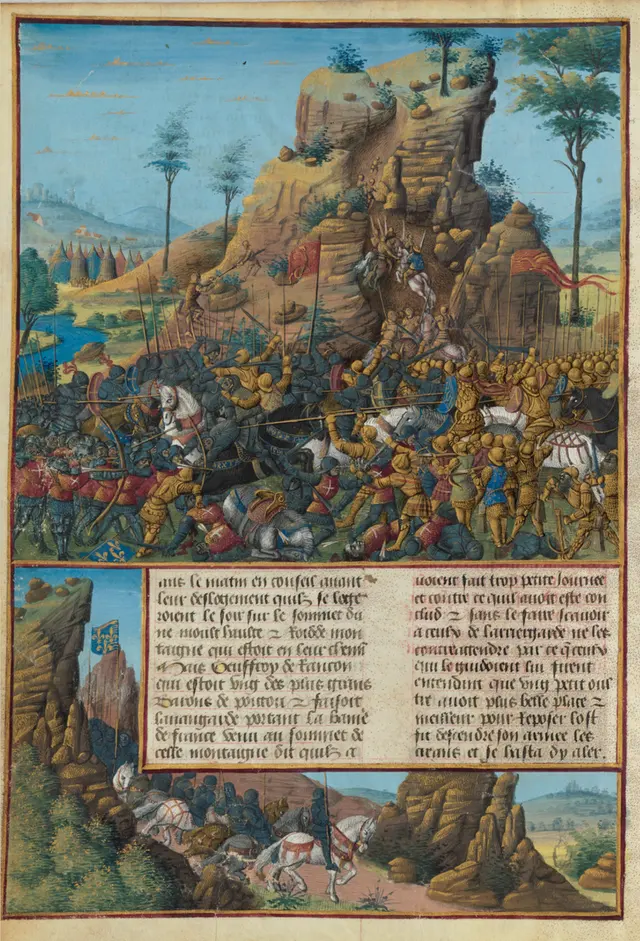
In October 1147 Conrad III's German army, advancing from Nicaea toward Konya, ran short of supplies and grew exhausted near Dorylaion (Eskişehir). Repeated attacks by Sultan Mas'ud I's cavalry destroyed most of the army, and Conrad retreated to Nicaea.
 Event depiction
1148
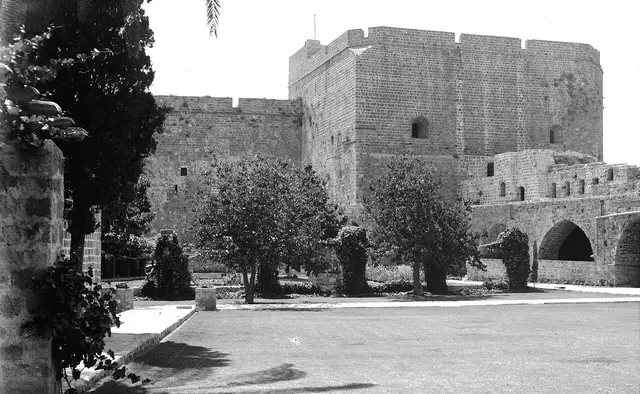
Crossing of Mount Honaz
In early January 1148, at the pass of Mount Cadmus (Honaz Dağı), Louis VII's French army was split in two when the vanguard advanced against orders. Seljuk forces routed the exposed main column with heavy losses; the king barely escaped.
 Historical site
1148
Council of Acre
On 24 June 1148 at Palmarea near Acre, Conrad III, Louis VII, the young King Baldwin III, Queen Melisende and the barons of Jerusalem discussed the Second Crusade's objective. The meeting decided to attack Damascus, at times an ally of the Kingdom of Jerusalem.
Event depiction1148
Siege of Damascus
On 24 July 1148 the armies of the Second Crusade besieged Damascus from the orchards to its west. Faced with Mu'in al-Din Unur's resistance and the prospect of Nur al-Din and Sayf al-Din coming to the city's aid, the army moved to the east side; four days later the siege was lifted.
Event depiction1149
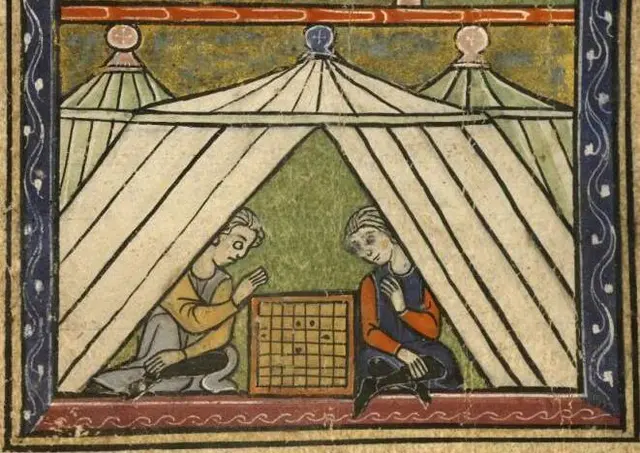
Battle of Inab
On 29 June 1149 near the castle of Inab, Nur al-Din surrounded and destroyed the forces of Prince Raymond of Poitiers of Antioch and his ally Ali ibn Wafa. Raymond and Ali died in the battle; Nur al-Din advanced through Antiochene territory to the Mediterranean coast.
 Historical figure
1150
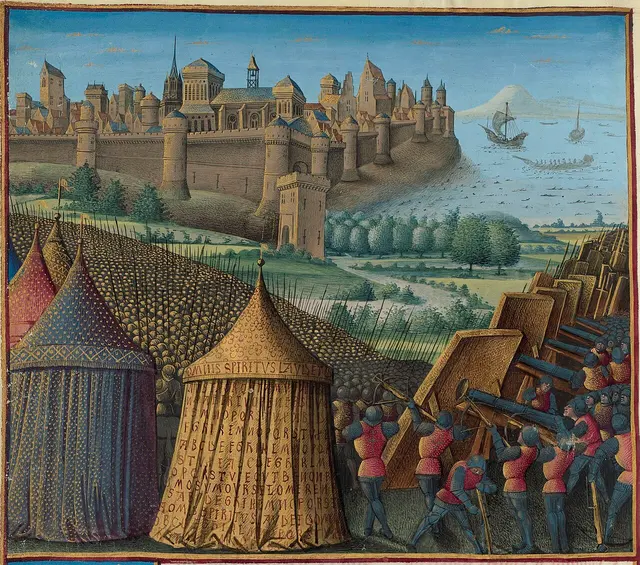
Captivity of Joscelin II
Joscelin II, the last count of Edessa, was seized by Nur al-Din's Turkmen allies in spring 1150 while travelling to Antioch. He was blinded and imprisoned in Aleppo, where he died in 1159; the county's remaining castles were soon sold to Byzantium or changed hands.
 Event depiction
1153
Siege of Ascalon
King Baldwin III besieged Ascalon, Fatimid Egypt's last fortress in Palestine, in January 1153. The siege of some seven months ended with the city's negotiated surrender in August 1153, opening the Kingdom of Jerusalem's southern frontier toward Egypt.
Contextual historical image1154
Nur al-Din takes Damascus
In April 1154 Nur al-Din took Damascus from Mujir al-Din Abaq, uniting Aleppo and Damascus under a single government. The takeover, achieved with the support of part of the city's population, created a strong and united Syrian centre facing the crusader states.
 Contextual historical image
1158
Byzantine–Frankish rapprochement
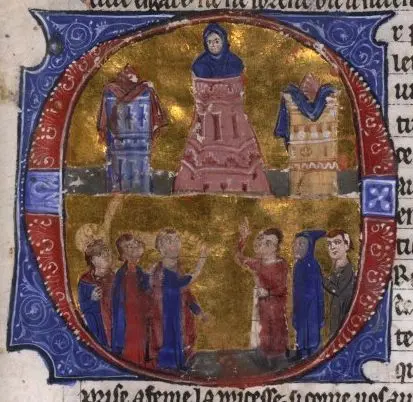
In 1158 the Byzantine emperor Manuel I Komnenos came to Cilicia and forced Prince Reynald of Châtillon of Antioch, who had plundered Cyprus, to submit before him. In April 1159 he entered Antioch in ceremony; an agreement with Nur al-Din then freed thousands of Latin prisoners.
 Historical figure
11601176
Long captivity of Raynald of Châtillon
Prince Reynald of Châtillon of Antioch was captured at the end of 1160 by the forces of Majd al-Din, governor of Aleppo, while returning from a plundering raid near Marash. Held in the citadel of Aleppo for about sixteen years, he was released for a high ransom in 1176.
Geographical record11631169
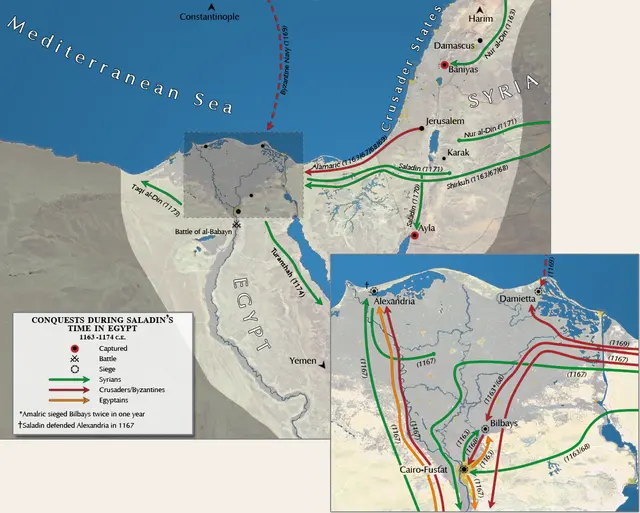
Crusader–Zengid campaigns in Egypt
Between 1163 and 1169, King Amalric of Jerusalem and Nur al-Din's commander Shirkuh clashed several times to gain influence over weakened Fatimid Egypt. The struggle ended in Nur al-Din's favour when Shirkuh became vizier in January 1169.
Historical figure1164
Battle of Harim
The allied army of Antioch, Tripoli, Byzantium and the Armenians, coming to relieve the castle of Harim besieged by Nur al-Din, suffered a heavy defeat on 12 August 1164. Leading figures such as Bohemond III, Raymond III, Constantine Kalamanos and Joscelin III were captured.
Contextual historical image1169
Saladin becomes Fatimid vizier
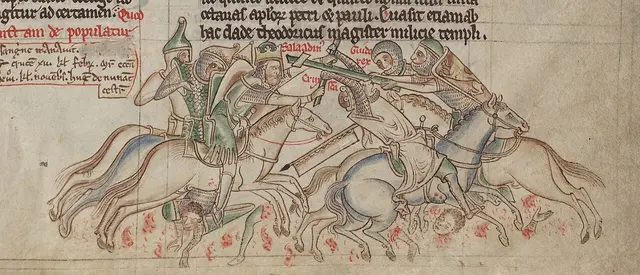
After Shirkuh died in March 1169, his nephew Saladin (Salah al-Din Yusuf) was appointed vizier by the Fatimid caliph al-Adid on 26 March 1169. Appearing at first loyal both to the Fatimid caliph and to Nur al-Din, Saladin soon established his own power in Egypt.
 Contextual historical image
1171
End of the Fatimid Caliphate
In September 1171 Saladin had the Friday sermon in Cairo read in the name of the Abbasid caliph al-Mustadi. A few days later the last Fatimid caliph, al-Adid, died; the two-century Isma'ili Fatimid caliphate ended and Egypt was brought into the Sunni Abbasid order.
 Contextual historical image
1174
Deaths of Nur al-Din and Amalric I; Saladin enters Damascus
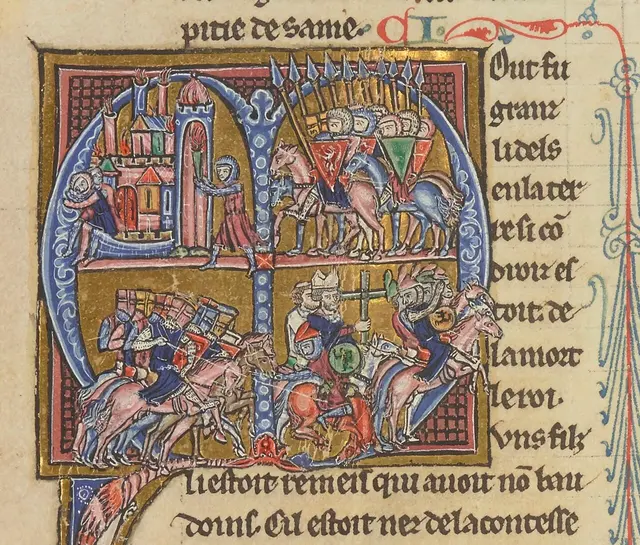
In 1174 first Nur al-Din (15 May) and then King Amalric of Jerusalem (11 July) died. As young heirs and regency disputes emerged on both sides, Saladin entered Damascus in October 1174 and began gathering Nur al-Din's legacy under his own rule.
 Event depiction
1177
Battle of Montgisard
On 25 November 1177 the sixteen-year-old King Baldwin IV of Jerusalem routed Saladin's army from Egypt with a surprise attack at Montgisard near Ramla. Saladin barely escaped back to Egypt; the victory gave the kingdom a few years' respite.
 Historical site
1179
Third Lateran Council
The Third Lateran Council, held by Pope Alexander III in March 1179, introduced the two-thirds majority rule for papal elections and adopted canons on church discipline. It also banned the sale of arms and ship materials to Muslims and granted crusade-like privileges to those fighting “heretics” in southern France.
Contextual historical image1179
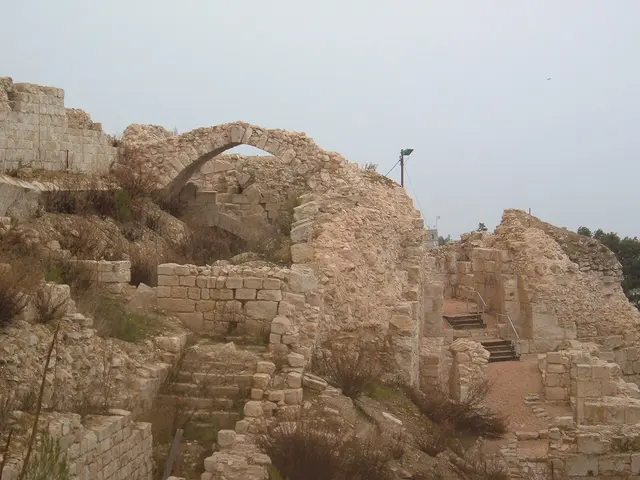
Battle of Marj Ayyun
On 10 June 1179 at Marj Uyun in the Litani valley, a Frankish army that had scattered in pursuit of Saladin's raiders was defeated by a sudden counterattack. Leading figures such as the Templar master Odo of Saint-Amand and Baldwin of Ibelin were captured; Baldwin IV barely escaped.
 Contextual historical image
1179
Destruction of Jacob's Ford castle
Chastellet, the castle Baldwin IV had the Templars build at Jacob's Ford on the Jordan, was besieged by Saladin in August 1179. Brought down by mining, it fell on 29–30 August; the defenders were killed or captured and the castle was destroyed.
Geographical record11821183
Raynald's Red Sea expedition
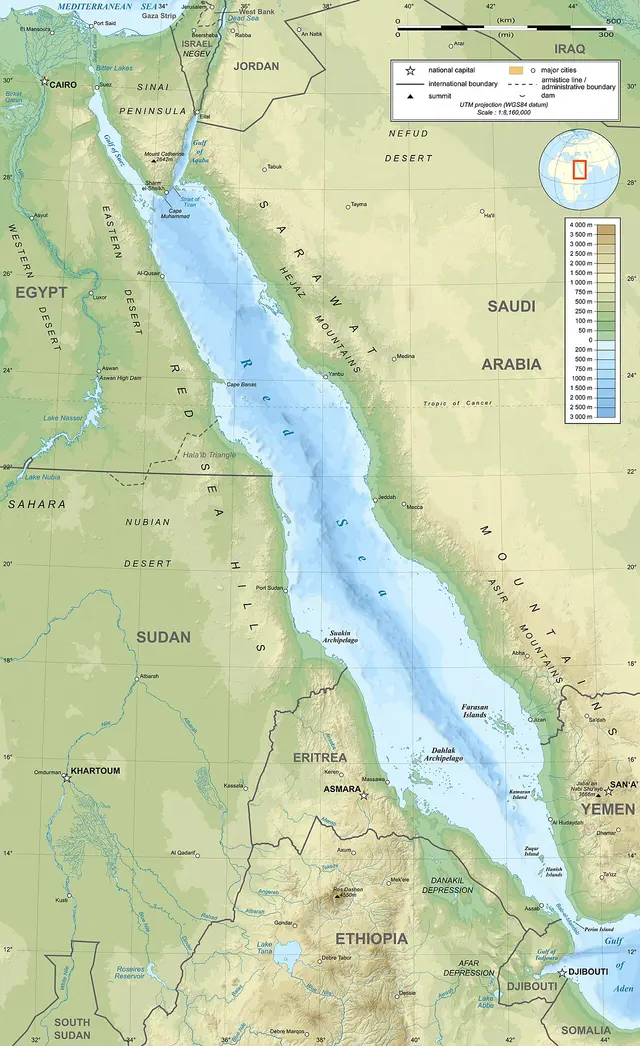
In the winter of 1182–1183 Reynald of Châtillon launched ships, carried overland in pieces, into the Gulf of Aqaba. The raiders attacked ports on the Red Sea coast and merchant and pilgrim ships; an Ayyubid fleet under Admiral Husam al-Din Lu'lu' stopped the expedition.
Contextual historical image1183
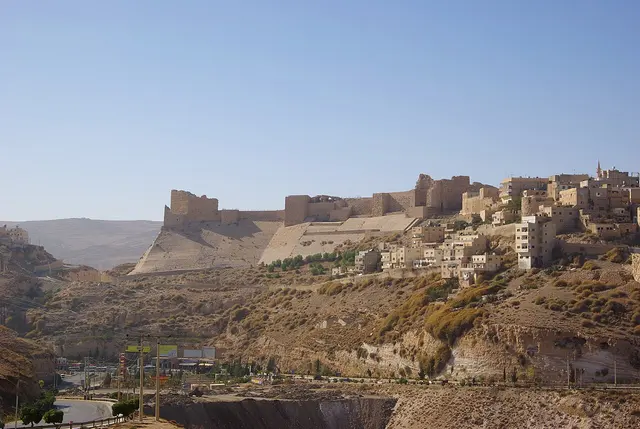
Aleppo submits to Saladin
In June 1183 Saladin acquired Aleppo from the Zengid Imad al-Din Zengi II through an agreement exchanging the city for Sinjar and the surrounding lands. The union of Egypt, Damascus and Aleppo under one government created a powerful front encircling the crusader states.
 Contextual historical image
1185
Truce with the Kingdom of Jerusalem
After Baldwin IV died in 1185, the regent, Count Raymond III of Tripoli, faced with drought and famine, made a four-year truce with Saladin. The truce brought brief stability for trade and travel, but the succession crisis of 1186 and Reynald's caravan raid broke this order.
Historical site1186
Raid on the Kerak caravan
At the end of 1186 or early 1187, Reynald of Châtillon, lord of Kerak, attacked a large caravan travelling from Egypt to Damascus despite the truce. He took the merchants and goods to Kerak and refused the demands of both Saladin and King Guy to return them; this became the direct cause of Saladin's declaration of war.
Event depiction1187
Battle of Hattin
On 3–4 July 1187 at Hattin near Tiberias, Saladin wore down the main army of the Kingdom of Jerusalem with thirst and fire and then destroyed it. King Guy of Lusignan was captured, Reynald of Châtillon was killed and the True Cross was taken; the kingdom's defensive strength collapsed in a single day.
Event depiction1187
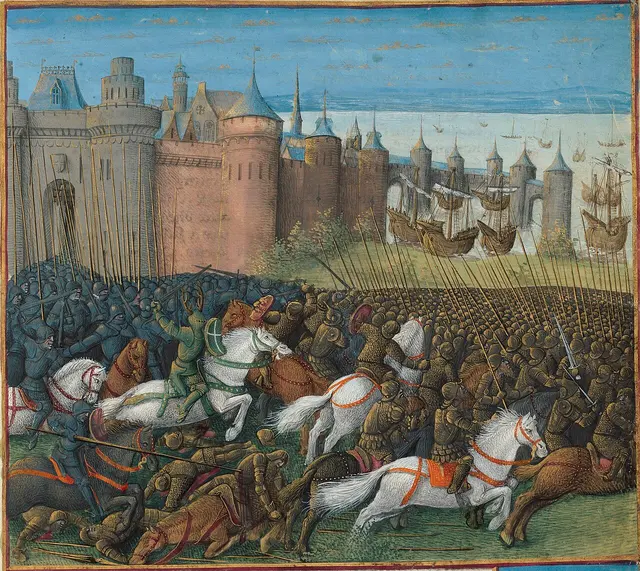
Surrender of Jerusalem to Saladin
Saladin besieged Jerusalem on 20 September 1187. After a breach was opened in the walls, negotiations led by Balian of Ibelin ended with the city's surrender by agreement on 2 October. The departure of the Latin population was tied to a ransom per person; some who could not pay were released, others enslaved.
 Contextual historical image
1187
Call for the Third Crusade
On news of the defeat at Hattin and the loss of Jerusalem, Pope Gregory VIII issued the bull Audita tremendi on 29 October 1187. It attributed the defeat to the sins of Christians, called for penance and fasting, and granted broad privileges to those joining a new expedition.
Event depiction11871188
Defence of Tyre
Conrad of Montferrat, arriving at Tyre by sea a few days after Hattin, took over its defence. Saladin's siege, begun in November 1187, failed when Conrad's ships defeated the Muslim fleet at the end of December, and Tyre remained the most important coastal city still in Latin hands.
 Historical site
1188
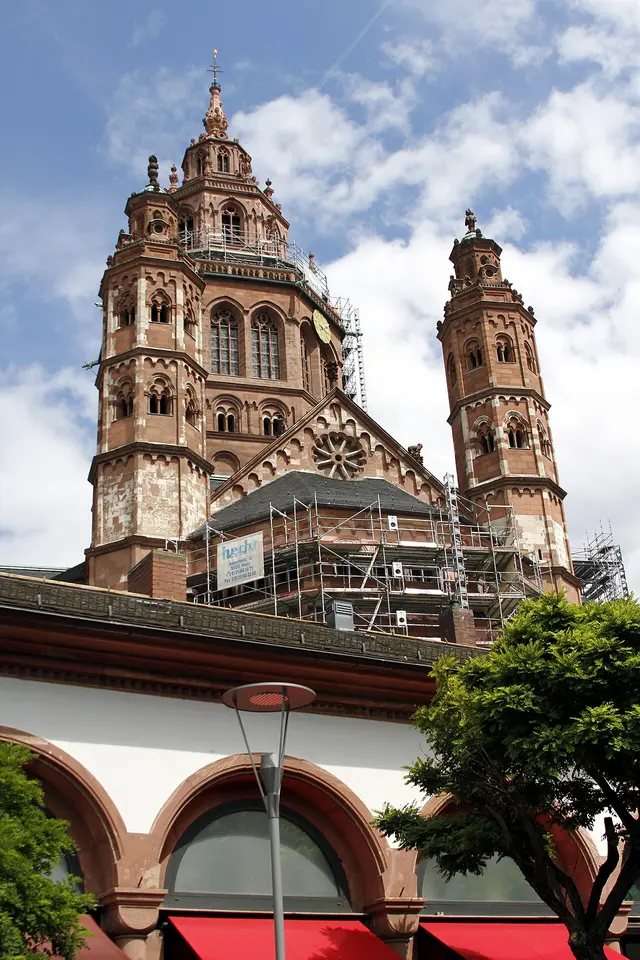
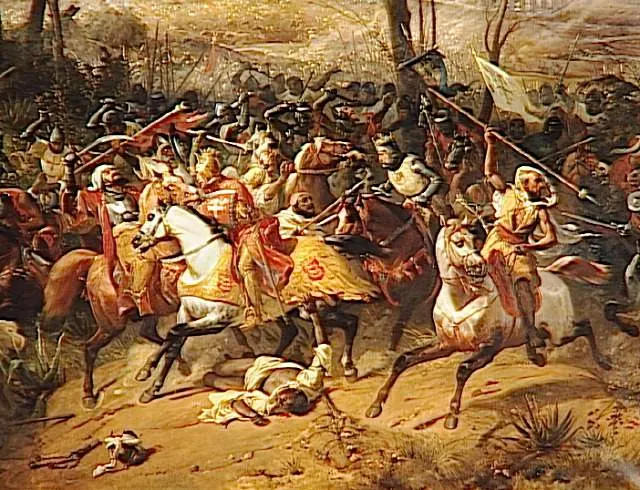
Assembly of Mainz and the Third Crusade vow
At the imperial assembly held in Mainz on 27 March 1188, known as the “Court of Christ” (Curia Christi), Frederick Barbarossa, his son Frederick and many German nobles took the cross. The assembly decided that the German army would march overland through Hungary and Byzantium and set a financial qualification for participation.
 Contextual historical image
11891192
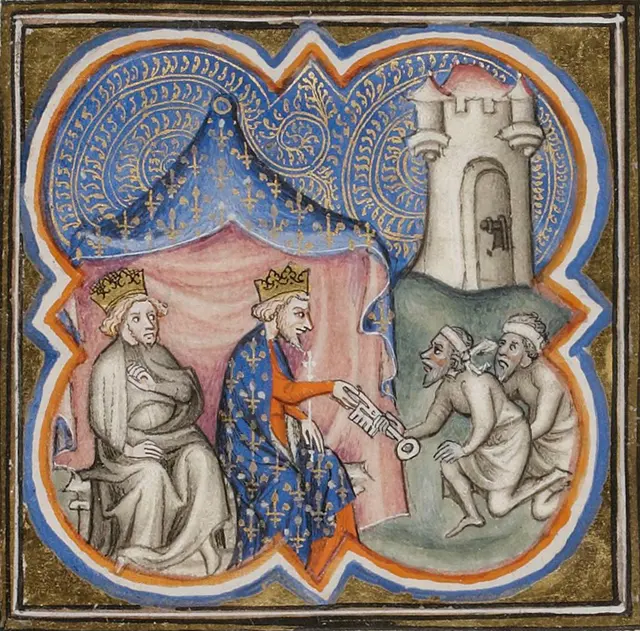
Third Crusade
The Third Crusade, launched after the loss of Jerusalem in 1187, was joined by Frederick Barbarossa, King Philip II Augustus of France and King Richard the Lionheart of England. Barbarossa died on the way; the crusade took Acre and recovered the coastal strip, but ended with the Treaty of Jaffa in 1192 without taking Jerusalem.
 Event depiction
11891191
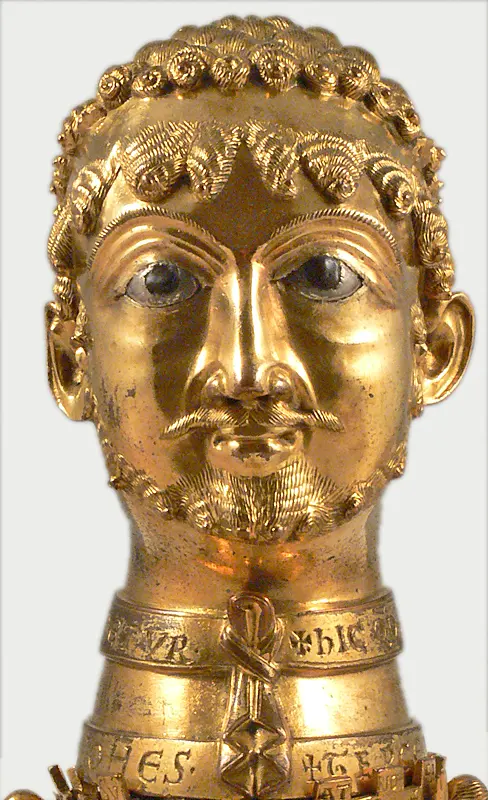
Siege of Acre
The siege of Acre, begun by King Guy of Lusignan in August 1189, became a two-year war of attrition as Saladin besieged the besiegers from outside. After Philip II and Richard I arrived in 1191, the city surrendered on terms on 12 July 1191.
 Historical figure
1190
Death of Frederick Barbarossa
After taking Konya in May 1190, the German emperor Frederick Barbarossa crossed the Taurus and came down into Cilicia. On 10 June 1190 he drowned while crossing the Saleph (Göksu) river near Silifke; most of his army dispersed and only a small contingent reached Acre.
 Geographical record
1191
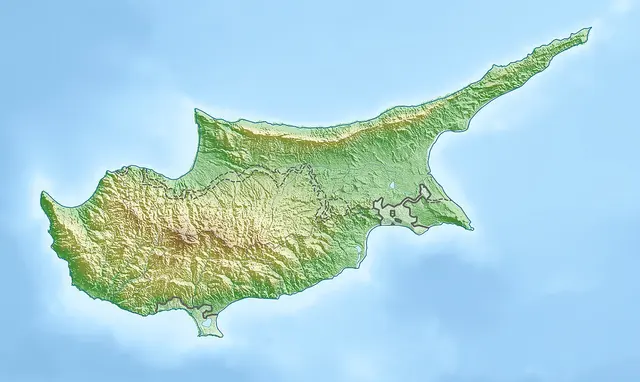
Richard's conquest of Cyprus
In May 1191, some of Richard's ships, caught in a storm on the way to Acre, were driven onto the coast of Cyprus. When the island's self-proclaimed emperor Isaac Komnenos mistreated the shipwrecked, Richard conquered the island within weeks; Cyprus later became a lasting Latin kingdom.
 Event depiction
1191
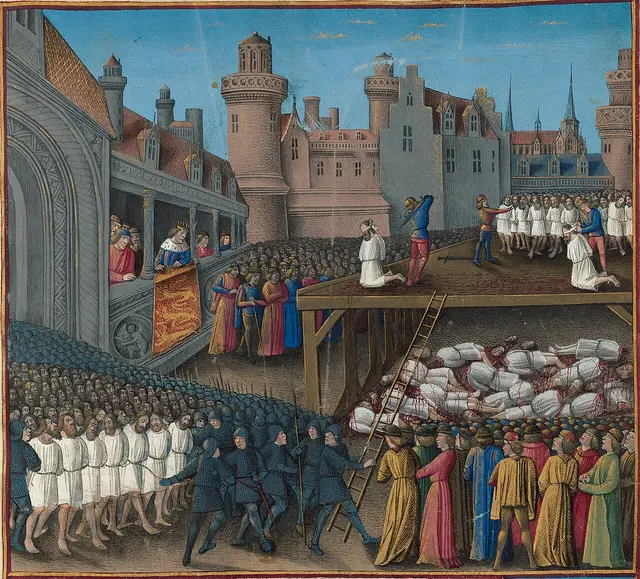
Killing of the Acre prisoners
Because of delays in fulfilling the terms of Acre's surrender, Richard ordered on 20 August 1191 that some 2,600–3,000 Muslim prisoners be killed near the hill of Ayyadiya before the crusader army. The episode became one of the most controversial treatments of prisoners in the crusades.
Event depiction1191
Battle of Arsuf
Richard's army, advancing south along the coast from Acre toward Jaffa, came under Saladin's great attack near Arsuf on 7 September 1191. Keeping its tight formation, the army, after an early charge by the Hospitallers, forced Saladin to withdraw with a general counterattack.
Contextual historical image1192
Foundation of the Latin Kingdom of Cyprus
Cyprus, conquered by Richard the Lionheart in 1191, was handed in 1192 to Guy of Lusignan, who had lost the throne of Jerusalem. Guy's brother Aimery took the title of king in 1197, giving birth to the Latin Kingdom of Cyprus, ruled by the Lusignan dynasty until 1489.
 Event depiction
1192
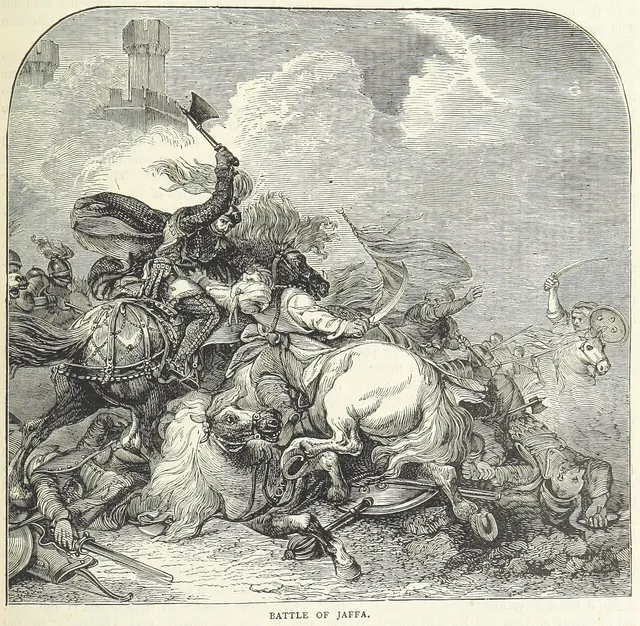
Battle of Jaffa and peace treaty
In July 1192 Saladin took Jaffa in a surprise attack; Richard arrived by sea, retook the city and on 5 August defended his camp with very few knights. On 2 September 1192 the two sides signed the Treaty of Jaffa: the coastal strip stayed with the Franks, Jerusalem stayed under Muslim rule, and pilgrims were granted free access.
Contextual historical image1193
Death of Saladin
Saladin died of illness in Damascus on 4 March 1193, about six months after the Treaty of Jaffa. His lands were divided among his sons and his brother al-Adil; after family rivalries, al-Adil eventually reunited most of the Ayyubid territories.
 Contextual historical image
11971198
German Crusade
Troops of the German Crusade prepared by Emperor Henry VI reached Acre in autumn 1197. They recovered the coast of Beirut and Sidon, but while they were besieging the castle of Tibnin (Toron), news came that the emperor had died in Sicily in September 1197, and the crusade broke up in early 1198.
Historical site1197
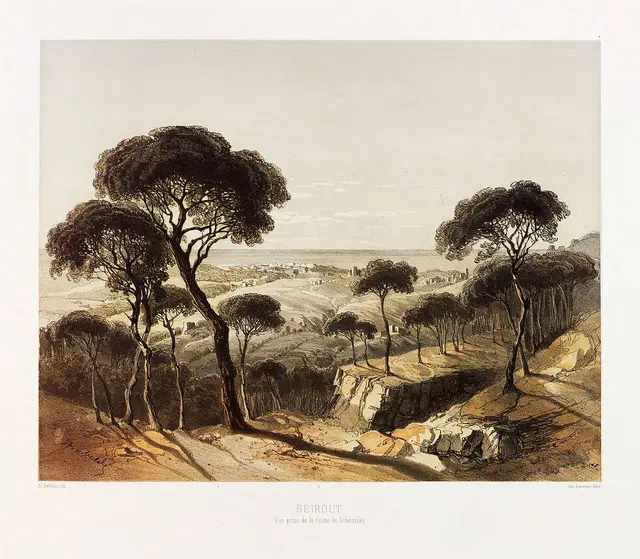
German Crusaders capture Beirut
When the forces of the German Crusade of 1197 advanced on Beirut in October 1197, the city's Ayyubid garrison abandoned it. The crusaders took Beirut without a fight around 24 October; the city returned to Latin rule and later became an important lordship of the Ibelin family.
 Historical document
1198
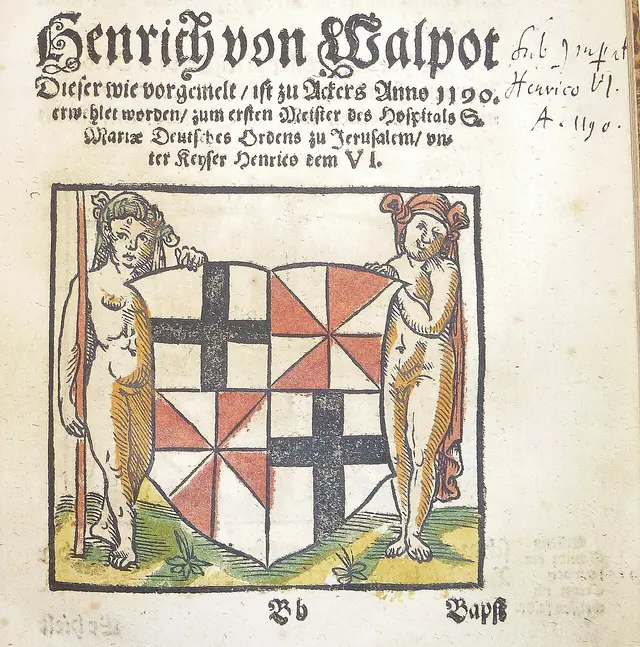
Teutonic Knights become a military order
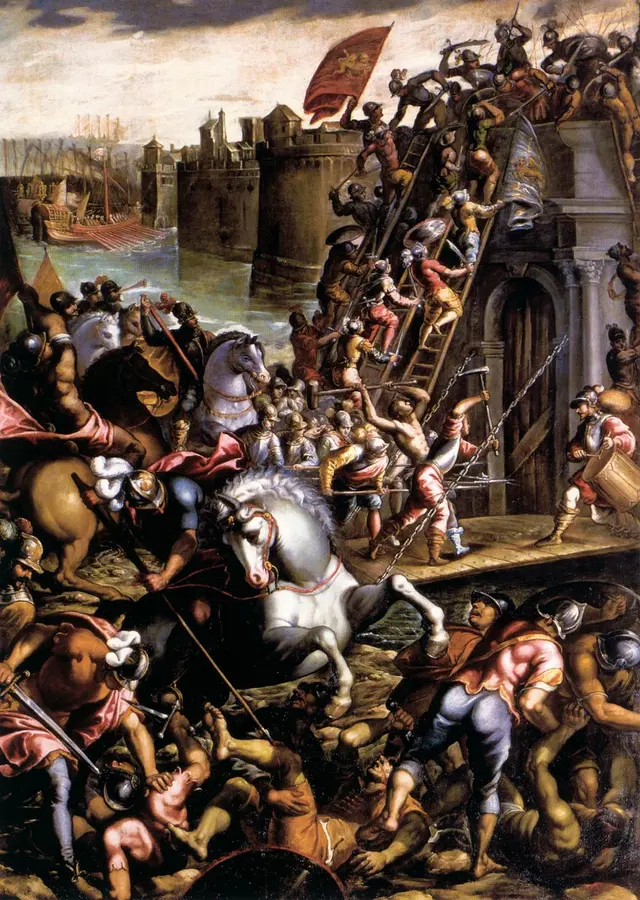
The hospital brotherhood founded for German pilgrims at the siege of Acre in 1190 was turned into a military order in a ceremony at Acre in March 1198. With Pope Innocent III's approval in 1199, the Teutonic Knights became a permanent military-religious organisation like the Templars and Hospitallers.
 Contextual historical image
1198
Call for the Fourth Crusade
In August 1198 Pope Innocent III proclaimed a new expedition to the East with the bull Post miserabile. Designed as a crusade directed by the papacy, it first targeted Egypt, but a transport contract with Venice and a dynastic struggle in Byzantium turned it toward Constantinople.
Event depiction1202
Sack of Zara
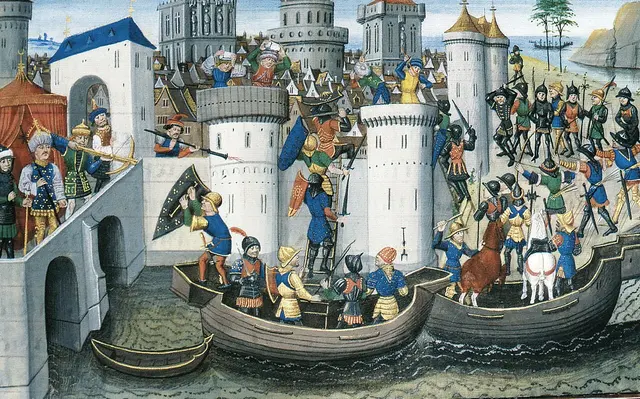
Unable to pay its transport debt to Venice, the army of the Fourth Crusade besieged the Christian city of Zara (Zadar) on the Adriatic at Doge Enrico Dandolo's suggestion. The city surrendered on 24 November 1202 and was sacked; the pope excommunicated those who took part in the attack.
 Contextual historical image
1203
First capture of Constantinople
In July 1203 the army of the Fourth Crusade and the Venetian fleet took the tower of Galata and broke the chain across the Golden Horn. After the assault of 17 July, Emperor Alexios III fled; the blinded former emperor Isaac II and his son Alexios IV were placed on the throne.
Event depiction1204
Capture and sack of Constantinople
On 12 April 1204 the army of the Fourth Crusade and the Venetians attacked a second time and took Constantinople. In three days of looting the city's churches, palaces and houses were plundered; many works of art and holy relics were carried off to the West.
Contextual historical image1204
Foundation of the Latin Empire
After the capture of Constantinople, an electoral college chose Count Baldwin of Flanders as Latin emperor; Baldwin was crowned in Hagia Sophia on 16 May 1204. By the Partitio Romaniae, Byzantine territory was divided among the emperor, Venice and the crusade leaders.
Contextual historical image1205
Battle of Adrianople
On 14 April 1205 before Adrianople, the army of the Bulgarian tsar Kaloyan lured the forces of the Latin emperor Baldwin into a trap with a feigned retreat by Cuman cavalry. The Latin army was defeated, Count Louis of Blois was killed, and Baldwin was captured and never returned.
 Event depiction
1212
Children's Crusade
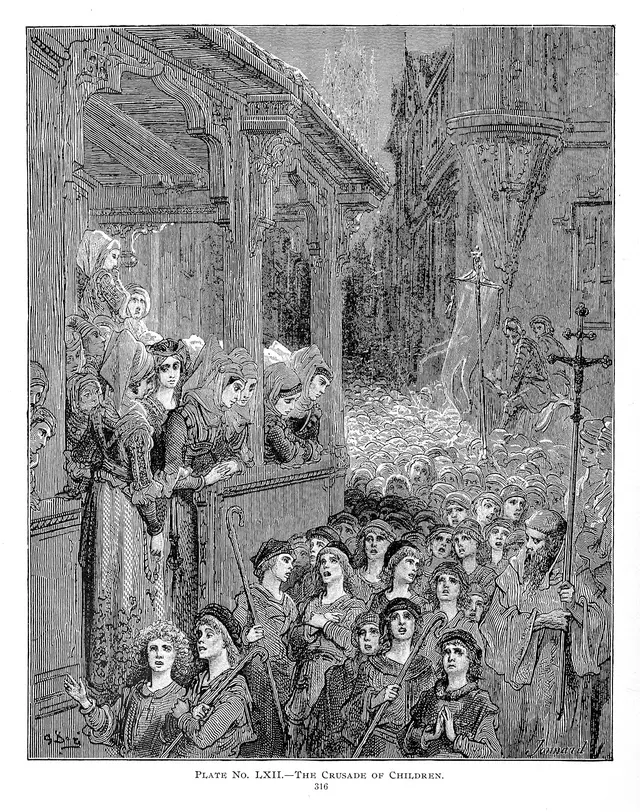
In summer 1212, young and poor crowds gathered around Stephen of Cloyes in France and Nicholas of Cologne in the Rhineland set out to free Jerusalem. The movement broke up when it reached the Mediterranean ports; most participants returned home, and some died or disappeared on the roads.
 Historical site
1215
Fourth Lateran Council and plan for the Fifth Crusade
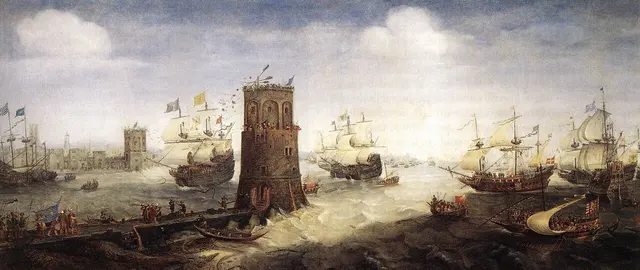
The Fourth Lateran Council, held by Pope Innocent III in November 1215, was the most comprehensive church assembly of the Middle Ages. Alongside reform canons, its decree Ad liberandam set a new crusade to begin on 1 June 1217 and ordered a special tax on the clergy.
 Contextual historical image
1217
Fifth Crusade armies at Acre
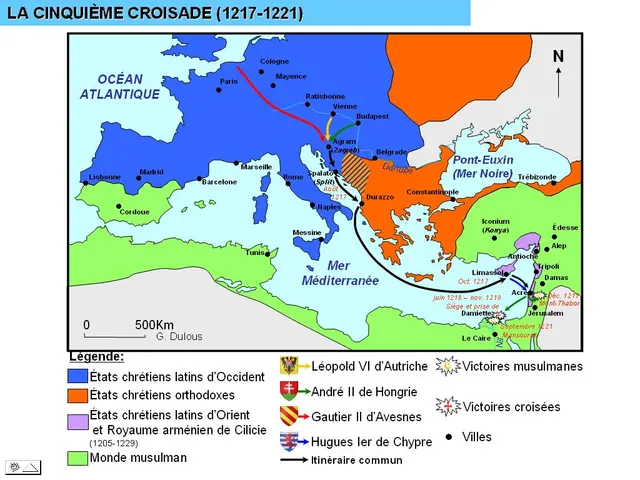
The first armies of the Fifth Crusade, led by King Andrew II of Hungary and Duke Leopold VI of Austria, reached Acre in autumn 1217. Campaigns in Galilee and the Jordan valley and an attack on Mount Tabor produced no decisive result; Andrew went home in early 1218 and the target shifted to Egypt.
Event depiction12181219
Capture of Damietta
The army of the Fifth Crusade besieged Damietta in the Nile delta in May 1218. After the chain tower was taken in August 1218 the siege lasted a year and a half; weakened by hunger and disease, the city was taken on 5 November 1219.
 Geographical record
1221
Surrender of the Fifth Crusade army
In July 1221 the army of the Fifth Crusade, advancing toward Cairo under Cardinal Pelagius, was trapped near Mansura by the flooding Nile and dikes opened by Ayyubid forces. The army surrendered at the end of August; Damietta was returned, an eight-year truce was made and prisoners were released on both sides.
 Historical site
1223
Meeting of Ferentino and the plan for the Sixth Crusade
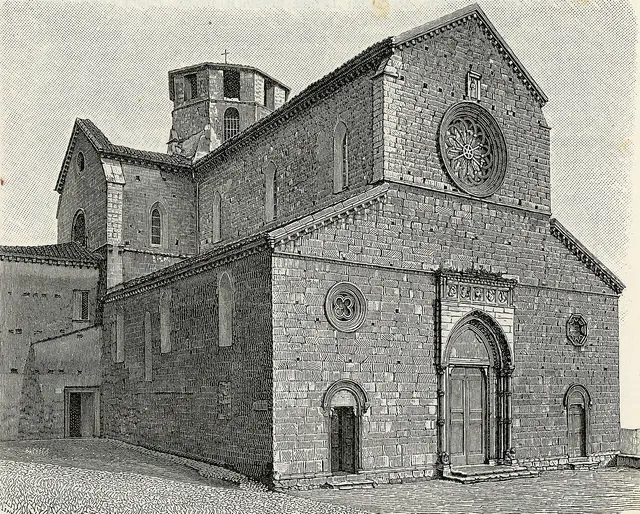
In March 1223 Pope Honorius III, Emperor Frederick II, King John of Brienne of Jerusalem and the Teutonic master Hermann von Salza met at Ferentino. It was agreed that Frederick would marry Isabella, heiress to the throne of Jerusalem, and the emperor's crusade was postponed to 1225.
 Contextual historical image
1227
Excommunication of Frederick II
Frederick II set out from Brindisi for the East in September 1227 but soon fell ill and turned back. Pope Gregory IX regarded this as another breach of the crusade vow the emperor had postponed for years, and excommunicated him on 29 September 1227.
Contextual historical image12281229
Sixth Crusade
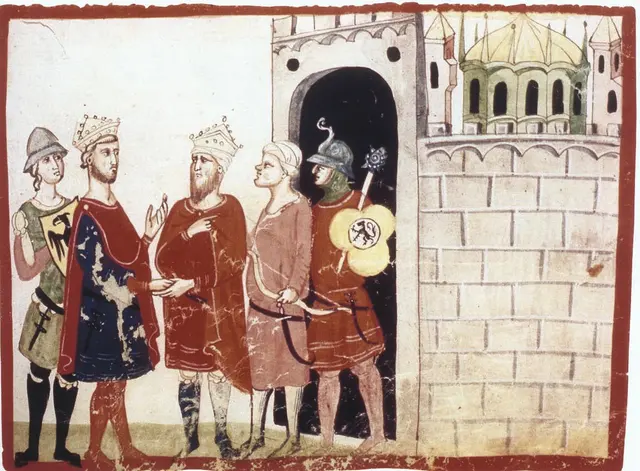
The excommunicated emperor Frederick II reached Acre via Cyprus in 1228. Without fighting a major battle, his negotiations with al-Malik al-Kamil led to the Treaty of Jaffa in February 1229, which handed Jerusalem, Bethlehem and Nazareth to the Latins for ten years.
Event depiction1229
Treaty of Jaffa
The Treaty of Jaffa, signed on 18 February 1229 between Frederick II and the Ayyubid sultan al-Malik al-Kamil, handed Jerusalem, Bethlehem and Nazareth to the Franks for ten years, together with a corridor to the coast. The Haram al-Sharif remained under Muslim administration.
Contextual historical image12311243
War of the Lombards
Between 1229 and 1243, Frederick II's representatives in the East and the local aristocracy led by John of Ibelin of Beirut fought for control of Cyprus and the Kingdom of Jerusalem. The struggle, called the “War of the Lombards” in the sources, ended when imperial rule was terminated with the capture of Tyre in 1243.
Contextual historical image12391241
Barons' Crusade
The crusade of 1239–1241, led by Theobald IV, king of Navarre and count of Champagne, and then by Richard, earl of Cornwall, suffered a heavy defeat at Gaza. But by exploiting rivalry among the Ayyubid rulers, the leaders made treaties that extended the Kingdom of Jerusalem's borders to a degree not seen since 1187.
 Geographical record
1244
Khwarazmian capture of Jerusalem
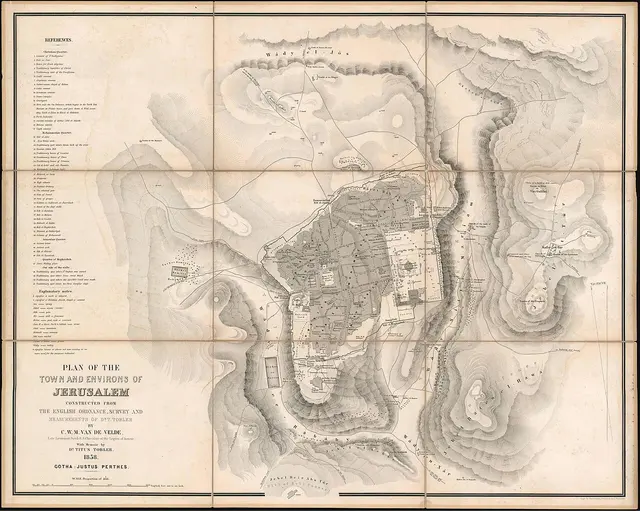
Khwarazmian forces, invited into Syria by the Egyptian sultan al-Salih Ayyub, entered Jerusalem in July 1244. The citadel surrendered on 23 August; most of the Christian population leaving the city was killed on the road, and the Church of the Holy Sepulchre was plundered. Jerusalem never again came under Latin rule.
Historical site1244
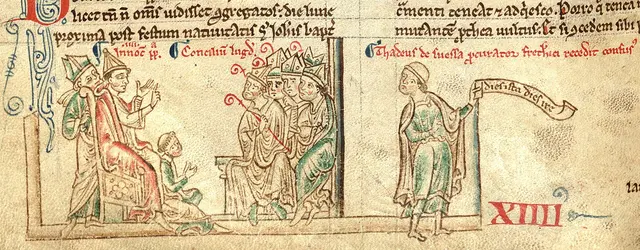
Battle of Gaza / La Forbie
On 17–18 October 1244 at Harbiyya (La Forbie) near Gaza, the allied army of the Kingdom of Jerusalem with Damascus, Homs and Kerak was heavily defeated by the Egyptian army and its Khwarazmian allies. The Frankish army was largely destroyed; Count Walter of Brienne of Jaffa was captured.
 Event depiction
1245
First Council of Lyon and call for the Seventh Crusade
The council Pope Innocent IV held at Lyon in summer 1245 deposed Emperor Frederick II and, in response to the loss of Jerusalem, proclaimed a new crusade. A tax on clerical revenues was decided for the Seventh Crusade, to be led by King Louis IX of France.
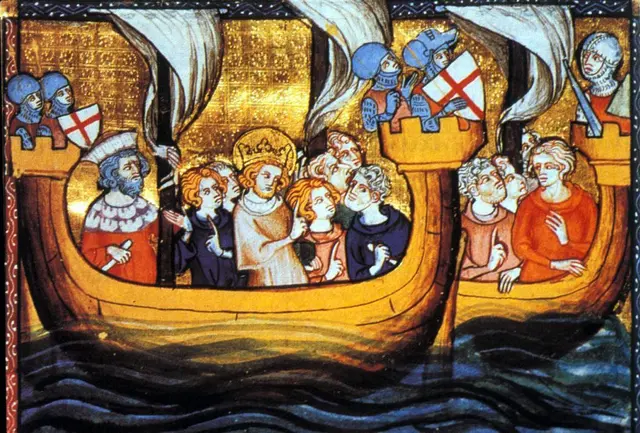 Contextual historical image
1248
Louis IX arrives in Cyprus
Louis IX set out from Aigues-Mortes in August 1248 and reached the port of Limassol in Cyprus on 17 September 1248. The army wintered in Cyprus; during this time supplies were gathered, ships prepared, Mongol envoys received and Damietta chosen as the crusade's objective.
Event depiction1249
Louis IX captures Damietta
Louis IX's army landed near Damietta on 5 June 1249 and forced the Ayyubid forces on the beach to withdraw. When the commander Fakhr al-Din withdrew, the garrison and population also abandoned the city; the crusaders took Damietta without a fight on 6 June.
 Event depiction
1250
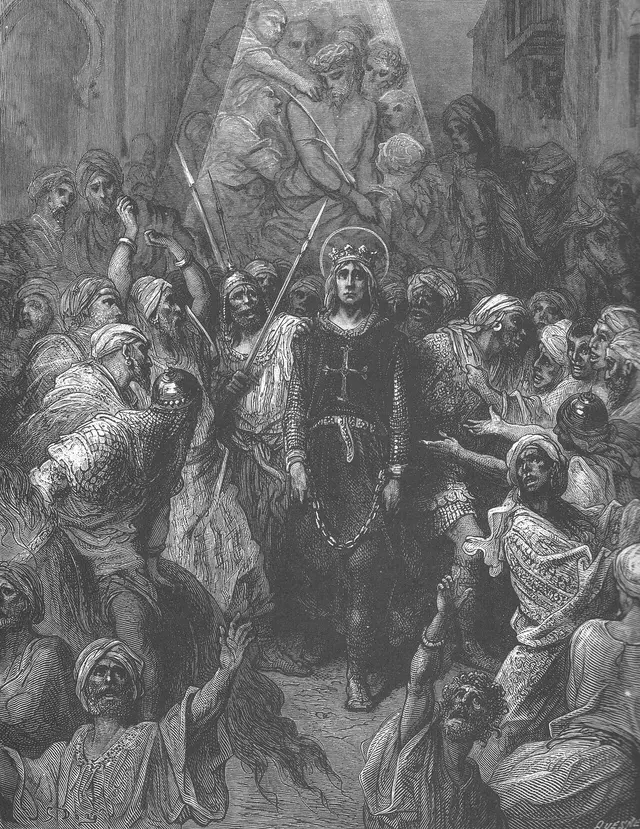
Louis IX captured at Mansurah and Fariskur
Louis IX's army crossed the river before Mansura in February 1250, but the reckless charge into the town by the king's brother, Count Robert of Artois, caused heavy losses. After long attrition and disease, the retreating army was surrounded at Fariskur in April 1250; Louis was captured and released in exchange for the return of Damietta and a large ransom.
Contextual historical image1250
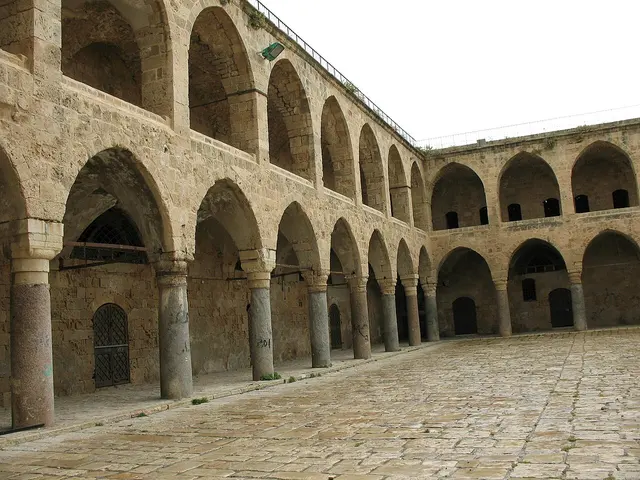
Beginning of Mamluk rule in Egypt
In May 1250 the Bahri Mamluks killed the Ayyubid sultan Turanshah. For a short time al-Salih Ayyub's widow Shajar al-Durr was recognised as sultan; she then married the emir Izz al-Din Aybak and left power to him. Ayyubid rule in Egypt thus ended and the era of the Mamluk Sultanate began.
 Contextual historical image
1254
Louis IX leaves the Levant
After his release in May 1250, Louis IX stayed in Acre for four years instead of returning to France. During this time he had the walls of Acre, Caesarea, Jaffa and Sidon repaired, negotiated the release of the prisoners in Egypt, and returned to France in April 1254.
Historical site12561270
War of Saint Sabas
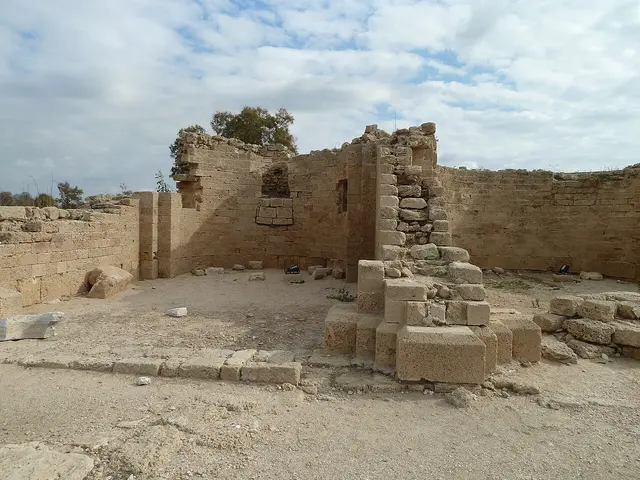
In 1256 a dispute over property belonging to the monastery of Saint Sabas in Acre turned into a war between Venice and Genoa that split the Latin East in two. The barons and military orders also took sides; the Genoese were expelled from Acre in 1258, and the conflict continued intermittently until 1270.
 Contextual historical image
1260
Battle of Ayn Jalut
On 3 September 1260 at Ayn Jalut in Galilee, the Mamluk sultan Qutuz and his commander Baybars defeated the Mongol army under Kitbuqa. Kitbuqa was killed, the Mongol advance from Syria toward Egypt was halted, and the Mamluks became masters of Syria.
Contextual historical image1261
Byzantines recover Constantinople
On 25 July 1261 Alexios Strategopoulos, commander of the Empire of Nicaea, entered Constantinople with a small force while the Latin garrison and the Venetian fleet were away. The Latin emperor Baldwin II fled, and Michael VIII Palaiologos entered the city and restored the Byzantine Empire.
Contextual historical image1263
Baybars' first major coastal raid
In spring 1263 the Mamluk sultan Baybars led a major campaign into the Kingdom of Jerusalem. He had the Church of the Annunciation in Nazareth and the monastery on Mount Tabor destroyed, ravaged the surroundings of Acre and attacked its walls, but withdrew without attempting to take the city.
Historical site1265
Baybars' Caesarea–Arsuf campaign
In a campaign begun in February 1265, Baybars took Caesarea, then Haifa and Arsuf, defended by the Hospitallers. The walls of the captured cities were demolished and the region brought under Mamluk rule; the Latin coastal strip south of Acre shrank considerably.
Historical site1266
Capture of Safed Castle
In June 1266 Baybars besieged the powerful Templar castle of Safed in Galilee. After assaults causing heavy losses, the castle surrendered on 23 July 1266 on a promise of safe conduct; but most of the garrison was then executed. The reasons are told differently in the sources.
Contextual historical image1268
Fall of Jaffa and Beaufort
In his campaign of spring 1268, Baybars took Jaffa after a short siege in early March and, in mid-April, the Templar castle of Shaqif Arnun (Beaufort). These conquests further shrank the territory held by the Kingdom of Jerusalem ahead of the Antioch campaign.
Geographical record1268
Baybars captures Antioch
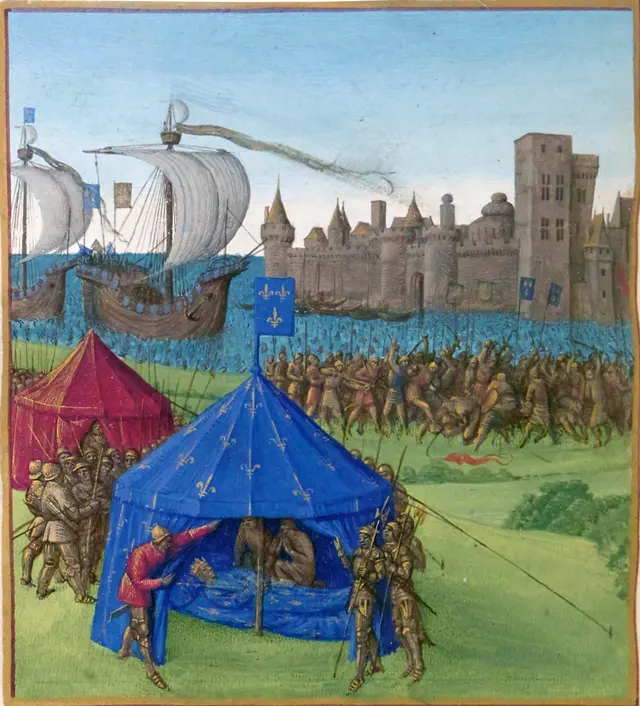
Baybars besieged Antioch in May 1268 and took the city on 18 May after a four-day siege. Most of the population was killed or carried off into slavery; the Principality of Antioch, in existence since 1098, effectively came to an end.
 Event depiction
1270
Eighth Crusade: Tunis
Louis IX's second crusade sailed in July 1270 not to the Levant but to Hafsid Tunis. Disease spread through the camp at Carthage; the king died on 25 August 1270. His brother Charles of Anjou secured the army's withdrawal through a treaty with the Hafsid sultan.
Contextual historical image1271
Surrender of Krak des Chevaliers
In March 1271 Baybars besieged Krak des Chevaliers (Hisn al-Akrad), the Hospitallers' strongest castle. After the outer defences fell, the garrison was persuaded to surrender, probably by a forged letter of command, and the castle was handed over on 8 April 1271 in return for safe conduct.
 Geographical record
12711272
Lord Edward's Crusade
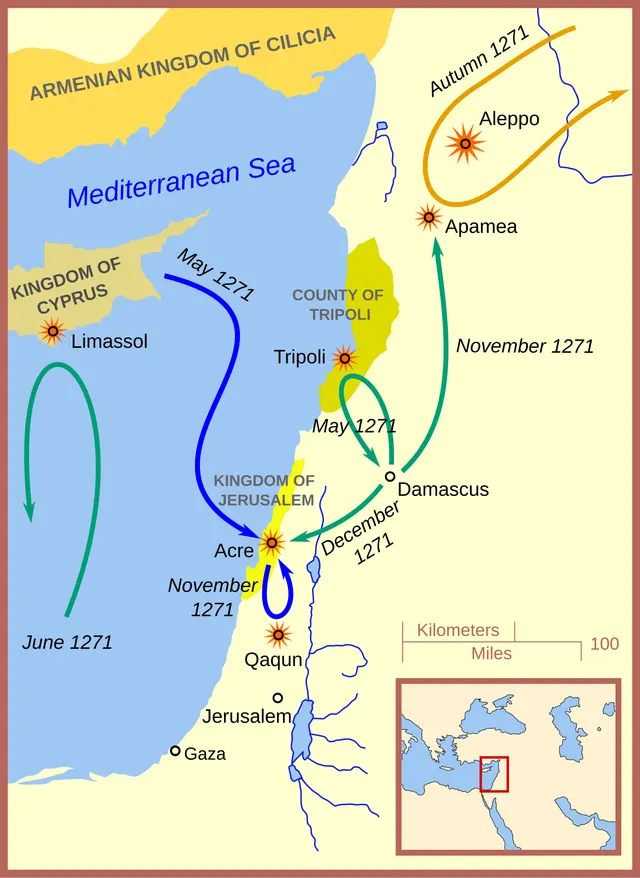
Prince Edward of England (later Edward I) reached Acre in May 1271 with a small army. Seeking coordination with the Mongol Ilkhanids, he made limited raids into Mamluk territory but achieved no lasting gain, and after the 1272 truce returned to Europe having survived an assassination attempt with wounds.
Contextual historical image1272
Baybars–Edward truce
On 22 May 1272 at Caesarea, a truce of ten years, ten months and ten days was signed between Baybars and King Hugh I of Jerusalem and Cyprus. By securing Acre and the pilgrim road to Nazareth, the truce effectively ended Lord Edward's crusade.
 Historical site
1274
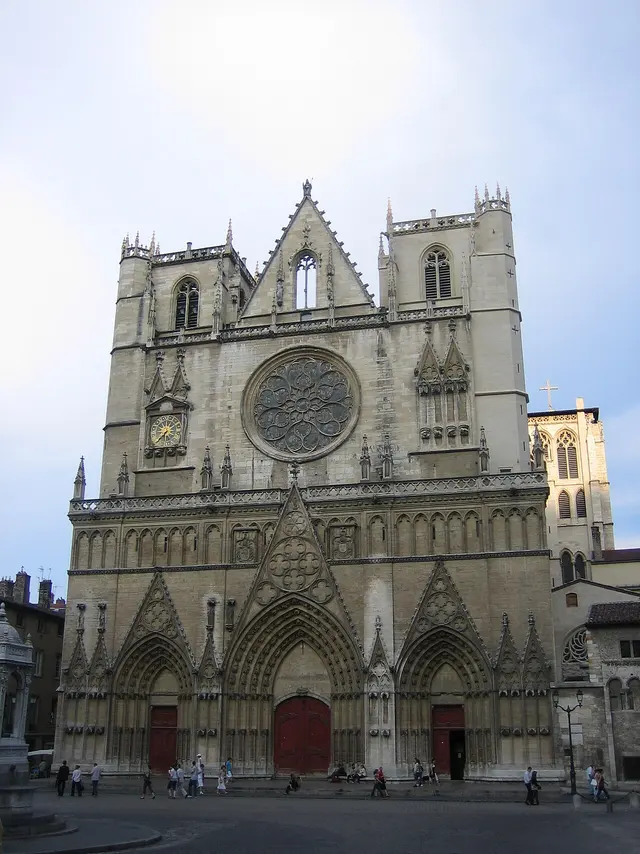
Second Council of Lyon and the new crusade plan
The council Pope Gregory X held at Lyon in 1274 planned a new general crusade for the Holy Land and adopted a six-year church tax to finance it. Church union with Byzantium was proclaimed and Mongol Ilkhanid envoys were received; but with the pope's death in 1276 the crusade never took place.
Contextual historical image1277
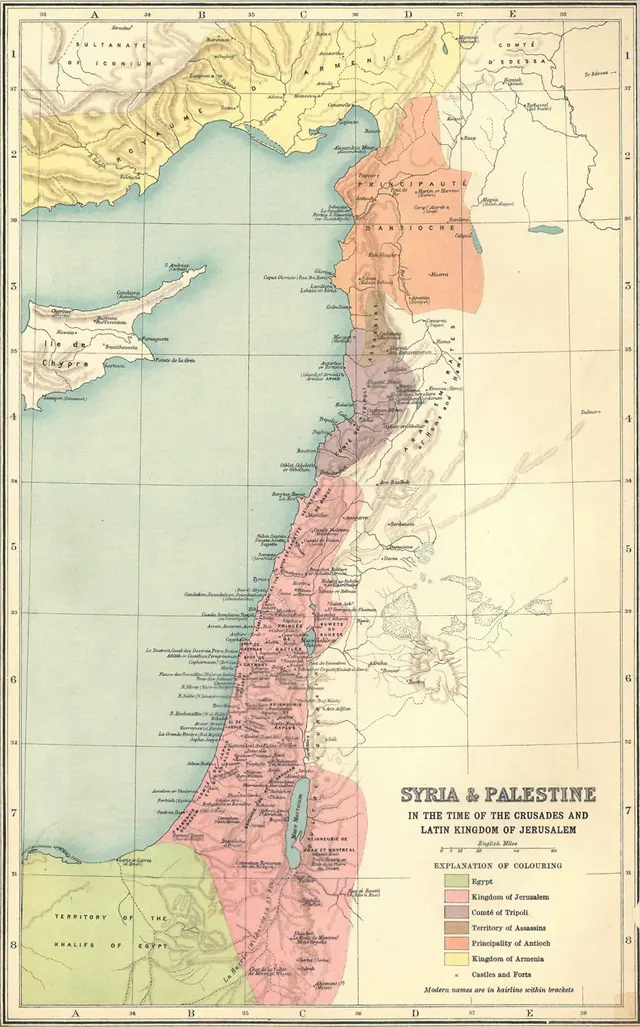
Death of Baybars
The Mamluk sultan Baybars died in Damascus on 1 July 1277. After the brief reigns of his sons and a power struggle among the emirs, the emir Sayf al-Din Qalawun became sultan in 1279 and maintained the pressure on the Latin coastal states.
 Contextual historical image
1281
Second Battle of Homs
On 29 October 1281 near Homs, the Mamluk sultan Qalawun faced a Mongol, Armenian and Georgian army commanded by Möngke Temür, brother of the Ilkhan Abaqa. Although the Mamluk left wing broke, Qalawun won thanks to the resistance of his centre and the withdrawal of the wounded Möngke Temür.
Historical site1285
Capture of Margat Castle
On 17 April 1285 Qalawun besieged Marqab, the Hospitallers' great castle on the Mediterranean coast. After mining brought down a tower, the castle surrendered on 25 May; the garrison was allowed to withdraw with its possessions to Tripoli and Tortosa.
Geographical record1287
Capture of Latakia
When an earthquake in March 1287 damaged one of Latakia's defensive towers, Qalawun sent an army to the city. Attacking on the grounds that the city belonged to the Principality of Antioch and was not covered by the truce with Tripoli, the Mamluks took Latakia in April 1287.
Event depiction1289
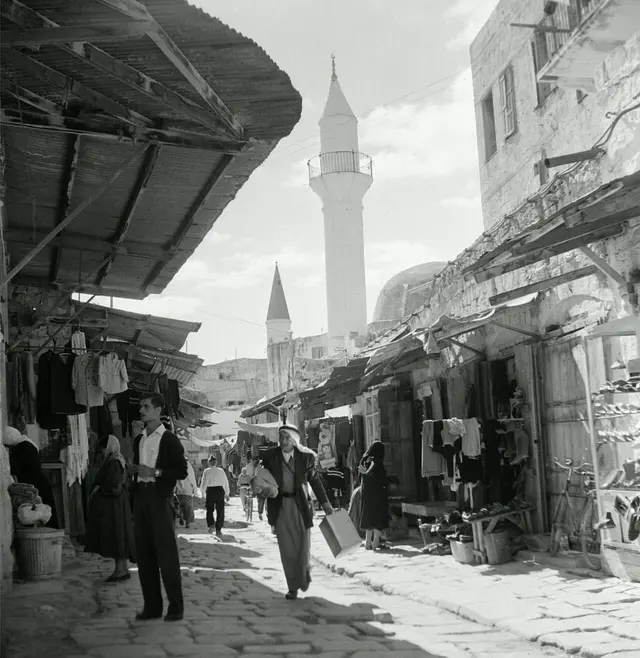
Fall of Tripoli
The succession crisis in Tripoli after Bohemond VII's death in 1287 and Genoese influence in the city gave Qalawun grounds to intervene. The Mamluk army besieged Tripoli in March 1289 and took the city on 26 April; it was destroyed and the county came to an end.
 Historical site
1290
Killing of Muslim merchants at Acre
In August 1290, undisciplined crusaders who had come to Acre from northern Italy in answer to Pope Nicholas IV's call attacked Muslim merchants and peasants in the city despite the truce; some local Christians were also killed because, being bearded, they were taken for Muslims. When Qalawun's demand that the culprits be handed over was refused, the sultan began preparing for war.
Contextual historical image1290
Death of Qalawun; Acre campaign passes to al-Ashraf
Having completed preparations for the campaign against Acre, Sultan Qalawun died shortly after leaving Cairo with his army in November 1290. His son al-Ashraf Khalil succeeded him, maintained his father's decision for war and besieged Acre in spring 1291.
 Event depiction
1291
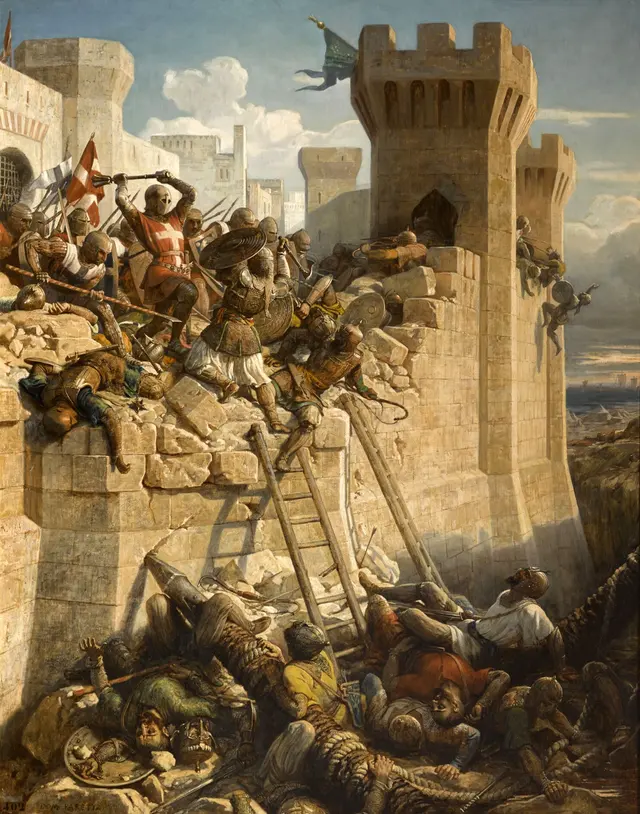
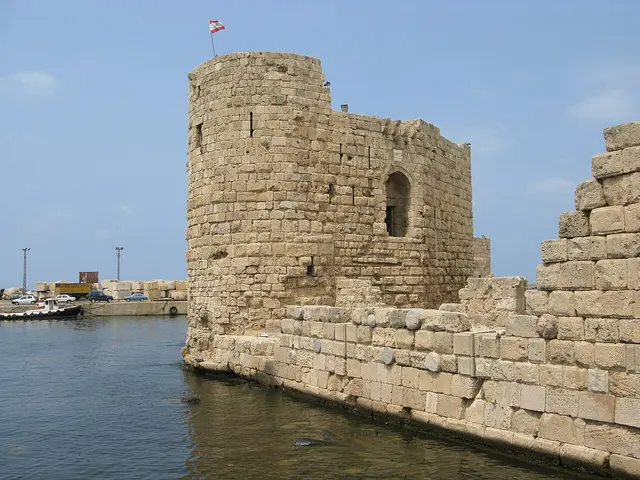
Fall of Acre
Al-Ashraf Khalil besieged Acre with a great Mamluk army on 6 April 1291. After a six-week siege the city was entered on 18 May through the “Accursed Tower”. The Templar master William of Beaujeu was mortally wounded; King Henry II fled to Cyprus, and with the fall of Acre the Kingdom of Jerusalem effectively came to an end.
 Historical site
1291
Evacuation of Tyre, Sidon and Beirut
After the fall of Acre, between May and July 1291, the other Latin cities on the Levantine coast were lost one by one. Tyre was abandoned without a fight, Beirut surrendered, and the Templars' sea castle at Sidon was evacuated after holding out for a time.
 Historical site
1291
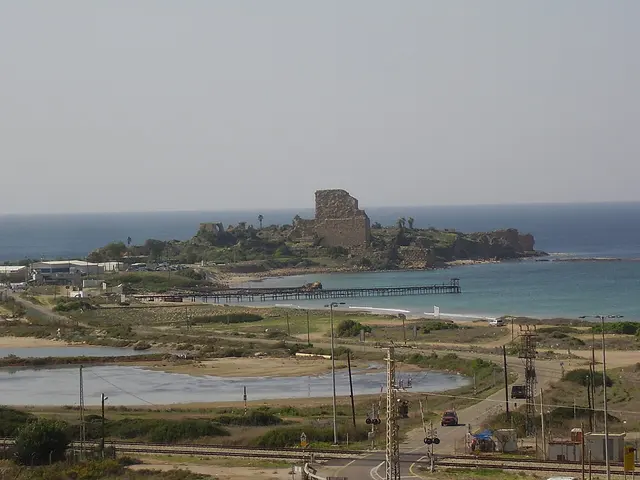
Evacuation of Tortosa and Atlit
In August 1291 the Templars evacuated without a fight their last great castles on the Levantine coast, Tortosa (3 August) and Atlit (14 August), and withdrew to Cyprus. The Latin military presence on the Levantine mainland thus came to an end; only the island of Ruad off Tortosa remained in Templar hands for a few more years.
1095–1291 · FULL CHRONOLOGY
From Clermont to Acre.
Calls to crusade, marches, battles, sieges, treaties, changes of power and the end of Latin rule in the East appear on one timeline. Detailed cases link directly to their records.
134verified timeline records
134 records shown
No timeline record matches.
Change the search or reset the era and type filters.
Coverage runs from the 1095 call at Clermont to the fall of Acre and the last Frankish evacuations from Tyre, Sidon, Beirut, Tortosa and Atlit in 1291. Events whose day or month is disputed or varies between sources are shown only by year or date range.
Crusades
The eight Crusades
Crusade files bringing together each expedition's events, route, actors and outcome on a single page. The Crusades →
- IFirst Crusade1096–1099 · 16 event records→
- IISecond Crusade1147–1149 · 11 event records→
- IIIThird Crusade1189–1192 · 13 event records→
- IVFourth Crusade1202–1204 · 6 event records→
- VFifth Crusade1217–1221 · 4 event records→
- VISixth Crusade1228–1229 · 4 event records→
- VIISeventh Crusade1248–1254 · 8 event records→
- VIIIEighth Crusade1270 · 6 event records→
SOURCES AND METHOD
The index is a starting point for research, not a final verdict.
The timeline, case index and map now share one verified record set. Councils and assemblies directly connected with campaign decisions, military orders or the law of the Crusader states are identified separately. Verify editions and page references before using a short summary in academic writing.