March – 26 April 1289 · Tripoli
Fall of Tripoli
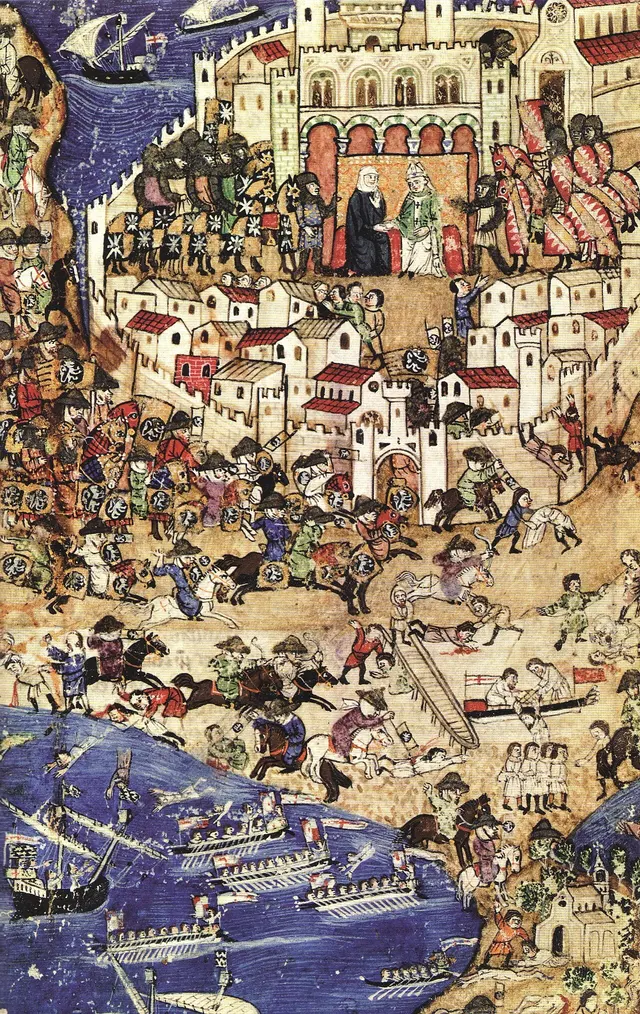
The succession crisis in Tripoli after Bohemond VII's death in 1287 and Genoese influence in the city gave Qalawun grounds to intervene. The Mamluk army besieged Tripoli in March 1289 and took the city on 26 April; it was destroyed and the county came to an end.
RESEARCH DOSSIER
Historical analysis of the event
Background
When Bohemond VII died childless, the city's leading men refused to accept his sister Lucia, formed a commune and sought the protection of Genoa. Lucia eventually came to terms with the commune and was recognised as countess. During this turmoil, some pro-Venetian circles are said to have warned Qalawun that growing Genoese power in the city would threaten Mamluk trade.
Course of events
Claiming the truce had been broken, Qalawun besieged Tripoli with a large army in March 1289. The city's position on a peninsula jutting into the sea made it easier to defend; some help came from Acre, Cyprus and the Italian cities.
But heavy catapult fire and mining brought down part of the walls. In the last days of the siege the Venetians and Genoese left the city in their ships. In the general assault of 26 April 1289 the city was taken. Most of the people who could not escape were killed or captured; those who had taken refuge on a small island offshore were later caught as well.
Outcome and significance
Qalawun had the old city destroyed and, to stop the Franks from using it again as a base from the sea, had a new city founded a few kilometres inland, forming the core of today's Tripoli. Smaller places nearby such as Jubayl and Batrun also soon passed to the Mamluks.
With the fall of Tripoli, of the four great crusader states only the Acre-centred Kingdom of Jerusalem remained.
Sources and debates
The Templar of Tyre gives the most detailed Latin account of the siege and the political turmoil before it. Abu al-Fida took part in the siege and described the city's capture. Who warned Qalawun, and the roles of Venice and Genoa, are reported differently in the sources.
Dates, places and figures in this record compare the principal narrative sources with modern scholarship. Where the sources disagree this is stated in the text; for a thesis or publication, consult the relevant edition and page reference.