18 July – 25 August 1270 · Carthage / Tunis
Eighth Crusade: Tunis
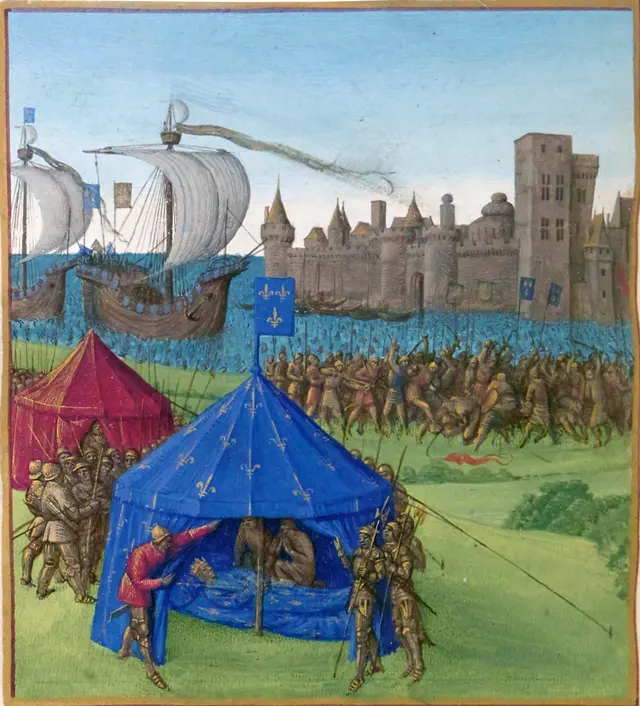
Louis IX's second crusade sailed in July 1270 not to the Levant but to Hafsid Tunis. Disease spread through the camp at Carthage; the king died on 25 August 1270. His brother Charles of Anjou secured the army's withdrawal through a treaty with the Hafsid sultan.
RESEARCH DOSSIER
Historical analysis of the event
Background
As Baybars took the Latin coastal cities one by one and Antioch fell, Louis IX took the cross a second time in 1267. The choice of Tunis as the target is debated: the idea that the Hafsid sultan al-Mustansir was ready to convert to Christianity, the notion that Tunis could serve as a base against Egypt, and the interests of the king's brother Charles of Sicily, who was owed tribute from Tunis, are all cited as factors.
Course of events
Louis set out from Aigues-Mortes on 1 July 1270 and landed at Carthage near Tunis on 18 July. The army took the old fortress of Carthage, made camp and waited for Charles. In the summer heat, epidemics such as dysentery and typhoid spread through the camp.
The king's son John Tristan died on 3 August. Louis too fell ill and died on 25 August 1270. That same day Charles of Anjou arrived at Carthage with his fleet.
Outcome and significance
After several clashes with the Hafsid army, Charles made a treaty with al-Mustansir: the sultan would continue paying tribute to Charles, pay a war indemnity and allow Christian merchants and priests to live freely in Tunis. With the new French king Philip III, the army withdrew in November 1270; many ships sank in a storm off Sicily.
The failure of the expedition is regarded as the end of the age of great crusades to the Holy Land. Louis IX was canonised in 1297.
Sources and debates
Joinville, though he did not take part, reports the king's death. The chronicle of Primat, sources from Saint-Denis and William of Nangis give the French side, and Ibn Khaldun the Hafsid side. The real motive for directing the crusade to Tunis and Charles of Anjou's role are debated among historians.
Dates, places and figures in this record compare the principal narrative sources with modern scholarship. Where the sources disagree this is stated in the text; for a thesis or publication, consult the relevant edition and page reference.