8 April 1271 · Krak des Chevaliers
Surrender of Krak des Chevaliers
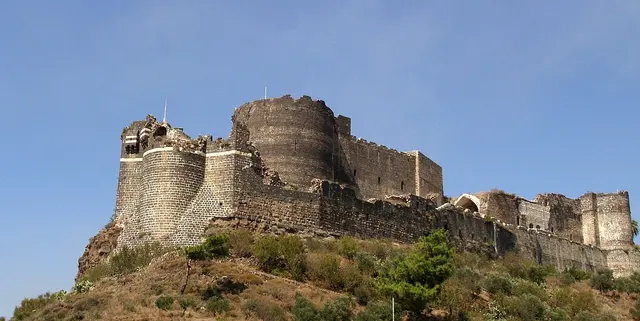
In March 1271 Baybars besieged Krak des Chevaliers (Hisn al-Akrad), the Hospitallers' strongest castle. After the outer defences fell, the garrison was persuaded to surrender, probably by a forged letter of command, and the castle was handed over on 8 April 1271 in return for safe conduct.
RESEARCH DOSSIER
Historical analysis of the event
Background
Krak des Chevaliers was a great castle controlling the Homs gap, held by the Hospitallers since 1142. Thirteenth-century expansions had made it one of the most impressive military buildings of the Middle Ages. But by the 1270s the Hospitallers' manpower had declined, and the lands around the castle had shrunk under Mamluk pressure.
Course of events
Baybars began the siege on 3 March 1271. Winter rains delayed the setting up of the catapults. At the end of March the castle's outer suburb and then its outer walls were taken; the defenders withdrew into the powerful inner castle.
According to Mamluk sources, Baybars had a forged letter prepared, appearing to come from the Hospitaller master in Tripoli and ordering the castle's surrender. The garrison surrendered on 8 April 1271 on condition of safe passage to Tripoli.
Outcome and significance
The castle passed to the Mamluks without serious damage and was repaired to become the centre of a Mamluk garrison, one reason it still largely stands today. The fall of Krak collapsed the County of Tripoli's inland defence, and Baybars soon took other castles such as Akkar.
The surrender shows that in crusader-era castle defence, morale, manpower and hope of outside help were as decisive as the strongest walls.
Sources and debates
The forged-letter story appears only in Mamluk sources, especially Ibn Abd al-Zahir. Latin sources mention the castle's fall briefly. Whether the story is a propaganda element highlighting the sultan's cunning is debated. The castle's architecture and the traces of the siege have been studied in detail through archaeological and architectural research.
Dates, places and figures in this record compare the principal narrative sources with modern scholarship. Where the sources disagree this is stated in the text; for a thesis or publication, consult the relevant edition and page reference.