7 January 1148 · Mount Honaz / Denizli
Crossing of Mount Honaz
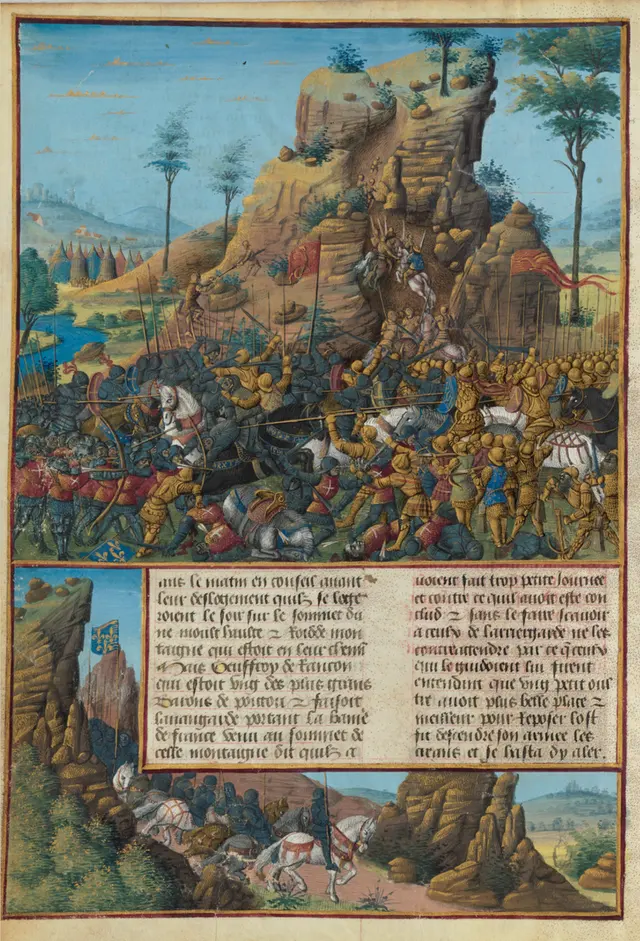
In early January 1148, at the pass of Mount Cadmus (Honaz Dağı), Louis VII's French army was split in two when the vanguard advanced against orders. Seljuk forces routed the exposed main column with heavy losses; the king barely escaped.
RESEARCH DOSSIER
Historical analysis of the event
Background
After Dorylaion the French army, with the German remnants, advanced south along the Aegean coast and then up the Maeander valley to Laodicea (Denizli). The road from Laodicea to Antalya ran through the steep passes of Mount Cadmus. Seljuk forces were watching the army's movements closely.
Course of events
The king ordered Geoffrey of Rancon, commanding the vanguard, to camp on the summit. But Geoffrey, thinking the march easy, went down beyond the pass. The main column behind, full of baggage and pilgrims, was left open to Seljuk attack.
In the attack in the narrow pass many soldiers and animals fell from the cliffs or were killed. According to Odo of Deuil, when his horse was killed Louis VII climbed onto a rock, held off his attackers and reached his army as darkness fell.
Outcome and significance
After this disaster the army's discipline was handed to Everard des Barres, master of the Templars in France; the Templars divided the army into units of fifty and secured an orderly march to Antalya. At Antalya Louis and most of the nobles sailed to Antioch; most of the pilgrims who found no ships were left behind and perished from disease and attacks.
Sources and debates
The main source is Odo of Deuil, who was with the king; his account is harsh toward Byzantium and full of praise for the Templars. William of Tyre also reports the episode. The battle is dated to 6 or 7 January 1148; the exact location of the pass is disputed.
Dates, places and figures in this record compare the principal narrative sources with modern scholarship. Where the sources disagree this is stated in the text; for a thesis or publication, consult the relevant edition and page reference.