24–28 July 1148 · Damascus
Siege of Damascus
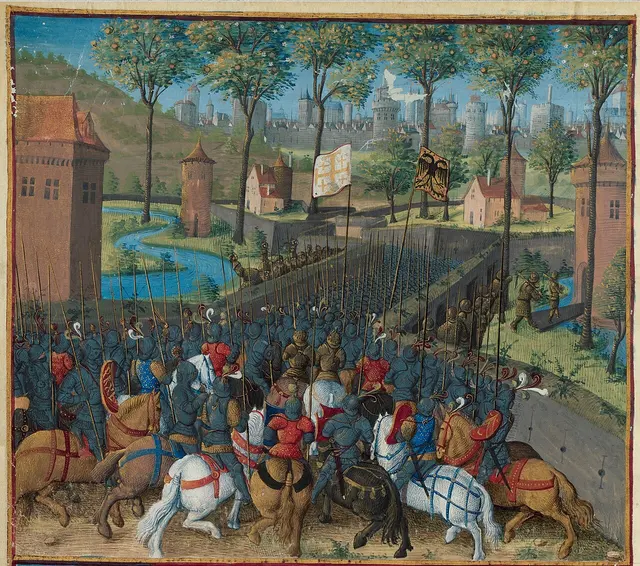
On 24 July 1148 the armies of the Second Crusade besieged Damascus from the orchards to its west. Faced with Mu'in al-Din Unur's resistance and the prospect of Nur al-Din and Sayf al-Din coming to the city's aid, the army moved to the east side; four days later the siege was lifted.
RESEARCH DOSSIER
Historical analysis of the event
Background
Following the decision at Palmarea, the army of Jerusalem and the French and German forces marched on Damascus via Tiberias and Banyas. On learning of the crusader army's approach, Mu'in al-Din Unur, who governed the city, asked Sayf al-Din Ghazi in Mosul and Nur al-Din in Aleppo for help.
Course of events
On 24 July the crusaders advanced through the orchards west of the city, divided by water channels and walls, and approached the city walls. In the fighting in the orchards the defenders and volunteers of Damascus suffered heavy losses; the Maliki jurist Yusuf al-Findalawi was among the dead. The crusaders camped in this area, close to water and food.
But because of the defenders' counterattacks and guerrilla-style fighting in the orchards, the leaders on 27 July moved the camp to the east side, where the walls were thought to be weaker. There was no water or food there. When news came that relief armies were approaching, the crusade leaders decided on 28 July to withdraw.
Outcome and significance
The retreat from Damascus effectively ended the Second Crusade. Conrad's proposal for an attempt on Ascalon found no response. The failure led Westerners to accuse the barons of Jerusalem of taking bribes from Damascus.
In Damascus the siege increased Nur al-Din's prestige and weakened confidence in the city's alliance with Jerusalem. Six years later Nur al-Din brought Damascus under his rule.
Sources and debates
Ibn al-Qalanisi witnessed the siege day by day from Damascus. William of Tyre attributes the move of the camp to treachery and reports the bribery charge, without saying clearly who took the bribes. Modern research stresses that the decision may have arisen from logistical and military necessity, and that the treachery narrative was a product of the later search for culprits.
Dates, places and figures in this record compare the principal narrative sources with modern scholarship. Where the sources disagree this is stated in the text; for a thesis or publication, consult the relevant edition and page reference.