28–29 June 1149 · Inab / Afrin
Battle of Inab
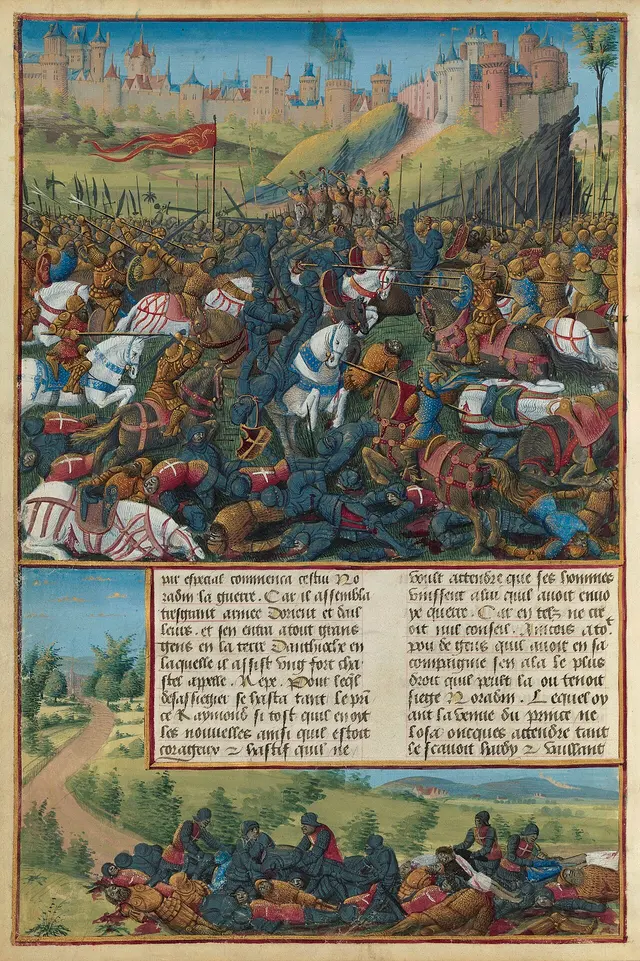
On 29 June 1149 near the castle of Inab, Nur al-Din surrounded and destroyed the forces of Prince Raymond of Poitiers of Antioch and his ally Ali ibn Wafa. Raymond and Ali died in the battle; Nur al-Din advanced through Antiochene territory to the Mediterranean coast.
RESEARCH DOSSIER
Historical analysis of the event
Background
After the failure of the Second Crusade, Nur al-Din increased his pressure in northern Syria. Raymond of Poitiers allied with Ali ibn Wafa, a Kurdish Batini leader, to resist Nur al-Din's campaigns against Antiochene territory. In June 1149 Nur al-Din besieged the castle of Inab.
Course of events
Raymond came to its aid with an outnumbered force, and Nur al-Din temporarily withdrew. But the Frankish–Batini force camped on an open plain. On the night of 28–29 June Nur al-Din's army surrounded the camp and attacked in the morning.
In the battle, fought in a cloud of dust raised by the wind, the allied forces were destroyed. Raymond and Ali ibn Wafa were killed. Raymond's severed head is said to have been mounted in silver and sent to the caliph in Baghdad.
Outcome and significance
Nur al-Din seized most of Antioch's territory east of the Orontes and is said to have reached the Mediterranean coast and bathed in the sea. Antioch was defended by the widowed Princess Constance and Patriarch Aimery; King Baldwin III of Jerusalem came north and took over the city's defence.
The victory at Inab greatly increased Nur al-Din's prestige in the Muslim world and made him the leading figure of jihad against the Franks.
Sources and debates
Ibn al-Qalanisi and Ibn al-Athir report the battle and Nur al-Din's victory in detail. William of Tyre describes Raymond's courage and the battle's tragic end. The site of the battle and the strength of the forces differ between sources.
Dates, places and figures in this record compare the principal narrative sources with modern scholarship. Where the sources disagree this is stated in the text; for a thesis or publication, consult the relevant edition and page reference.