25 January – 19 August 1153 · Ascalon
Siege of Ascalon
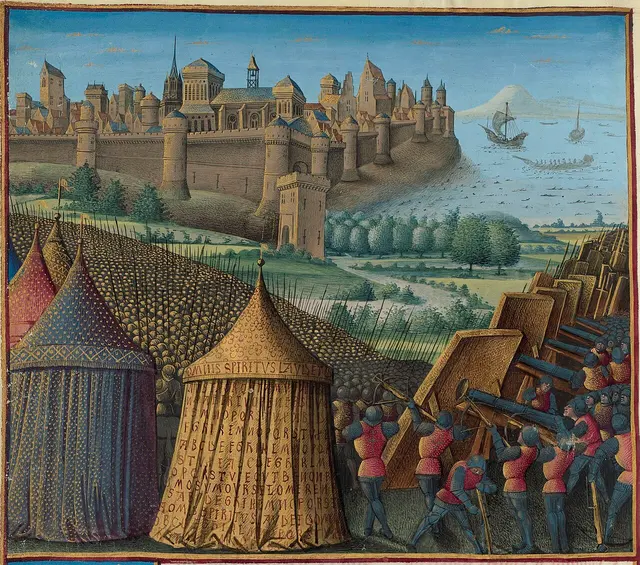
King Baldwin III besieged Ascalon, Fatimid Egypt's last fortress in Palestine, in January 1153. The siege of some seven months ended with the city's negotiated surrender in August 1153, opening the Kingdom of Jerusalem's southern frontier toward Egypt.
RESEARCH DOSSIER
Historical analysis of the event
Background
Since 1099 Ascalon had been the base for Fatimid raids on the Kingdom of Jerusalem. In the 1130s the kingdom had hemmed it in by building the castles of Ibelin, Blanchegarde and Bethgibelin around it. With Gaza given to the Templars in 1150, the ring was complete. Baldwin III had resolved the crisis of government with his mother Melisende in his own favour in 1152.
Course of events
The siege began on 25 January 1153. All the kingdom's forces, the military orders and soldiers carried by ships arriving in the pilgrim season took part. In June the Fatimid fleet brought supplies and troops into the city, but the siege continued.
In August, as a Templar siege tower burned, a breach opened in the wall. According to William of Tyre, the Templar master Bernard of Tremelay closed the breach to other units so as to keep the booty for his order, and the Templars who entered the city were killed. After a brief collapse in morale the siege continued, and the city surrendered on 19 August on condition that its inhabitants could leave for Egypt with their property.
Outcome and significance
The capture of Ascalon completed the Kingdom of Jerusalem's coastal conquests and put it in a position to intervene in Egypt's internal affairs. The city was joined to the county of Jaffa and given to the king's brother Amalric. In the same years, however, Nur al-Din's capture of Damascus removed the kingdom's northern buffer zone.
Sources and debates
William of Tyre is the fullest source for the siege; his story of Templar greed may reflect his critical attitude toward the military orders. Ibn al-Qalanisi and Ibn al-Athir report the city's surrender and the internal strife in Egypt. Some sources date the surrender to 22 August.
Dates, places and figures in this record compare the principal narrative sources with modern scholarship. Where the sources disagree this is stated in the text; for a thesis or publication, consult the relevant edition and page reference.