1158–1159 · Antioch
Byzantine–Frankish rapprochement
In 1158 the Byzantine emperor Manuel I Komnenos came to Cilicia and forced Prince Reynald of Châtillon of Antioch, who had plundered Cyprus, to submit before him. In April 1159 he entered Antioch in ceremony; an agreement with Nur al-Din then freed thousands of Latin prisoners.
RESEARCH DOSSIER
Historical analysis of the event
Background
Reynald of Châtillon became prince of Antioch in 1153 by marrying Princess Constance. In 1156, together with the Armenian lord Thoros, he plundered Byzantine Cyprus, causing great destruction on the island. King Baldwin III of Jerusalem, meanwhile, was seeking Byzantine support against Nur al-Din and in 1158 married the emperor's niece Theodora.
Course of events
Manuel entered Cilicia with a large army in autumn 1158; Thoros fled to the mountains. Reynald appeared before the emperor at Mopsuestia barefoot with a rope around his neck to beg forgiveness, promising to surrender the citadel of Antioch to Byzantium and to accept a Greek patriarch. Baldwin III also met the emperor and mediated between the two sides.
In April 1159 Manuel entered Antioch in a magnificent ceremony in which Reynald held the bridle of his horse and Baldwin III rode behind. Instead of marching on Aleppo, he then made an agreement with Nur al-Din; Nur al-Din released some six thousand Latin prisoners, including Bertrand of Toulouse.
Outcome and significance
The campaign and ceremony of 1159 were the clearest expression of Byzantine supremacy over Antioch. But Manuel's agreement with Nur al-Din disappointed the Latins; rather than take Aleppo, the emperor preferred to keep a balance between the Seljuks and Nur al-Din.
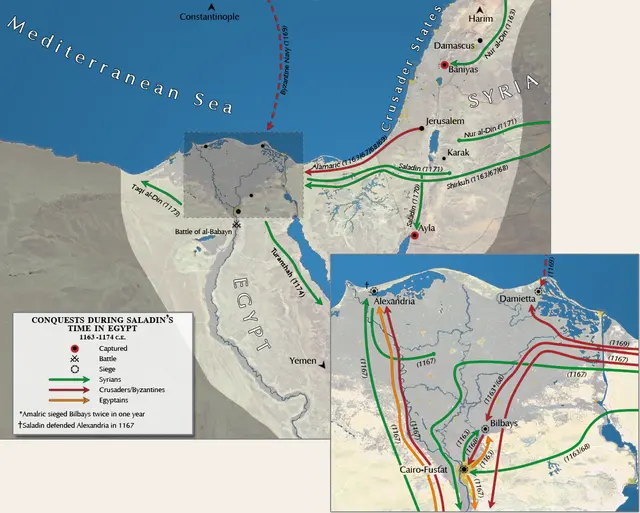
The Byzantine–Jerusalem alliance continued in later years: King Amalric married Manuel's grandniece Maria, and a joint expedition to Egypt was mounted in 1169.
Sources and debates
John Kinnamos and Niketas Choniates stress Byzantine supremacy; William of Tyre reports Reynald's humiliation critically. Michael the Syrian and Ibn al-Qalanisi mention the Manuel–Nur al-Din agreement. Whether a Greek patriarch was actually installed in Antioch, and when, is disputed.
Dates, places and figures in this record compare the principal narrative sources with modern scholarship. Where the sources disagree this is stated in the text; for a thesis or publication, consult the relevant edition and page reference.