1163 – 1169 · Cairo – Bilbeis – Alexandria
Crusader–Zengid campaigns in Egypt
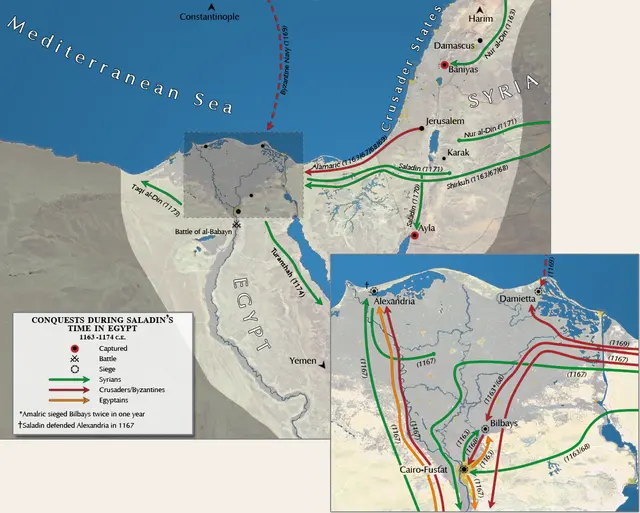
Between 1163 and 1169, King Amalric of Jerusalem and Nur al-Din's commander Shirkuh clashed several times to gain influence over weakened Fatimid Egypt. The struggle ended in Nur al-Din's favour when Shirkuh became vizier in January 1169.
RESEARCH DOSSIER
Historical analysis of the event
Background
In the 1160s the Fatimid caliphate was collapsing amid power struggles among viziers. Shawar, a vizier ousted in 1163, fled to Damascus and asked Nur al-Din for help. The Kingdom of Jerusalem, able to turn toward Egypt after taking Ascalon, also wanted to bring Egypt's wealth and strategic position under its control.
Course of events
In 1164 Shirkuh restored Shawar to the vizierate. But when Shawar broke his promises to Nur al-Din, he called on Amalric for help; Shirkuh was besieged in Bilbays, and the two armies left Egypt by agreement.
In the second campaign of 1167, Shirkuh defeated the Frankish–Fatimid army at al-Babayn in March. The young Saladin then held Alexandria for months. In the end both sides withdrew again; the Kingdom of Jerusalem gained a resident in Cairo and an annual tribute.
In 1168 Amalric broke the agreement and invaded Egypt, and in November there was a massacre of the population at Bilbays. Shawar had Fustat burned to keep it from the Franks and asked Nur al-Din for help. When Shirkuh arrived in January 1169, Amalric withdrew; Shawar was killed and Shirkuh became vizier.
Outcome and significance
After Shirkuh's death in March 1169, his nephew Saladin became vizier. In the autumn of that year the joint Jerusalem–Byzantine fleet's siege of Damietta also failed. Egypt thus ceased to be a sphere of influence of the Kingdom of Jerusalem, and the kingdom was caught in a pincer in which Syria and Egypt were ruled by the same power.
Sources and debates
William of Tyre vividly describes the Frankish embassy to the Fatimid palace in Cairo and judges the 1168 campaign to have been Amalric's mistake. Ibn al-Athir, Imad al-Din al-Isfahani and Abu Shama give the Zengid side's view. The chronology of the campaigns and the amounts of tribute paid differ between sources.
Dates, places and figures in this record compare the principal narrative sources with modern scholarship. Where the sources disagree this is stated in the text; for a thesis or publication, consult the relevant edition and page reference.