27 November 1095 · Clermont, France
Council of Clermont and the call to crusade
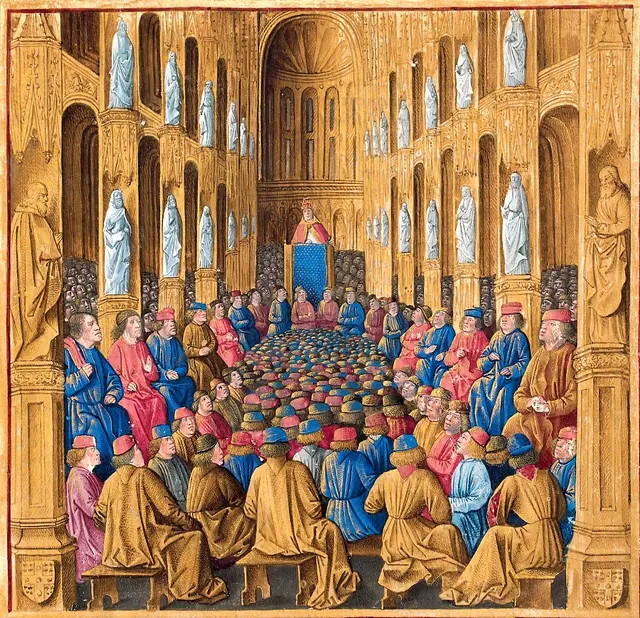
At the close of the Council of Clermont, Pope Urban II called for aid to Eastern Christians and an armed journey to Jerusalem. The council granted those who went a remission that replaced all their penance; the First Crusade began with this call.
RESEARCH DOSSIER
Historical analysis of the event
Background
Having crossed into France after Piacenza, Urban held a great council at Clermont in the Auvergne between 18 and 28 November 1095. Most participants were bishops and abbots from southern and central France. Much of the agenda concerned reform: the Peace of God, the protection of church property and the excommunication of King Philip I for his unlawful marriage.
The appeal and the decrees
On 27 November Urban addressed a crowd in a field outside the town. The core of his message was that Christians in the East were under Turkish attack, that Jerusalem and the Holy Sepulchre must be freed, and that the journey had penitential value. Bishop Adhémar of Le Puy was among the first to take the cross and was appointed papal legate to the expedition; envoys of Count Raymond of Toulouse announced the count's participation.
The council's decrees include the canon stating that whoever set out to free the church in Jerusalem out of devotion alone would have the journey counted in place of all penance. It was also decided that the property of those departing would be placed under church protection and that the movement would set out on 15 August 1096.
Outcome and significance
Until the summer of 1096 Urban toured France repeating the call at centres such as Limoges, Angers, Tours and Nîmes, while bishops and preachers spread the message. The appeal met a much broader response than the papacy had expected: alongside the aristocratic armies, disorderly bands led by popular preachers such as Peter the Hermit set out as well.
With its vow of taking the cross, penitential privilege and protection of property, Clermont formed the core of the legal framework that would develop in later crusades.
Sources and debates
There is no official record of the speech. The versions given by Fulcher of Chartres, Robert the Monk, Baldric of Dol and Guibert of Nogent were written several years later, some after the expedition's success, and differ considerably. The cry “Deus vult” and detailed descriptions of persecution in the East appear in these later accounts. Historians therefore accept as reliable not a verbatim text but a common core of themes: penance, Jerusalem and aid to Eastern Christians.
Dates, places and figures in this record compare the principal narrative sources with modern scholarship. Where the sources disagree this is stated in the text; for a thesis or publication, consult the relevant edition and page reference.