28 August – 8 September 1221 · Mansurah – Damietta
Surrender of the Fifth Crusade army
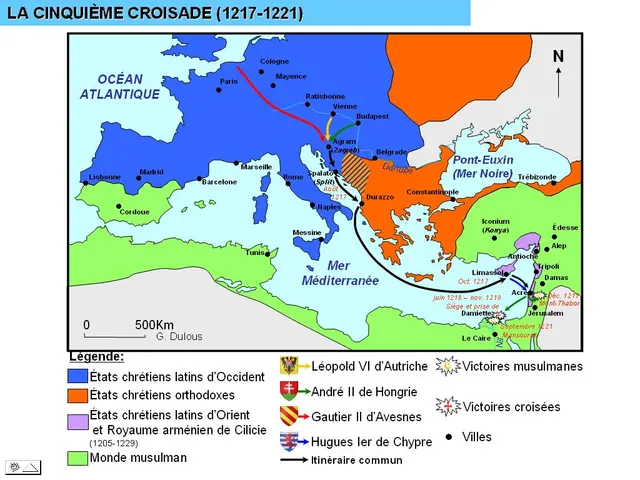
In July 1221 the army of the Fifth Crusade, advancing toward Cairo under Cardinal Pelagius, was trapped near Mansura by the flooding Nile and dikes opened by Ayyubid forces. The army surrendered at the end of August; Damietta was returned, an eight-year truce was made and prisoners were released on both sides.
RESEARCH DOSSIER
Historical analysis of the event
Background
After Damietta was taken in 1219, the army waited in the expectation that Frederick II would join the crusade. In summer 1221 German reinforcements under Duke Louis of Bavaria arrived, and John of Brienne also rejoined the army. Al-Kamil again offered peace, but Pelagius insisted on advancing on Cairo. Al-Kamil, meanwhile, had summoned the forces of his brothers al-Mu'azzam and al-Ashraf from Syria.
Course of events
In July 1221 the army marched south along the east bank of the Nile and camped opposite Mansura, where the Nile met one of its branches. The annual Nile flood had begun. Ayyubid ships, moving along a branch of the river, cut the crusaders' link with Damietta.
When the army began to withdraw at the end of August, the Ayyubid forces opened the dikes and flooded the land. Unable to advance through mud and water, its supplies exhausted, the army was surrounded. Around 30 August Pelagius and the leaders agreed to surrender.
Outcome and significance
Under the agreement the crusaders would evacuate Damietta, an eight-year truce would be made, and both sides would release their prisoners. Al-Kamil promised to return the True Cross, but the cross could not be found. Damietta was handed over on 8 September 1221.
The failure of the Fifth Crusade caused great disappointment in the West, and blame fell both on Pelagius and on Frederick II, who had not joined the crusade. The Egyptian strategy was tried again in Louis IX's later crusade.
Sources and debates
Oliver of Paderborn and James of Vitry describe the retreat as witnesses. Ibn al-Athir stresses al-Kamil's restraint toward the crusaders and the cooperation of the Ayyubid brothers. The date and terms of the surrender agreement are given with small differences in the sources.
Dates, places and figures in this record compare the principal narrative sources with modern scholarship. Where the sources disagree this is stated in the text; for a thesis or publication, consult the relevant edition and page reference.