May 1218 – 5 November 1219 · Damietta
Capture of Damietta
The army of the Fifth Crusade besieged Damietta in the Nile delta in May 1218. After the chain tower was taken in August 1218 the siege lasted a year and a half; weakened by hunger and disease, the city was taken on 5 November 1219.
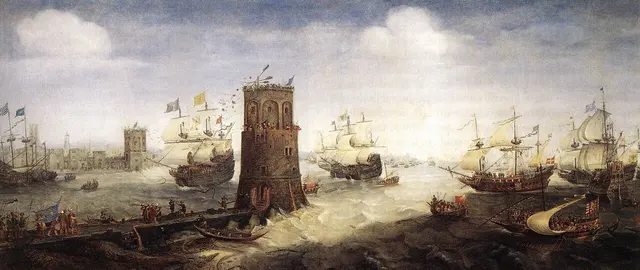
RESEARCH DOSSIER
Historical analysis of the event
Background
Damietta, at the mouth of the Nile's eastern branch, was one of Egypt's most important port cities. A chain tower on an island in the middle of the river controlled the iron chains that closed the river. The crusaders believed that after taking Damietta they could advance on Cairo or exchange it for Jerusalem.
Course of events
The army landed opposite Damietta in May 1218. With a siege tower mounted on two ships, designed by Oliver of Paderborn, the chain tower was taken on 25 August 1218. After this news al-Adil died at the end of August, and the government of Egypt passed to his son al-Malik al-Kamil.
In September 1218 the papal legate Cardinal Pelagius arrived and became increasingly influential in directing the crusade. In 1219 al-Kamil offered Jerusalem and most of Palestine in exchange for Damietta; John of Brienne wanted to accept, but Pelagius and the military orders refused. In September 1219 Francis of Assisi went to al-Kamil's camp and met the sultan. The city, its population greatly reduced by hunger and disease, was taken almost without resistance on 5 November 1219.
Outcome and significance
The crusaders found streets full of the dead and the sick. A dispute arose between Pelagius and John of Brienne over the booty and the government of the city; John returned to Acre for a time.
Taking Damietta was the Fifth Crusade's greatest success. But the army stayed at Damietta for another year and a half waiting for Frederick II's expected arrival, and this wait prepared the ground for the disaster of 1221.
Sources and debates
Oliver of Paderborn and James of Vitry describe the siege from the crusader camp; Ibn al-Athir and Abu Shama give the Egyptian side's view. The scope of al-Kamil's peace offers and Pelagius's role are central to later historians' debate about responsibility for the crusade's failure.
Dates, places and figures in this record compare the principal narrative sources with modern scholarship. Where the sources disagree this is stated in the text; for a thesis or publication, consult the relevant edition and page reference.