8 February – 6 April 1250 · Mansurah – Fariskur
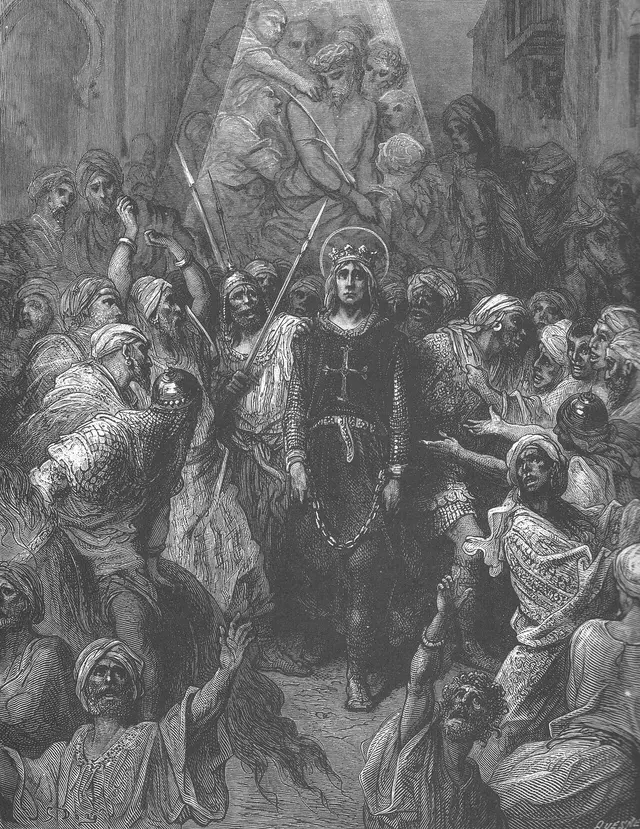
Louis IX captured at Mansurah and Fariskur
Louis IX's army crossed the river before Mansura in February 1250, but the reckless charge into the town by the king's brother, Count Robert of Artois, caused heavy losses. After long attrition and disease, the retreating army was surrounded at Fariskur in April 1250; Louis was captured and released in exchange for the return of Damietta and a large ransom.
RESEARCH DOSSIER
Historical analysis of the event
Background
The crusader army began its march from Damietta toward Cairo in November 1249. That same month Sultan al-Salih Ayyub died; his widow Shajar al-Durr concealed his death until his son Turanshah arrived from Hisn Kayfa. The army reached the opposite bank from Mansura in December and tried to cross the Bahr al-Saghir, a branch of the Nile.
Course of events
On 8 February 1250 the river was crossed at a shallow ford shown by an Egyptian. Robert of Artois, leading the vanguard, overran the Egyptian camp and then, without waiting for the king's orders, charged into the town of Mansura with the Templars. Surrounded in the narrow streets by the Bahri Mamluks, Robert and most of the knights were killed; the Egyptian commander Fakhr al-Din also died in the fighting that morning. Louis came up with the main army and held the camp.
The army stayed opposite Mansura for weeks. Egyptian ships cut the supply route to Damietta; scurvy and dysentery spread through the camp. In early April it was decided to retreat. On 6 April near Fariskur the army was surrounded and the sick Louis was captured together with his brothers.
Outcome and significance
For Louis's release it was agreed that Damietta would be returned and a ransom of 800,000 bezants (400,000 French livres) paid; Damietta was given in place of a ransom for the king himself. While negotiations were under way, Sultan Turanshah was killed by the Mamluks in May 1250. Louis was freed on 6 May after Damietta was handed over and half the ransom paid.
The disastrous end of the Seventh Crusade caused great shock in the West. The Bahri Mamluks who had come to the fore at Mansura soon seized power in Egypt.
Sources and debates
Jean de Joinville fought beside the king at Mansura and was captured; his account is the most detailed and most human testimony to the crusade. Ibn Wasil and al-Maqrizi report the Egyptian side, the rise of the Mamluks and Turanshah's death. Baybars's role at Mansura was emphasised in later Mamluk sources.
Dates, places and figures in this record compare the principal narrative sources with modern scholarship. Where the sources disagree this is stated in the text; for a thesis or publication, consult the relevant edition and page reference.