May 1254 · Acre
Louis IX leaves the Levant
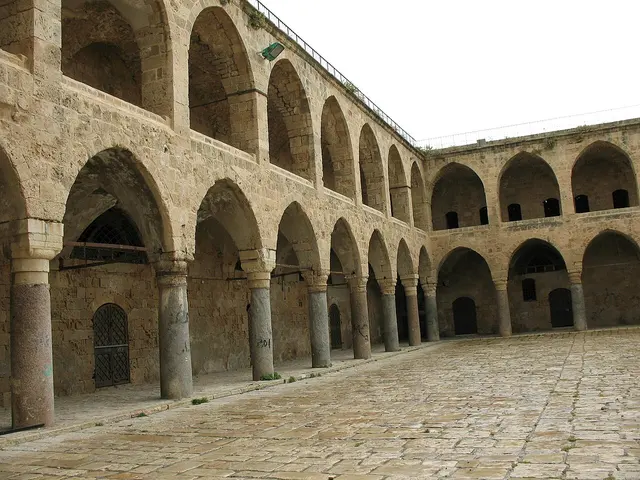
After his release in May 1250, Louis IX stayed in Acre for four years instead of returning to France. During this time he had the walls of Acre, Caesarea, Jaffa and Sidon repaired, negotiated the release of the prisoners in Egypt, and returned to France in April 1254.
RESEARCH DOSSIER
Historical analysis of the event
Background
Louis's army, which reached Acre from Egypt, had been largely destroyed, and thousands of soldiers remained captive in Egypt. His brothers wanted him to return to France; his mother Blanche of Castile was governing France as regent. Louis decided to stay in the East because he did not want to abandon the prisoners and believed the Kingdom of Jerusalem's defences needed strengthening.
His activities
Louis exploited the rivalry between the Mamluk government in Egypt and the Ayyubid ruler in Syria, al-Nasir Yusuf, negotiating with both. He secured from the Mamluks the release of the prisoners still in Egypt and the cancellation of the rest of the ransom.
In this period the walls of Montmusard, Acre's new suburb, and the fortifications of Caesarea, Jaffa and Sidon were repaired at his own expense. Following embassies sent to the Mongol khan, the Franciscan friar William of Rubruck travelled to Mongolia in 1253. When news of his mother's death arrived, Louis left Acre on 24 April 1254.
Outcome and significance
Louis's four-year stay turned a failed Egyptian expedition into a mission that strengthened the defence of the Latin coastal states. He left a French military regiment in Acre, whose costs the French crown bore for a long time.
Louis's piety and his self-sacrifice during this period were among the factors in his canonisation in 1297.
Sources and debates
Joinville describes Louis's years in Acre in detail. William of Rubruck's travel report is a key source for relations with the Mongols. Arabic sources report Louis's negotiations with the Mamluks and the Syrian Ayyubids briefly.
Dates, places and figures in this record compare the principal narrative sources with modern scholarship. Where the sources disagree this is stated in the text; for a thesis or publication, consult the relevant edition and page reference.