May 1250 · Cairo
Beginning of Mamluk rule in Egypt
In May 1250 the Bahri Mamluks killed the Ayyubid sultan Turanshah. For a short time al-Salih Ayyub's widow Shajar al-Durr was recognised as sultan; she then married the emir Izz al-Din Aybak and left power to him. Ayyubid rule in Egypt thus ended and the era of the Mamluk Sultanate began.
RESEARCH DOSSIER
Historical analysis of the event
Background
Al-Salih Ayyub had built his army largely from purchased slaves of Kipchak origin, the mamluks. The most important of these was the Bahriyya regiment, stationed on Rawda island in the Nile. The Bahriyya had played a decisive role in the victory over the crusaders at Mansura. The new sultan Turanshah, however, was promoting his own men brought from Hisn Kayfa.
Course of events
Turanshah took a stance that threatened his father's mamluks. On 2 May 1250, in his camp at Fariskur, he was attacked by Bahri emirs and killed as he tried to flee to the Nile; Baybars is named in the sources among the attackers.
The emirs then recognised Shajar al-Durr as sultan; coins were struck and the sermon read in her name. But when the Abbasid caliph objected to a woman ruling and the Ayyubids in Syria reacted, Shajar al-Durr married the emir Izz al-Din Aybak in July 1250 and left the throne to him. For a time a child Ayyubid prince was also nominally recognised as co-ruler.
Outcome and significance
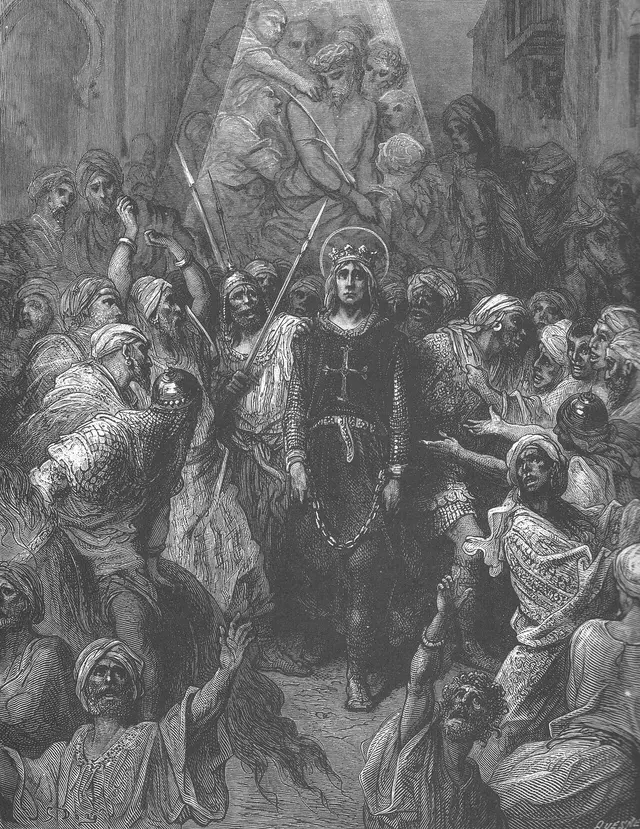
The Mamluk seizure of power took place in the same days as Louis IX's captivity and the ransom negotiations, and affected the execution of the agreement. Aybak was killed in 1257 after a quarrel with Shajar al-Durr, and Shajar al-Durr was killed soon afterwards.
After defeating the Mongols at Ayn Jalut in 1260, the Mamluk Sultanate also became master of Syria, and in 1291 it was the power that eliminated the Latin East.
Sources and debates
Ibn Wasil, al-Maqrizi and Ibn Taghribirdi describe the Mamluk transition in detail; Joinville writes that he witnessed Turanshah's killing as a prisoner. The length of Shajar al-Durr's reign and the relations among the Mamluk emirs are reported differently in the sources.
Dates, places and figures in this record compare the principal narrative sources with modern scholarship. Where the sources disagree this is stated in the text; for a thesis or publication, consult the relevant edition and page reference.