12 August 1099 · Ascalon
Battle of Ascalon
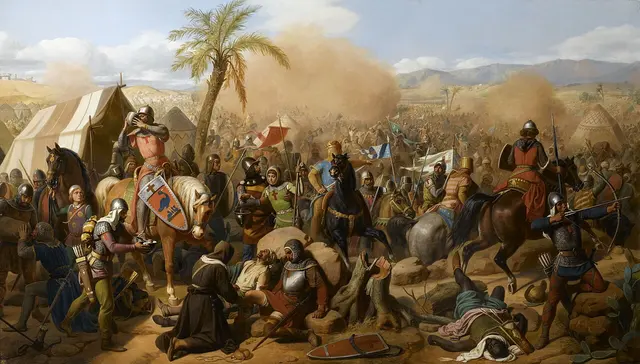
The army that the Fatimid vizier al-Afdal Shahanshah brought to retake Jerusalem was scattered by a surprise crusader attack before Ascalon on 12 August 1099. The victory saved the newly founded Latin government from its first great threat, but Ascalon remained Fatimid until 1153.
RESEARCH DOSSIER
Historical analysis of the event
Background
After the loss of Jerusalem, the Fatimid vizier al-Afdal Shahanshah gathered a large army and came to Ascalon on the Palestinian coast. The army consisted of Sudanese infantry, Arab and Berber cavalry and Egyptian units, and greatly outnumbered the crusaders. Ascalon was the Fatimids' strongest harbour fortress in Palestine and served as the main base for reinforcements from Egypt.
Course of events
Godfrey, Raymond, Robert of Normandy, Robert of Flanders and Tancred left Jerusalem with the army on 10 August; Patriarch Arnulf carried with the army the fragment of the True Cross found in Jerusalem. From herds and prisoners taken on the way, the crusaders learned the position of the Fatimid army and how unprepared it was.
On the morning of 12 August the crusaders attacked the Fatimid army before its camp had formed for battle. In the brief fighting panic spread through the Fatimid ranks; some soldiers were crushed in the gates trying to flee into the city, others took refuge in the sea or in the surrounding orchards. Al-Afdal returned to Egypt by ship.
Outcome and significance
The crusaders captured the Fatimid camp, standards and a great quantity of booty; the vizier's sword and standard were dedicated in the Church of the Holy Sepulchre. The victory saved the small Latin government in Jerusalem from its first and greatest threat.
The city of Ascalon, however, did not surrender. According to the sources, its inhabitants were ready to offer their surrender to Raymond, but Godfrey's demand to rule the city directly caused a dispute and the opportunity was lost. Ascalon stayed in Egyptian hands until 1153 as the base for Fatimid raids on the Kingdom of Jerusalem.
Sources and debates
The Gesta Francorum, Raymond of Aguilers and Fulcher of Chartres describe the battle as the last victory of the First Crusade; their figures for the size of the armies are exaggerated. Ibn al-Qalanisi and Ibn al-Athir record the defeat briefly. On why Ascalon was not taken, Latin sources stress the quarrel among the leaders, a narrative that also reflects propaganda in the rivalry between Godfrey and Raymond.
Dates, places and figures in this record compare the principal narrative sources with modern scholarship. Where the sources disagree this is stated in the text; for a thesis or publication, consult the relevant edition and page reference.