22 July 1099 · Jerusalem
Political foundation of the Kingdom of Jerusalem
A week after the capture of Jerusalem, on 22 July 1099, the crusade leaders chose Godfrey of Bouillon as ruler of the city. Godfrey used the title “Advocate of the Holy Sepulchre” instead of king, laying the foundation of Latin rule in Jerusalem.
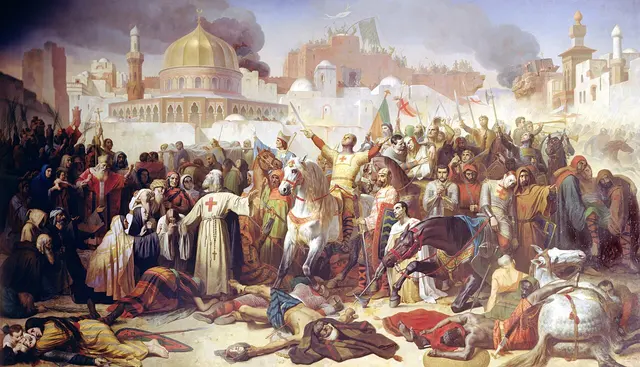
RESEARCH DOSSIER
Historical analysis of the event
Background
After Jerusalem fell, the crusader army faced two questions: who would govern the city, and how would that government relate to religious authority? Some leaders considered the expedition complete and were preparing to go home, while news that a Fatimid army had left Egypt forced a quick decision. The clergy argued that a patriarch should be elected first in the holy city and that secular rule should be subordinate to him.
The election and the question of title
The leaders first offered the rule to Raymond of Saint-Gilles; Raymond declined, saying he did not wish to be king in the city where Christ had worn a crown of thorns. On 22 July Godfrey of Bouillon, duke of Lower Lorraine, was chosen. Godfrey too refused a royal crown, adopting the title given in most sources as Advocatus Sancti Sepulchri, Advocate of the Holy Sepulchre.
Raymond resisted handing over the Tower of David to Godfrey, and the dispute left resentment between the two leaders. On 1 August Arnulf of Chocques was elected patriarch; when Archbishop Daimbert of Pisa arrived in December 1099 he replaced Arnulf, and Godfrey and Bohemond received their lands from him as fiefs.
Outcome and significance
Godfrey's short rule was taken up by the victory at Ascalon, tribute agreements with the coastal cities and the struggle to hold territory with a small body of knights. Since most crusaders returned to Europe in autumn 1099, the new state's military strength was limited to a few hundred knights.
Godfrey died on 18 July 1100. His brother Baldwin came from Edessa to take over and was crowned with the title of king at Christmas that year. The 1099 election is therefore seen as the political foundation of the Kingdom of Jerusalem, and the 1100 coronation as the open proclamation of the monarchy.
Sources and debates
Although it is widely accepted that Godfrey used the title “Advocate”, no contemporary official text documents it directly; writers such as Raymond of Aguilers and William of Tyre stress his humility. Some historians note that the title rests largely on a later narrative and that Godfrey was also called “duke” or “prince”. The patriarchate's claim over secular government was also a matter of open conflict in these early years.
Dates, places and figures in this record compare the principal narrative sources with modern scholarship. Where the sources disagree this is stated in the text; for a thesis or publication, consult the relevant edition and page reference.