25 December 1100 · Bethlehem
Baldwin I becomes king of Jerusalem
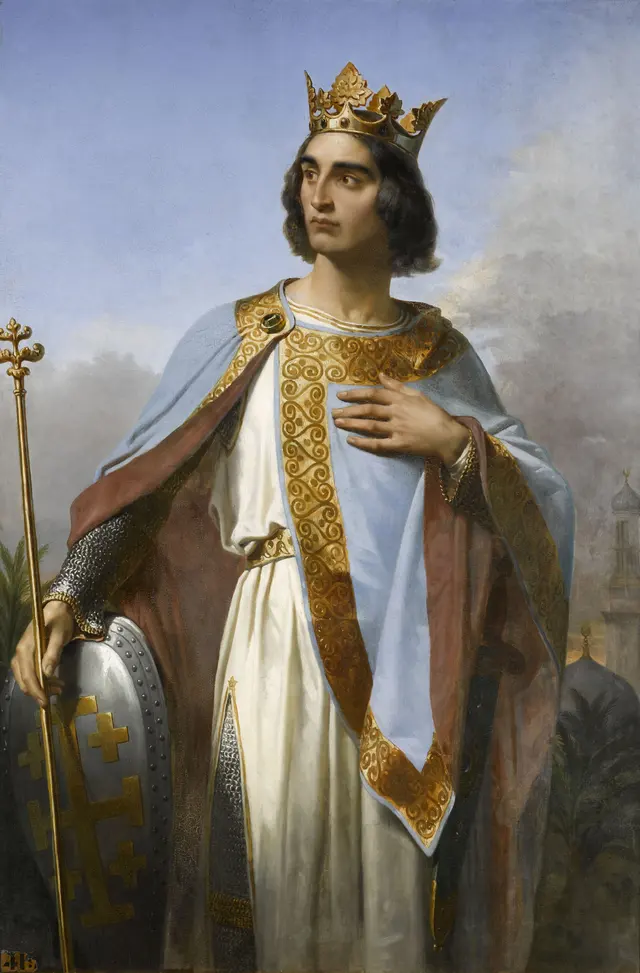
After Godfrey of Bouillon's death in 1100, his brother Baldwin came from Edessa to Jerusalem and took over the government. Crowned by Patriarch Daimbert at Bethlehem on 25 December 1100, he became the first Latin king of Jerusalem.
RESEARCH DOSSIER
Historical analysis of the event
Background
When Godfrey died on 18 July 1100, Patriarch Daimbert was planning to bring Jerusalem under church rule and to call on Bohemond for support. But Bohemond had just been captured by the Danishmendids. The knights around Godfrey wanted the government to pass to his brother, Count Baldwin of Edessa, and sent him word.
Course of events
Leaving Edessa to his cousin Baldwin of Bourcq, Baldwin set out in October 1100. He escaped an ambush by the forces of Damascus and Homs at the Nahr al-Kalb pass near Beirut and reached Jerusalem in November. He was accepted in the city despite Daimbert's opposition.
Once agreement with the patriarch was reached, the coronation took place on 25 December 1100 not in Jerusalem but in the Church of the Nativity in Bethlehem, held to be the birthplace of Christ. Unlike Godfrey, Baldwin openly used the title of king.
Outcome and significance
The coronation settled that Jerusalem would be a secular kingdom rather than a religious territory governed by the church. Tension between Daimbert and the king continued, and the patriarch was removed from office in 1102.
During his reign, which lasted until 1118, Baldwin I took coastal cities such as Arsuf, Caesarea, Acre, Beirut and Sidon with the help of Italian fleets, held the southern frontier against the Fatimids and laid the administrative foundations of the kingdom.
Sources and debates
Fulcher of Chartres, as Baldwin's chaplain, witnessed the events and strongly defends his legitimacy. Albert of Aachen and William of Tyre also give details. Daimbert's letter to Bohemond and the patriarchate's claim to govern are interpreted differently by historians because of the partisanship of the sources.
Dates, places and figures in this record compare the principal narrative sources with modern scholarship. Where the sources disagree this is stated in the text; for a thesis or publication, consult the relevant edition and page reference.