2–5 August 1101 · Merzifon
Crusade of 1101: Merzifon
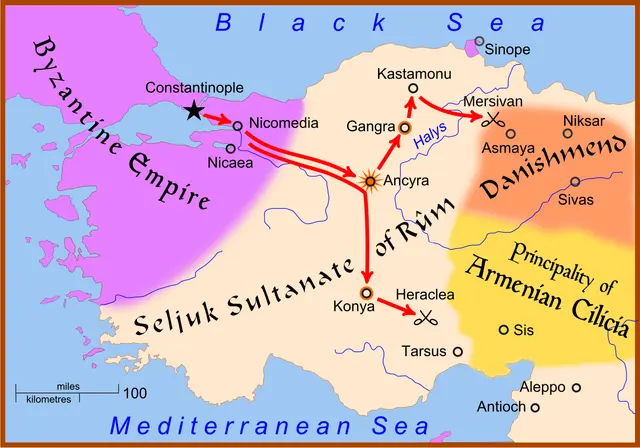
A large, mainly Lombard army that set out from the West after the capture of Jerusalem turned toward northern Anatolia to free Bohemond. In early August 1101 it was destroyed near Merzifon by Kilij Arslan, the Danishmend Gümüştegin and their allies.
RESEARCH DOSSIER
Historical analysis of the event
Background
News of the capture of Jerusalem created a new wave of recruitment in Europe. The Lombard army led by Archbishop Anselm of Milan reached Constantinople in spring 1101; Raymond of Saint-Gilles joined as guide on behalf of Byzantium, and Stephen of Blois and contingents from Burgundy were added to this army. Alexios wanted it to follow the route of the First Crusade.
Course of events
In June 1101 the army took Ankara and handed it over to Byzantium. But the Lombards insisted on heading northeast into Danishmendid territory to free Bohemond, held at Niksar. After a failed siege of Çankırı the army turned north toward Kastamonu, struggling forward short of supplies.
Forces sent by Kilij Arslan, the Danishmend Gümüştegin and Ridwan of Aleppo harassed the army for days. In early August, in a battle near Merzifon, the Lombard vanguard broke. During the night Raymond and the other leaders abandoned the camp and fled to Sinope; the next morning Turkish forces entered the camp and killed or captured those who remained.
Outcome and significance
Merzifon was one of the crusader armies' worst defeats in Anatolia. Thousands, including non-combatants, women and clergy, were taken captive; the baggage and treasure in the camp fell to the Turkish forces. The surviving leaders returned to Constantinople by sea.
The defeat showed that the success of 1097 had not opened a lasting Latin route across Anatolia. Through brief cooperation, the Anatolian Seljuks and the Danishmendids had been able to destroy a large Western army.
Sources and debates
The fullest narrator of the events is Albert of Aachen; Orderic Vitalis and Ekkehard of Aura also provide information. Anna Komnene blames the defeat on the Lombards' obstinacy and clears Raymond. The size of the army and its losses are given in the tens of thousands and are exaggerated. The exact site and date of the battle are also uncertain.
Dates, places and figures in this record compare the principal narrative sources with modern scholarship. Where the sources disagree this is stated in the text; for a thesis or publication, consult the relevant edition and page reference.