1189–1192 · Anatolia and Levant
Third Crusade
The Third Crusade, launched after the loss of Jerusalem in 1187, was joined by Frederick Barbarossa, King Philip II Augustus of France and King Richard the Lionheart of England. Barbarossa died on the way; the crusade took Acre and recovered the coastal strip, but ended with the Treaty of Jaffa in 1192 without taking Jerusalem.
RESEARCH DOSSIER
Historical analysis of the event
Background
The defeat at Hattin and the loss of Jerusalem became a great mobilisation in the West through the bull Audita tremendi. But because of war between England and France, Henry II's death in 1189 and Richard's accession, the West's two great kings could not set out until summer 1190. Meanwhile King Guy had begun besieging Acre in August 1189.
Course of the crusade
Barbarossa's army crossed the Balkans in 1189, entered Anatolia in spring 1190 and took Konya in May; but the emperor drowned in the Saleph (Göksu) river on 10 June 1190, and most of his army dispersed.
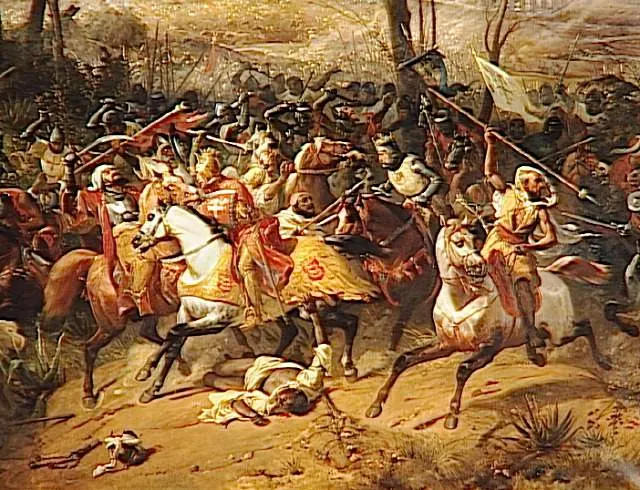
After wintering in Sicily, Philip and Richard reached Acre in spring 1191; on the way Richard conquered Cyprus. Acre surrendered on 12 July 1191. Philip returned to France in August. After the killing of the Acre prisoners, Richard advanced south along the coast, defeated Saladin at Arsuf on 7 September and took Jaffa.
Twice Richard advanced to within a short distance of Jerusalem, but turned back believing that even if he took the city he could not hold it. In summer 1192 he defended Jaffa against Saladin, and the Treaty of Jaffa was signed on 2 September 1192.
Outcome and significance
The treaty left the coastal strip from Tyre to Jaffa to the Franks; Jerusalem remained in Muslim hands, but Christian pilgrims were allowed to visit the city. The “second” Kingdom of Jerusalem, centred on Acre, survived for another century, and Cyprus passed to Latin rule.
The crusade failed to recover Jerusalem, but it prevented the complete destruction of the Latin East and prepared the ground for the strategy of later crusades targeting Egypt.
Sources and debates
The Itinerarium peregrinorum et gesta regis Ricardi and Ambroise's Estoire de la guerre sainte are Latin and French eyewitness accounts from Richard's side. Baha al-Din ibn Shaddad and Imad al-Din al-Isfahani write from Saladin's close circle. The sources are openly partisan about the disputes among the leaders and Richard's decisions.
Dates, places and figures in this record compare the principal narrative sources with modern scholarship. Where the sources disagree this is stated in the text; for a thesis or publication, consult the relevant edition and page reference.