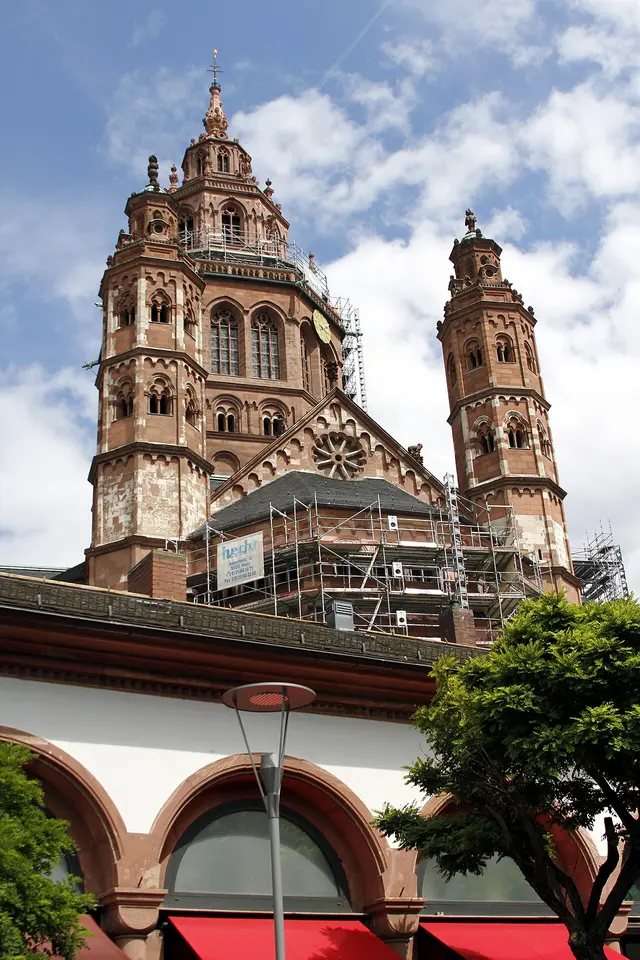
27 March 1188 · Mainz
Assembly of Mainz and the Third Crusade vow
At the imperial assembly held in Mainz on 27 March 1188, known as the “Court of Christ” (Curia Christi), Frederick Barbarossa, his son Frederick and many German nobles took the cross. The assembly decided that the German army would march overland through Hungary and Byzantium and set a financial qualification for participation.
RESEARCH DOSSIER
Historical analysis of the event
Background
After the bull Audita tremendi, the papal legate Cardinal Henry of Albano and Bishop Gottfried of Würzburg preached the crusade in Germany. Barbarossa had taken part in the Second Crusade with his uncle Conrad III in 1147 and valued the empire's role in the East. Internal disputes within the empire, however, were an obstacle to the expedition.
The assembly
The assembly met in Mainz on Laetare Sunday before Easter. Barbarossa, who symbolically left the presidency of the meeting to Christ, took the cross; his son, Duke Frederick of Swabia, and many bishops and nobles followed.
To prevent the misery and disorder of earlier expeditions, it was decided that only those possessing a set amount of silver, enough to cover two years' expenses, could join the army. The departure date was set for spring 1189, and envoys were sent to Byzantium, Hungary and the Anatolian Seljuk sultanate.
Outcome and significance
The Mainz assembly prepared one of the best-organised armies of the Third Crusade. The army set out from Regensburg in May 1189. The financial qualification is seen as a sign of the shift toward professionalism in crusading armies.
The letter Barbarossa sent Saladin demanding the return of Jerusalem also dates from this period; its authenticity is disputed.
Sources and debates
The main information on the assembly appears in the Historia de expeditione Friderici imperatoris and in German annals. The amount of silver required (around three marks) and the size of the army differ between sources.
Dates, places and figures in this record compare the principal narrative sources with modern scholarship. Where the sources disagree this is stated in the text; for a thesis or publication, consult the relevant edition and page reference.