28 August 1189 – 12 July 1191 · Acre
Siege of Acre
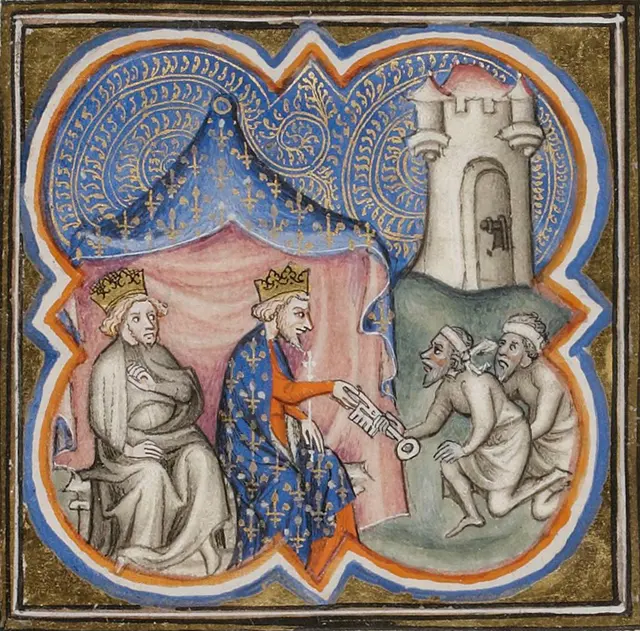
The siege of Acre, begun by King Guy of Lusignan in August 1189, became a two-year war of attrition as Saladin besieged the besiegers from outside. After Philip II and Richard I arrived in 1191, the city surrendered on terms on 12 July 1191.
RESEARCH DOSSIER
Historical analysis of the event
Background
Released from captivity in 1188, King Guy was refused entry to Tyre by Conrad of Montferrat. Looking for a target to regain his kingdom, Guy marched south from Tyre with a small force in August 1189 and besieged Acre, the kingdom's most important port. Naval forces from the West joined him.
Course of events
The siege began on 28 August 1189. Saladin soon arrived and surrounded the crusader camp from outside; the crusaders, supplied by sea, ringed their camp with ditches. A great battle on 4 October 1189 was inconclusive.
In the winter of 1190–1191 the crusader camp suffered famine and disease; Queen Sibylla and her daughters died. With Sibylla's death Guy's right to the throne became disputed, and Conrad, by marrying the queen's sister Isabella, became a claimant. Philip arrived on 20 April and Richard on 8 June 1191. Worn down by catapults and mining, the city's garrison surrendered on 12 July without Saladin's approval.
Outcome and significance
Under the terms, the garrison's lives would be spared in return for payment of 200,000 dinars, the release of 1,500 Christian prisoners and the return of the True Cross. Delay in fulfilling these terms ended in the massacre of the prisoners in August.
Until 1291 Acre was the capital of the Kingdom of Jerusalem and the commercial centre of the Latin East. During the siege, the casting down of Duke Leopold V of Austria's banner by Richard's men began an enmity that would lead to Richard's captivity in later years.
Sources and debates
Baha al-Din ibn Shaddad describes the siege day by day from Saladin's camp; the Itinerarium and Ambroise report the experiences of the crusader camp. During the siege the German hospital that became the origin of the Teutonic Knights was founded. Losses and numbers of participants are uncertain.
Dates, places and figures in this record compare the principal narrative sources with modern scholarship. Where the sources disagree this is stated in the text; for a thesis or publication, consult the relevant edition and page reference.