March–April 1268 · Jaffa and Beaufort
Fall of Jaffa and Beaufort
In his campaign of spring 1268, Baybars took Jaffa after a short siege in early March and, in mid-April, the Templar castle of Shaqif Arnun (Beaufort). These conquests further shrank the territory held by the Kingdom of Jerusalem ahead of the Antioch campaign.
RESEARCH DOSSIER
Historical analysis of the event
Background
In 1268 Jaffa was ruled by Count Guy of Jaffa of the Ibelin family, who had a truce with Baybars. The castle of Shaqif Arnun (Beaufort) on the Litani river in the mountains of Lebanon had been sold to the Templars by the lord of Sidon in 1260 and controlled the routes between Galilee and Lebanon.
Course of events
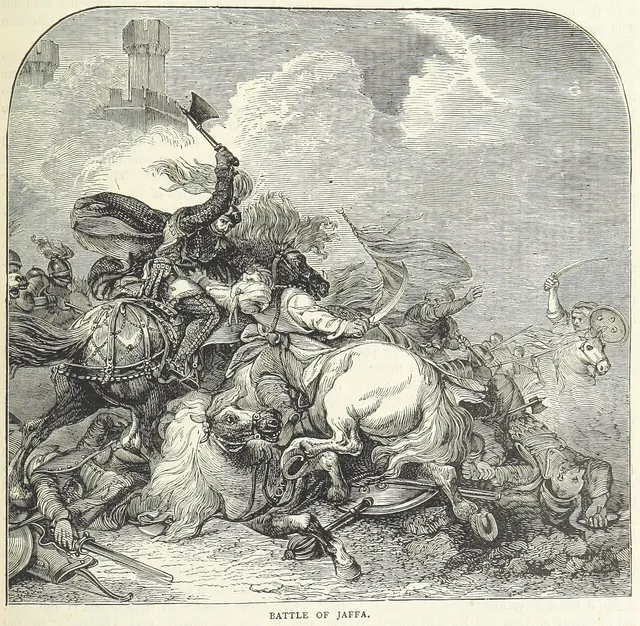
In March 1268 Baybars broke the truce and launched a sudden attack on Jaffa. The town surrendered on 7 March after a siege of about twelve hours. Some of the inhabitants were allowed to go to Acre; the town's walls and citadel were demolished and their valuable materials carried off for use in buildings in Cairo.
Baybars then turned north to Shaqif Arnun. In the siege begun in early April, heavy catapult fire broke the castle's defence, and the garrison surrendered on 15 April. The defenders were taken captive; unlike Jaffa, the castle was not demolished but strengthened with a Mamluk garrison.
Outcome and significance
After these two conquests the Kingdom of Jerusalem had only Atlit left in the south, and Acre, Tyre, Sidon and Beirut in the north. Baybars continued his strategy of demolishing coastal cities while holding strategic inland castles with his own garrisons.
A few weeks later, in May 1268, the sultan led his army north and took Antioch.
Sources and debates
Ibn Abd al-Zahir and Ibn Shaddad of Aleppo describe the sieges from the sultan's perspective; the Gestes des Chiprois and the Templar of Tyre report the Latin losses. The capture of Jaffa during a truce is presented in Latin sources as Baybars's bad faith; Mamluk sources claim the Franks had broken the truce first.
Dates, places and figures in this record compare the principal narrative sources with modern scholarship. Where the sources disagree this is stated in the text; for a thesis or publication, consult the relevant edition and page reference.