6 April – 18 May 1291 · Acre
Fall of Acre
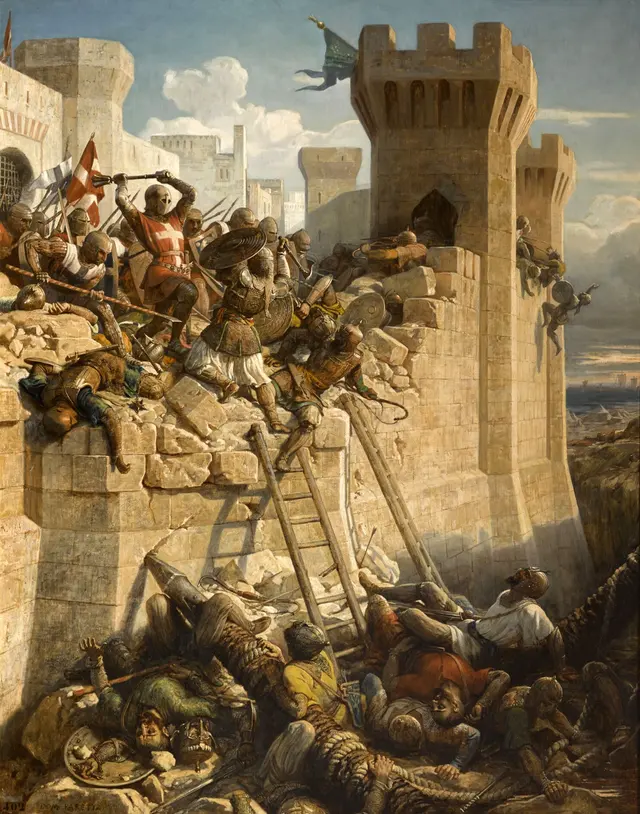
Al-Ashraf Khalil besieged Acre with a great Mamluk army on 6 April 1291. After a six-week siege the city was entered on 18 May through the “Accursed Tower”. The Templar master William of Beaujeu was mortally wounded; King Henry II fled to Cyprus, and with the fall of Acre the Kingdom of Jerusalem effectively came to an end.
RESEARCH DOSSIER
Historical analysis of the event
Background
Since 1191 Acre had been the capital of the Kingdom of Jerusalem and the largest city of the Latin East. With a double line of walls, the fortresses of the military orders and the quarters of the Italian cities, it had strong defences. But the city had only a few thousand defenders, and coordination between King Henry II of Cyprus and the military orders was weak.
Course of events
The Mamluk army besieged the city from the landward side on 6 April. Dozens of catapults, among them great machines called “the Victorious” and “the Furious”, pounded the walls; sappers dug tunnels under the towers. The defenders made night sorties, but these failed. King Henry II arrived from Cyprus with reinforcements on 4 May and offered peace; the offer was refused.
On 15–16 May the King's Tower on the outer walls fell. On the morning of 18 May the Mamluks launched a general assault and entered the city through the Accursed Tower on the inner wall. William of Beaujeu was mortally wounded. The people fled to the harbour; there were too few ships and many drowned or were killed. King Henry and some nobles escaped to Cyprus by ship. Patriarch Nicholas of Hanapes drowned while fleeing.
Outcome and significance
The Templars held out for ten more days in their strong fortress facing the sea. A dispute during surrender negotiations turned into fighting, and when the fortress was undermined and brought down on 28 May, defenders and attackers alike were buried in the rubble. The city was destroyed and abandoned.
The fall of Acre ended the nearly two-hundred-year existence of the Latin East; the remaining coastal cities were abandoned within months. The event caused great shock in the West, and many plans for “recovering the Holy Land” were written in the years that followed.
Sources and debates
The Templar of Tyre witnessed the siege and was at William of Beaujeu's side; his account is the most detailed Latin source. Abu al-Fida took part in the siege with the troops of Hama. Death tolls and the number of those who escaped are not known with certainty. Excavations at Acre have produced important finds documenting the traces of the siege and the city's destruction.
Dates, places and figures in this record compare the principal narrative sources with modern scholarship. Where the sources disagree this is stated in the text; for a thesis or publication, consult the relevant edition and page reference.