1138 · Antioch and northern Syria
Byzantine emperor enters Antioch
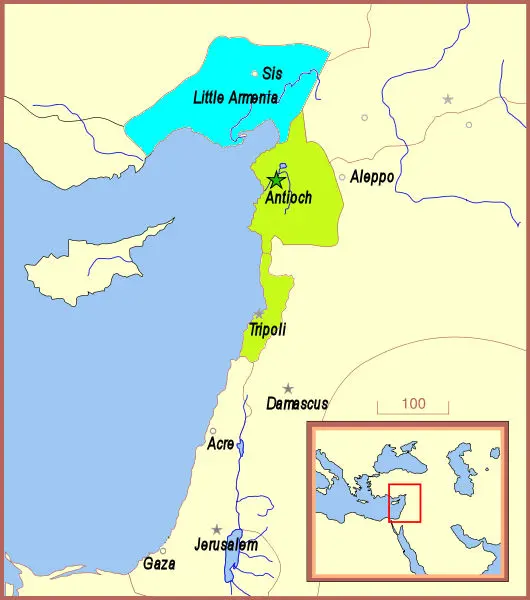
In 1137 the Byzantine emperor John II Komnenos besieged Antioch and forced Prince Raymond of Poitiers to swear allegiance. In spring 1138 he campaigned against Shaizar with the Frankish leaders, but Latin reluctance limited the results and the emperor left Antioch.
RESEARCH DOSSIER
Historical analysis of the event
Background
Byzantium had never abandoned its claim to Antioch since 1098. In 1137 John II eliminated the Armenian lordship in Cilicia and advanced south. Antioch was then ruled by Raymond of Poitiers, who had become prince in 1136 by marrying Princess Constance.
Course of events
In August 1137 the emperor besieged Antioch. King Fulk, just released from Montferrand, considered the Byzantine claim justified and advised Raymond to come to terms. Raymond swore allegiance to the emperor and agreed to hand Antioch to Byzantium in exchange for cities such as Aleppo, Shaizar and Homs, should they be taken.
In April–May 1138 the Byzantine army besieged Shaizar together with Raymond and Count Joscelin II of Edessa. According to Byzantine sources, the two Latin leaders took part half-heartedly. The Munqidhid emir of Shaizar secured the lifting of the siege with tribute and gifts. The emperor entered Antioch in ceremony but left the city after a rising of the Latin population incited by Joscelin.
Outcome and significance
Byzantium demonstrated its military superiority but could not bring Antioch under direct rule. John II returned to Syria in 1142 but died in spring 1143 after a hunting accident in Cilicia. This tension in Byzantine–Antiochene relations would resurface under Manuel I in 1158–1159.
As the city of Usama ibn Munqidh's family, the siege of Shaizar also appears in his Kitab al-I'tibar, which offers valuable information on the effect of Byzantine siege engines.
Sources and debates
John Kinnamos and Niketas Choniates give the Byzantine view and William of Tyre the Latin one; the Latin sources treat Byzantine intentions with suspicion. Ibn al-Qalanisi and Usama ibn Munqidh describe the siege of Shaizar from the Muslim side. The terms of Raymond's oath and the Latin leaders' conduct during the siege are reported differently in the sources.
Dates, places and figures in this record compare the principal narrative sources with modern scholarship. Where the sources disagree this is stated in the text; for a thesis or publication, consult the relevant edition and page reference.