August 1137 · Barin / Montferrand
Surrender of Montferrand
In August 1137 Imad al-Din Zengi besieged the castle of Montferrand (Ba'rin) near Homs, defeated the relief army of King Fulk of Jerusalem and forced him to shut himself in the castle. The king and his companions were released in exchange for the castle and a heavy ransom.
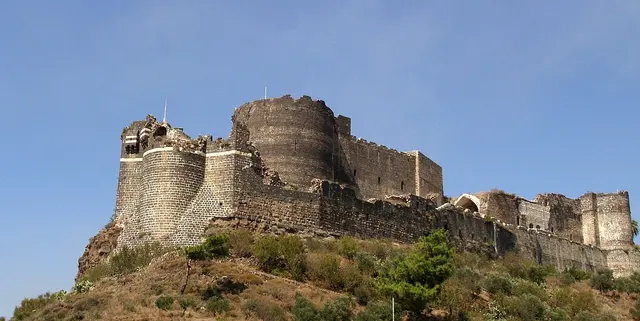
RESEARCH DOSSIER
Historical analysis of the event
Background
Ruling Mosul and Aleppo, Imad al-Din Zengi gathered strength around Homs and Hama in the 1130s and also targeted Damascus. Montferrand, a castle of the County of Tripoli, controlled the road between Homs and the coast. Count Pons of Tripoli had been killed early in 1137 in a clash with Damascene forces and was succeeded by his son Raymond II.
Course of events
When Zengi besieged the castle in July 1137, Fulk and Raymond II came to its aid. Zengi's forces defeated the Frankish army near the castle; Raymond was captured, and Fulk took refuge in Montferrand with his remaining soldiers. The poorly supplied castle was completely surrounded.
In answer to Fulk's call, relief forces were gathering from Antioch, Edessa and Jerusalem, while the army of the Byzantine emperor John II Komnenos was advancing from Cilicia toward Antioch. This pushed Zengi to a quick agreement: in exchange for the castle and a ransom of some 50,000 dinars, Fulk and his companions were released, along with Raymond and the other prisoners.
Outcome and significance
Montferrand was one of Zengi's first major successes against the Franks, and forcing the king of Jerusalem to surrender in person increased his prestige. For the Franks, saving the king and the army mattered more than losing the castle. Together with Zengi's threat to Damascus, the episode helped bring Jerusalem and Damascus closer to alliance.
Sources and debates
William of Tyre describes the siege and surrender in detail, writing that the Franks unknowingly escaped on good terms and only later learned that the relief army was on its way. Ibn al-Qalanisi and Ibn al-Athir state that Zengi came to terms because of the Byzantine threat. The ransom differs between sources.
Dates, places and figures in this record compare the principal narrative sources with modern scholarship. Where the sources disagree this is stated in the text; for a thesis or publication, consult the relevant edition and page reference.