14 September 1131 · Jerusalem
Reign of Fulk and Melisende begins
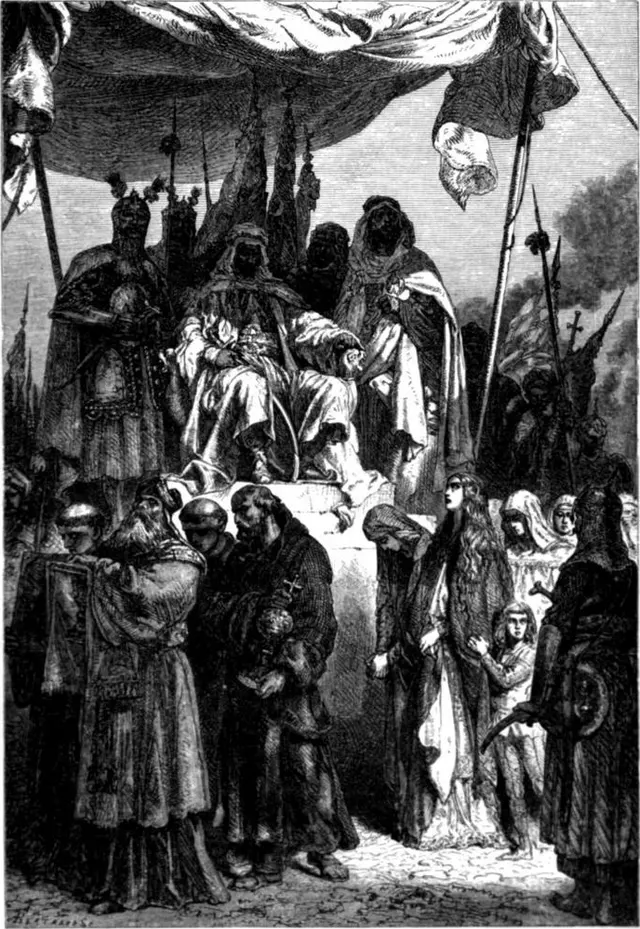
After Baldwin II died in August 1131, his daughter Melisende and her husband, Count Fulk of Anjou, were crowned together in the Church of the Holy Sepulchre on 14 September 1131. Fulk's attempt to rule alone led to a crisis in 1134, and Melisende's share in government became clear.
RESEARCH DOSSIER
Historical analysis of the event
Background
Baldwin II had no male heir. The kingdom's barons looked in the West for a powerful husband for his eldest daughter Melisende, and the choice fell on Count Fulk of Anjou. Fulk came to Jerusalem in 1129 and married Melisende. Their son Baldwin was born in 1130.
Course of events
Before he died on 21 August 1131, Baldwin II left the kingdom jointly to Melisende, Fulk and his grandson Baldwin. Fulk and Melisende were crowned in the Church of the Holy Sepulchre on 14 September 1131, the first coronation held in that church.
Fulk tried to promote men he had brought from Anjou and to push Melisende into the background. In 1134 the revolt of the queen's kinsman Hugh II of Le Puiset, count of Jaffa, and the events that followed showed that the native barons had rallied behind Melisende. The crisis ended with Fulk giving up making important decisions without consulting the queen.
Outcome and significance
Under Fulk the kingdom allied with Damascus against the threat of Zengi, built castles around Ascalon in the south and balanced relations with Byzantium. After Fulk died in 1143, Melisende continued to govern on behalf of her young son Baldwin III. The period is studied as a rare example of a female ruler exercising real power in Jerusalem.
Sources and debates
The main source for the crisis of 1134 is William of Tyre, whose account is sympathetic to Melisende; the causes of Hugh's revolt and rumours about his relationship with the queen cannot be verified. Historians such as Hans Eberhard Mayer have analysed the political and legal dimensions of the crisis in detail.
Dates, places and figures in this record compare the principal narrative sources with modern scholarship. Where the sources disagree this is stated in the text; for a thesis or publication, consult the relevant edition and page reference.