November 1129 · Damascus region
Damascus campaign
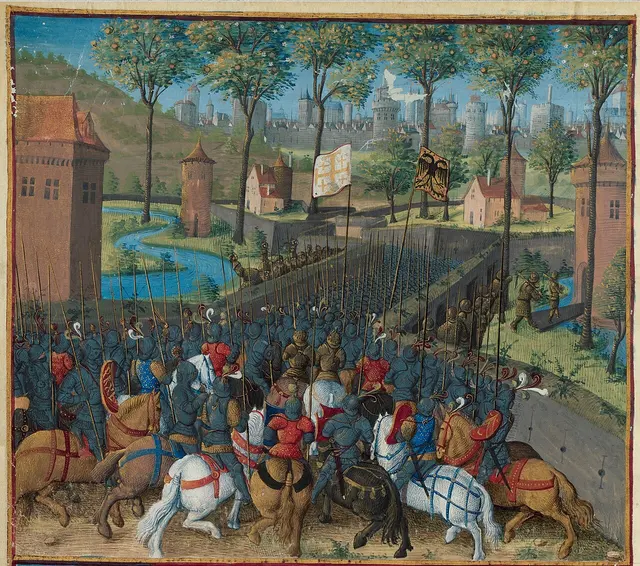
In November 1129 Baldwin II set out with newly arrived Western soldiers to take Damascus. The campaign failed after a secret agreement with the Batinis inside the city was exposed, foraging units were defeated, and heavy rains set in.
RESEARCH DOSSIER
Historical analysis of the event
Background
Thanks to Hugh of Payns's activity in the West and the arrival of Count Fulk of Anjou, the Kingdom of Jerusalem had an unusual number of new soldiers in 1129. In Damascus, after Toghtekin's death in 1128, his son Taj al-Muluk Buri was in power. The vizier al-Mazdaqani and the Batini (Isma'ili) circle are said to have agreed secretly to hand Damascus to the Franks in exchange for Tyre.
Course of events
In September 1129 Buri had his vizier killed and launched a great massacre of the Batinis in the city; the plot collapsed. The fortress of Banyas, held by the Batinis, was however handed over to the Franks.
In November the Frankish army arrived south of Damascus. Foraging units under William of Bures were heavily defeated at Marj al-Suffar by Damascene cavalry. Torrential rain and floods then made the roads impassable, and the army withdrew in early December.
Outcome and significance
The Damascus campaign was the Kingdom of Jerusalem's first serious attempt to take one of the great cities of inland Syria, and it failed. Thereafter the kingdom mostly maintained alliance or truce with Damascus; the city was not a direct target again until the Second Crusade's siege in 1148. The gain of Banyas, meanwhile, strengthened the kingdom's northeastern frontier.
Sources and debates
Ibn al-Qalanisi, as a Damascene witness, describes the Batini plot and Buri's countermove; William of Tyre gives the campaign briefly, attributing its failure to the weather. Because the existence and scope of a real agreement between the Batinis and the Franks is reported only by Muslim sources, it must be assessed with care.
Dates, places and figures in this record compare the principal narrative sources with modern scholarship. Where the sources disagree this is stated in the text; for a thesis or publication, consult the relevant edition and page reference.