3–4 July 1187 · Hattin
Battle of Hattin
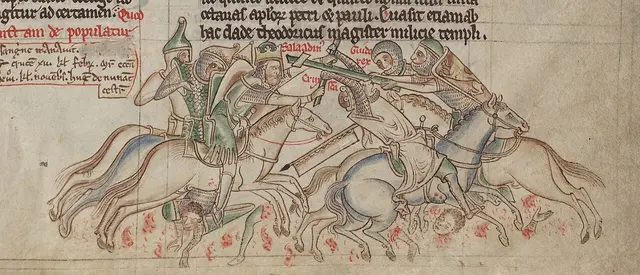
On 3–4 July 1187 at Hattin near Tiberias, Saladin wore down the main army of the Kingdom of Jerusalem with thirst and fire and then destroyed it. King Guy of Lusignan was captured, Reynald of Châtillon was killed and the True Cross was taken; the kingdom's defensive strength collapsed in a single day.
RESEARCH DOSSIER
Historical analysis of the event
Background
After the Kerak caravan raid, Saladin assembled a great army from Egypt, Syria and the Jazira. King Guy of Lusignan, reconciled with Raymond III, gathered all the kingdom's forces, the military orders and soldiers drawn from castle garrisons at the springs of Sephoria. The True Cross was with the army.
Course of events
On 2 July Saladin took the town of Tiberias, defended by Raymond III's wife Eschiva, and the citadel was besieged. At the war council at Sephoria, Raymond pointed to the danger of marching across waterless country and advised waiting. But under pressure from the Templar master Gerard of Ridefort and Reynald, Guy decided on the morning of 3 July to march on Tiberias.
All day the army advanced through hot, waterless country under constant attack from Saladin's archers. It was forced to spend the night on a plateau without water; the Muslim forces set fire to the dry grass, choking the army further with smoke. On 4 July the army was surrounded around the twin hills of Hattin (the Horns). Raymond III and Balian of Ibelin escaped by breaking out; the king and the remaining forces made a last stand around the royal tent and surrendered.
Outcome and significance
Saladin offered King Guy cold water but killed Reynald with his own sword for breaking the truce. Some two hundred captured Templar and Hospitaller knights were executed on Saladin's orders by Sufis and scholars. Most ordinary soldiers were sold as slaves. The True Cross was taken to Damascus and never returned.
The kingdom had lost most of the soldiers needed to defend its castles and cities. Over the next three months Acre, Nablus, Jaffa, Sidon, Beirut and Ascalon surrendered to Saladin; in October Jerusalem too was taken by agreement. Hattin was the event that gave rise to the Third Crusade.
Sources and debates
The battle is described in the works of Imad al-Din al-Isfahani, Baha al-Din ibn Shaddad and Ibn al-Athir, and on the Latin side in the account attributed to Ernoul, the Libellus de expugnatione Terrae Sanctae and letters written afterwards. The story of who pressured Guy into marching comes from pro-Ibelin sources. There are no firm figures for army sizes and losses; most historians estimate the Frankish army at about 20,000.
Dates, places and figures in this record compare the principal narrative sources with modern scholarship. Where the sources disagree this is stated in the text; for a thesis or publication, consult the relevant edition and page reference.