1122 – 1124 · Suruç – Kharput
Balak's captive-taking campaigns
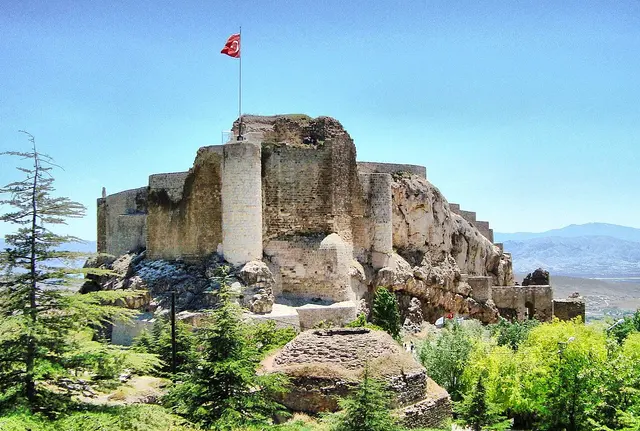
The Artuqid lord Belek Ghazi captured Count Joscelin I of Edessa in September 1122 and King Baldwin II of Jerusalem in April 1123. A revolt by the captives at Kharput, aided by Armenians, was crushed; the king was ransomed after Belek's death in 1124.
RESEARCH DOSSIER
Historical analysis of the event
Background
Ilghazi's nephew Belek Ghazi had built a strong Artuqid lordship around Kharput. Continual raiding on the northern and eastern borders of the County of Edessa kept Frankish and Turkish lords in constant frontier warfare.
Course of events
In September 1122, near Saruj, Belek's forces captured Count Joscelin I of Edessa and his cousin Galeran. In April 1123 Baldwin II, coming north to free Joscelin, was himself ambushed near Gargar and taken to the fortress of Kharput.
In August 1123 Armenian soldiers in disguise infiltrated Kharput, freed the prisoners and seized the fortress. Joscelin escaped to bring help, while Baldwin stayed in the castle. Belek quickly returned, retook the fortress, killed most of the Armenian and Frankish defenders and moved the king to Harran.
Outcome and significance
Belek was killed in May 1124 during the siege of Manbij. The king was released in August 1124 under an agreement with Belek's successor Timurtash; part of the ransom was paid at once, and hostages, including his young daughter Ioveta, were given for the rest.
While the king was a captive, the kingdom under Patriarch Warmund and the regent Eustace Garnier made an agreement with Venice and besieged Tyre. These events show that captivity of high-ranking figures turned into long processes of bargaining, and that the kingdom could function without its ruler.
Sources and debates
Fulcher of Chartres gives a detailed, heroic account of the Kharput escape; Matthew of Edessa and Michael the Syrian stress the Armenian role. Ibn al-Qalanisi and Ibn al-Athir report Belek's successes and death. The ransom is given in different figures in the sources.
Dates, places and figures in this record compare the principal narrative sources with modern scholarship. Where the sources disagree this is stated in the text; for a thesis or publication, consult the relevant edition and page reference.