14 April 1205 · Adrianople
Battle of Adrianople
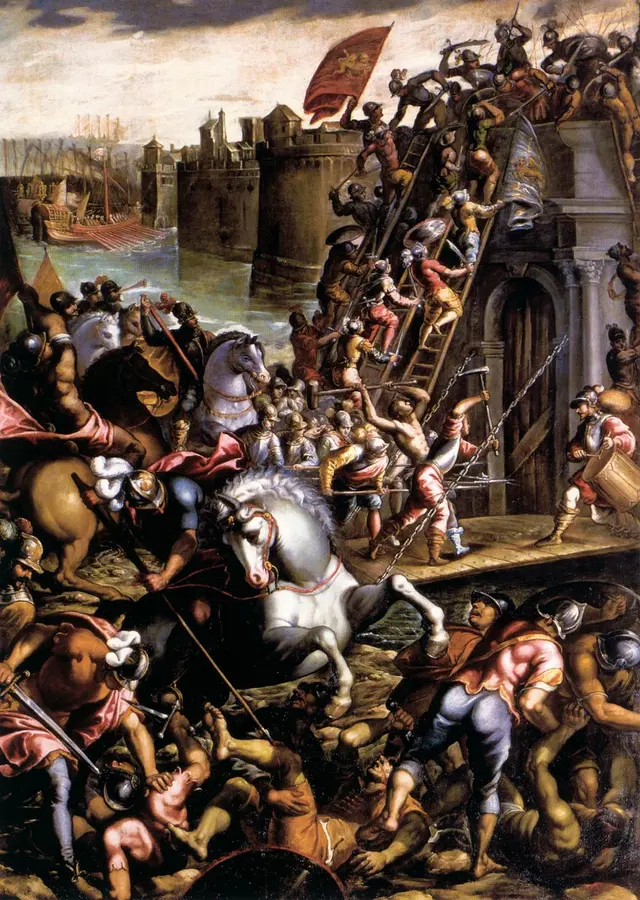
On 14 April 1205 before Adrianople, the army of the Bulgarian tsar Kaloyan lured the forces of the Latin emperor Baldwin into a trap with a feigned retreat by Cuman cavalry. The Latin army was defeated, Count Louis of Blois was killed, and Baldwin was captured and never returned.
RESEARCH DOSSIER
Historical analysis of the event
Background
After the Latin Empire was founded, the Greek aristocracy and cities of Thrace rebelled against Latin rule and asked the Bulgarian tsar Kaloyan for help. Kaloyan had sought an alliance with the Latins but had been rebuffed. When Adrianople rebelled, Baldwin came with his army to besiege the city.
Course of events
Kaloyan came to Adrianople's aid with Bulgarian and Cuman forces. On 14 April 1205 Cuman light cavalry attacked the Latin camp and withdrew. The Latin knights, despite orders given the day before not to pursue, followed the Cumans and fell into an ambush.
The surrounded Latin cavalry suffered heavy losses. Count Louis of Blois was killed and Emperor Baldwin was captured. Villehardouin and the aged Doge Enrico Dandolo withdrew the remaining forces in good order to Rodosto (Tekirdağ).
Outcome and significance
Baldwin died in captivity at Tarnovo, the Bulgarian capital; the circumstances of his death are unclear. His brother Henry became first regent and then, in 1206, emperor, stabilising the empire for a time. Enrico Dandolo died in Constantinople in June 1205 and was buried in Hagia Sophia.
The defeat at Adrianople exposed the limits of the Latin Empire's military strength only a year after its founding and showed that a new balance of power had begun in the Balkans.
Sources and debates
Villehardouin describes the battle as a witness and attributes the defeat to the disregard of orders. Niketas Choniates and Akropolites give the Byzantine view. There are different accounts of Baldwin's death in captivity; an impostor who appeared in Flanders in 1225 claiming to be Baldwin shows the lasting effect of this uncertainty.
Dates, places and figures in this record compare the principal narrative sources with modern scholarship. Where the sources disagree this is stated in the text; for a thesis or publication, consult the relevant edition and page reference.