1212 · Marseille – Genoa
Children's Crusade
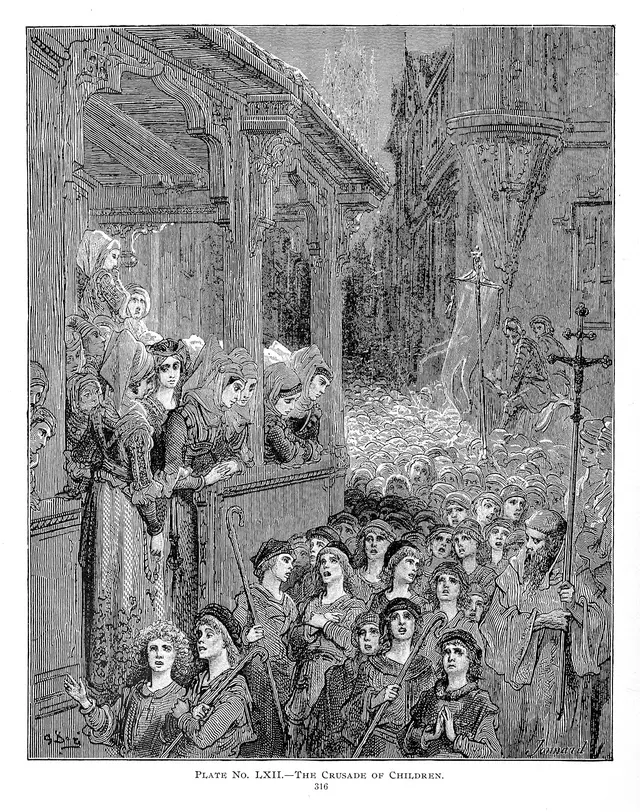
In summer 1212, young and poor crowds gathered around Stephen of Cloyes in France and Nicholas of Cologne in the Rhineland set out to free Jerusalem. The movement broke up when it reached the Mediterranean ports; most participants returned home, and some died or disappeared on the roads.
RESEARCH DOSSIER
Historical analysis of the event
Background
In the early thirteenth century there was intense religious fervour around crusade preaching, the Albigensian Crusade and the campaign of Las Navas de Tolosa in Spain. Popular movements rooted in Christian brotherhood and the ideal of poverty spread the idea that Jerusalem could be freed not by arms but by innocence and faith.
Course of events
In June 1212 Stephen, a young shepherd from Cloyes near Orléans, went to Saint-Denis to ask the king's permission to go to Jerusalem; King Philip II told the crowd to go home. In the same period a youth named Nicholas in Cologne drew thousands after him.
Nicholas's group crossed the Alps and reached Genoa in August 1212. When the expectation that the sea would part for them was not fulfilled, the crowd broke up; some went to Rome, some to Brindisi, many stayed in Genoa or went home. The story that the French group reached Marseille and that some were carried off by merchants and sold as slaves in North Africa rests on a later source.
Outcome and significance
The movement had no military result and never reached the Holy Land. But it showed papal and church circles how strong popular desire for a crusade was; Pope Innocent III's call for a new expedition with the bull Quia maior in 1213 is linked to this atmosphere.
The episode is an important case for studying medieval popular piety, expectations of prophecy and miracle, and mass movements.
Sources and debates
Contemporary sources for the episode are brief and scattered; the story of slave sales at Marseille belongs to Alberic of Trois-Fontaines, writing thirty years later. Modern research stresses that the Latin word “pueri” could denote not only children but the poor and dependent young people of society. Whether the movement was a “children's” crusade at all is therefore disputed.
Dates, places and figures in this record compare the principal narrative sources with modern scholarship. Where the sources disagree this is stated in the text; for a thesis or publication, consult the relevant edition and page reference.