25 July 1261 · Constantinople
Byzantines recover Constantinople
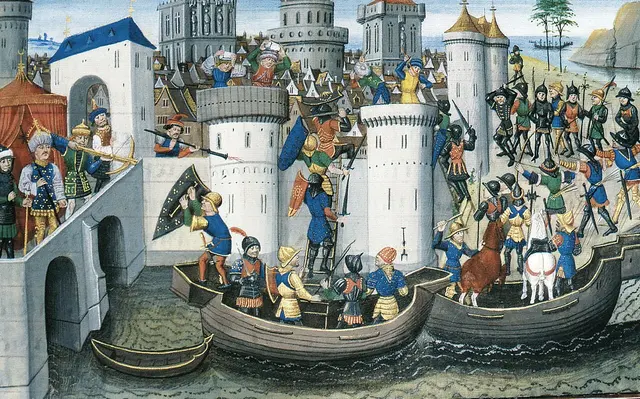
On 25 July 1261 Alexios Strategopoulos, commander of the Empire of Nicaea, entered Constantinople with a small force while the Latin garrison and the Venetian fleet were away. The Latin emperor Baldwin II fled, and Michael VIII Palaiologos entered the city and restored the Byzantine Empire.
RESEARCH DOSSIER
Historical analysis of the event
Background
After 1204 the Latin Empire steadily shrank, and by the 1250s it was confined to Constantinople and its surroundings. The Empire of Nicaea, meanwhile, had grown stronger in Anatolia and the Balkans. Michael VIII Palaiologos seized the throne at Nicaea in 1259 and the same year defeated the Latin–Epirote alliance at Pelagonia. In March 1261 he signed the Treaty of Nymphaion with Genoa.
Course of events
In July 1261 Michael sent Alexios Strategopoulos with a small force into Thrace. Strategopoulos learned that the Latin garrison of Constantinople and the Venetian fleet had gone on an expedition to the island of Daphnousia on the Black Sea coast.
On the night of 25 July, Byzantine soldiers, helped by the city's Greek inhabitants, slipped into the city through a gate and opened the gates. The Latin emperor Baldwin II fled his palace and left the city on a Venetian ship. Michael entered the city in ceremony on 15 August and was crowned again in Hagia Sophia.
Outcome and significance
The recapture of Constantinople ended the Latin Empire. Venice lost its privileged position in the city to Genoa. Baldwin II and his successors continued trying to organise a crusade in the West to retake Constantinople, an effort that figured especially in the plans of Charles of Anjou.
The event showed the limits of the crusades' impact on Byzantium; yet Byzantium never fully regained its pre-1204 strength.
Sources and debates
George Akropolites and George Pachymeres describe the events in detail from the Byzantine side. Western sources are brief and scattered. How the entry into the city took place, which gate was used and the role of the local population are reported differently in the sources.
Dates, places and figures in this record compare the principal narrative sources with modern scholarship. Where the sources disagree this is stated in the text; for a thesis or publication, consult the relevant edition and page reference.