14 September 1115 · Sarmin, Syria
Battle of Tell Danith
On 14 September 1115 Roger of Salerno, regent of Antioch, defeated the army sent by the Great Seljuk sultan under Bursuq ibn Bursuq with a surprise attack near Tell Danith (Sarmin). The victory strengthened the Frankish position in northern Syria for several years.
RESEARCH DOSSIER
Historical analysis of the event
Background
After Mawdud's death Sultan Muhammad Tapar sent a new army under Bursuq ibn Bursuq, emir of Hamadan. Lu'lu' of Aleppo, Ilghazi of Mardin and Toghtekin of Damascus feared that the sultan's army would threaten their positions in Syria. In summer 1115 they therefore formed a temporary alliance with Roger, regent of Antioch, and their joint forces awaited the Seljuk army near Apamea.
Course of events
Bursuq avoided direct battle for a while; when the allied forces dispersed, he took Kafartab and advanced toward Ma'arrat al-Nu'man. Learning that the Seljuk army was marching in loose order, Roger moved quickly with the forces of Antioch.
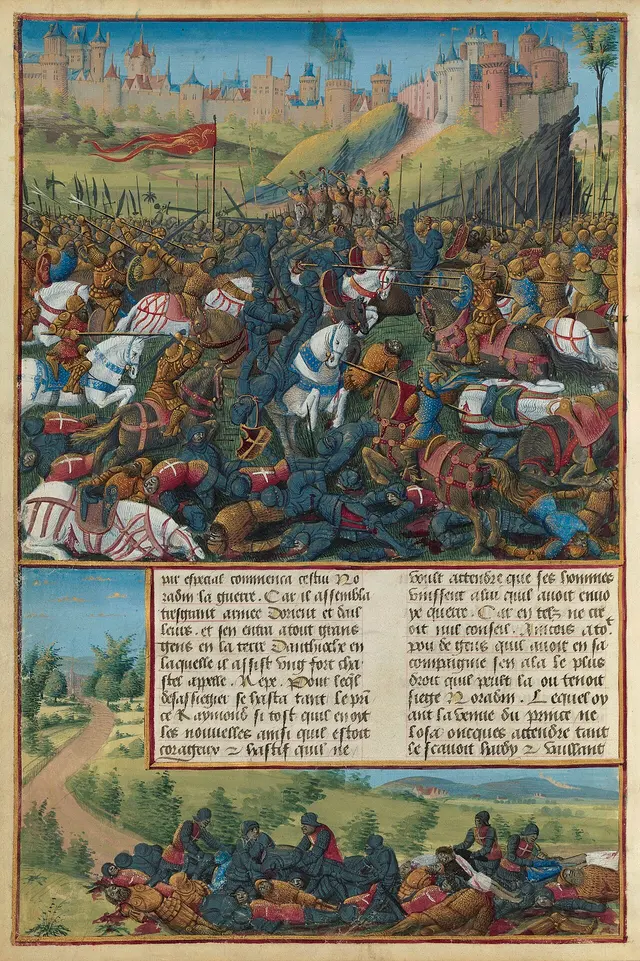
On 14 September near Tell Danith he launched a surprise attack on the Seljuk army as it prepared to make camp. Caught unprepared, the army scattered; its baggage and booty fell to the Franks. Bursuq withdrew and died soon afterwards.
Outcome and significance
Tell Danith was one of the last great Seljuk campaigns directed from Baghdad; thereafter the struggle against the crusaders fell to local centres such as Mosul, Mardin, Aleppo and Damascus. Roger's victory increased Antioch's power, but this ascendancy ended with the defeat at the Field of Blood against Ilghazi in 1119.
The battle is one of the clearest examples that in crusader-period Syria alliances could be formed according to regional balances of power rather than religious blocs.
Sources and debates
The Bella Antiochena of Walter the Chancellor of Antioch is the most important Latin eyewitness source. Ibn al-Qalanisi and Ibn al-Athir report the Syrian emirs' alliance with Roger and Bursuq's failure. The exact site of the battle and the strength of the forces differ between sources.
Dates, places and figures in this record compare the principal narrative sources with modern scholarship. Where the sources disagree this is stated in the text; for a thesis or publication, consult the relevant edition and page reference.