1110 – 1113 · Edessa – Euphrates basin
Mawdud's campaigns against Edessa
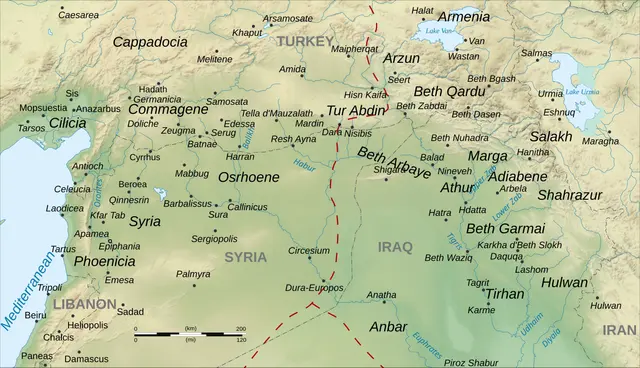
Appointed by the Great Seljuk sultan Muhammad Tapar, Mawdud, atabeg of Mosul, led repeated campaigns against the County of Edessa and Frankish lands between 1110 and 1113. Edessa was not taken, but Frankish territory east of the Euphrates was devastated and much of the Armenian population was forced to flee.
RESEARCH DOSSIER
Historical analysis of the event
Background
Having ended the struggles for the throne, the Great Seljuk sultan Muhammad Tapar launched campaigns against the crusaders directed from Baghdad. Mawdud ibn Altuntegin, atabeg of Mosul, became their commander. But the rulers of Aleppo and Damascus in Syria feared that the sultan's army would threaten their own independence.
Course of events
Mawdud besieged Edessa in spring 1110. When the relief army of King Baldwin I of Jerusalem and Tancred, regent of Antioch, arrived, the siege was lifted; but the withdrawing Frankish army, and the Armenian population trying to cross the Euphrates with it, were attacked on the riverbank and suffered heavy losses.
In 1111 Mawdud turned to Syria and faced the Frankish army near Shaizar; there was no open battle, and the support of the Syrian emirs remained limited. In 1112 Edessa was besieged again. In 1113, with Toghtekin of Damascus, he defeated Baldwin I at al-Sinnabra near Tiberias. In October 1113 he was killed in Damascus by a Batini assassin as he left Friday prayers.
Outcome and significance
Mawdud's campaigns permanently weakened the County of Edessa: lands east of the Euphrates were ruined, villages emptied, and the county increasingly became a frontier state based on defence. The campaigns also showed that Syrian Muslim rulers did not trust armies coming from Baghdad, and that Frankish–Muslim relations were shaped more by local interests than by religious fronts.
Sources and debates
Ibn al-Qalanisi, a contemporary Damascene, reports Mawdud's campaigns and death; Ibn al-Athir also gives detailed information. Matthew of Edessa stresses the losses and flight of the Armenian population. Some sources claim Toghtekin was behind Mawdud's assassination, but this is unproven.
Dates, places and figures in this record compare the principal narrative sources with modern scholarship. Where the sources disagree this is stated in the text; for a thesis or publication, consult the relevant edition and page reference.