10 March 1098 · Edessa
Foundation of the County of Edessa
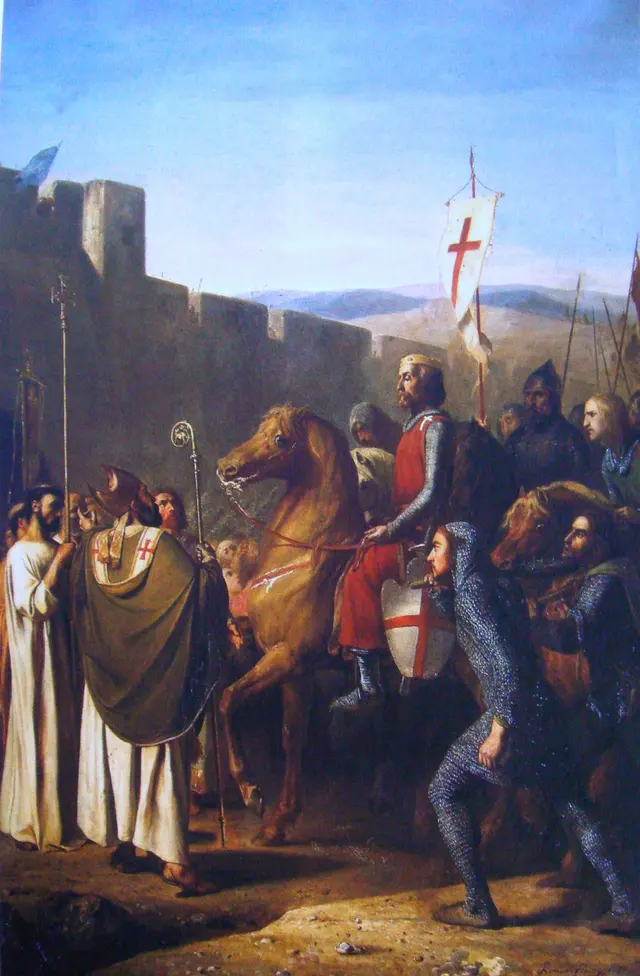
Invited and adopted by the Armenian ruler Thoros, Baldwin of Boulogne came to Edessa in February 1098. After Thoros was killed in an uprising, Baldwin took over on 10 March 1098 and founded the County of Edessa, the first crusader state in the East.
RESEARCH DOSSIER
Historical analysis of the event
Background
Edessa (Urfa) was a city inhabited mainly by Armenian and Syriac Christians, wedged between Seljuk emirs. The Armenian Thoros, who held a Byzantine title, was seeking military support against his Turkish neighbours. Baldwin, who had turned toward the Euphrates after Cilicia, had won the support of the Armenian population around Turbessel and Ravendel.
Course of events
Thoros's envoys invited Baldwin to Edessa. Arriving in early February 1098 with a small group of knights, Baldwin refused to serve merely as a mercenary; Thoros adopted him, making him co-ruler and heir. The sources describe an adoption ceremony in Armenian custom.
In early March an uprising broke out in the city against Thoros. He was killed while trying to escape, and Baldwin took over the government of the city on 10 March 1098. Baldwin's role in the uprising is unclear in the sources; Armenian historians imply that he at least did nothing to prevent it.
Outcome and significance
Baldwin enlarged the county by buying Samosata and seizing nearby castles, and tied himself to the local aristocracy by marrying an Armenian noblewoman. The County of Edessa was the first example showing that, beyond pilgrimage and campaign, the crusade could produce lasting political rule. The county also covered the crusaders' eastern flank during the siege of Antioch. When Baldwin took the throne of Jerusalem in 1100, he left Edessa to his cousin Baldwin of Bourcq.
Sources and debates
Fulcher of Chartres, as Baldwin's chaplain, witnessed the events. Albert of Aachen and the chronicle of Matthew of Edessa also provide important information; Syriac sources are valuable for the later period. Baldwin's responsibility for Thoros's death and the nature of the county's relationship with the Armenian population are disputed.
Dates, places and figures in this record compare the principal narrative sources with modern scholarship. Where the sources disagree this is stated in the text; for a thesis or publication, consult the relevant edition and page reference.