1–4 October 1098 · Bari
Council of Bari
While the First Crusade was under way, a council met at Bari in October 1098 under Pope Urban II to discuss the filioque dispute between the Latin and Greek churches. Archbishop Anselm of Canterbury defended the Latin position; religious rapprochement with Byzantium remained limited.
RESEARCH DOSSIER
Historical analysis of the event
Background
Although southern Italy had passed under Latin rule after the Norman conquest, it was home to many Greek-rite clergy and communities. After Clermont, Urban continued to pursue better relations with Byzantium and the reconciliation of the Eastern Church with papal authority. Archbishop Anselm of Canterbury, who had left England after quarrelling with King William II, was in Italy at the time.
The council and its debates
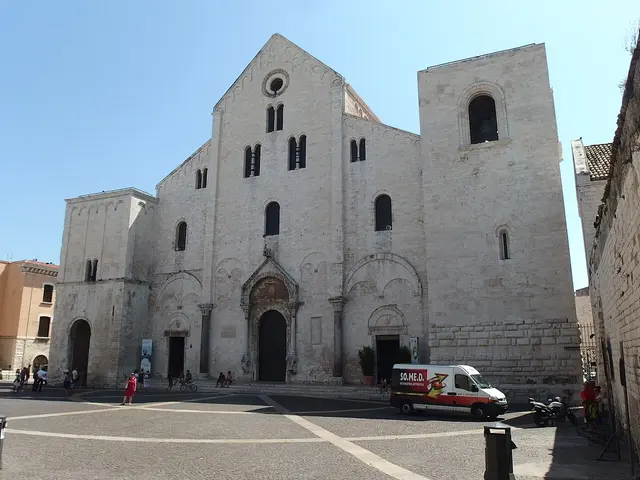
The council met in early October 1098 in the church of Saint Nicholas. At the centre of the agenda was the Greek clergy's objection to the Latin creed formula stating that the Holy Spirit proceeds from the Father “and the Son” (filioque). At Urban's invitation, Anselm defended the Latin position with theological arguments; this speech later became his treatise On the Procession of the Holy Spirit.
The English king's pressure on the church was also raised at the council; a proposal to excommunicate him was postponed at Anselm's intervention.
Outcome and significance
The Council of Bari neither proclaimed a new expedition nor achieved formal church union with Byzantium. But it shows that, while the crusader armies were in dispute with Byzantium at Antioch, the papacy was still seeking union with the Eastern Church through theological debate. The council is an early link in a process in which the crusades made Latin–Greek differences more visible rather than bringing the two sides closer.
Sources and debates
The main account of the council is by Eadmer, Anselm's biographer, who witnessed it and emphasises Anselm's role. The council's official decrees do not survive. Who represented the Greek side, and how the debate was perceived in Byzantium, remain unclear.
Dates, places and figures in this record compare the principal narrative sources with modern scholarship. Where the sources disagree this is stated in the text; for a thesis or publication, consult the relevant edition and page reference.