12–15 April 1204 · Constantinople
Capture and sack of Constantinople
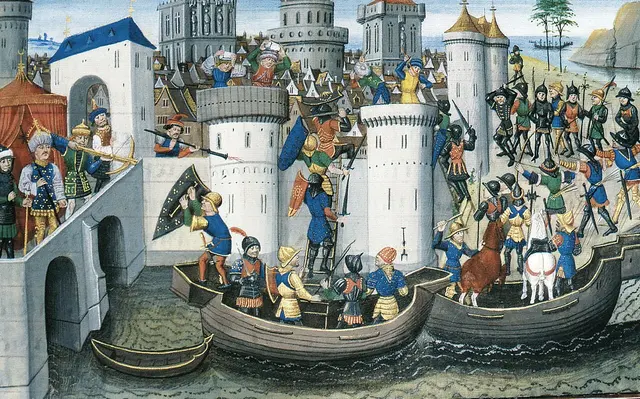
On 12 April 1204 the army of the Fourth Crusade and the Venetians attacked a second time and took Constantinople. In three days of looting the city's churches, palaces and houses were plundered; many works of art and holy relics were carried off to the West.
RESEARCH DOSSIER
Historical analysis of the event
Background
Alexios V Doukas (Mourtzouphlos), who took the throne after Alexios IV was killed in February 1204, refused to deal with the crusaders and strengthened the city's defences. Short of supplies and unpaid, the crusader army in March 1204 made an agreement providing for taking the city and dividing it among themselves.
Course of events
The first assault on 9 April failed. On 12 April, using bridges mounted on the masts of Venetian ships, towers on the Golden Horn were seized and a gate was opened. Alexios V fled and the city's defence collapsed.
On 13–15 April the city was sacked. Churches, monasteries and palaces were plundered; the altar and decorations of Hagia Sophia were broken up. Many relics and works of art were carried to the West; the bronze horses of the Hippodrome were taken to the Basilica of San Marco in Venice. Niketas Choniates criticised the crusaders' conduct by contrasting it with the restraint the Muslims had shown at Jerusalem in 1187.
Outcome and significance
The capture of the city led to the fragmentation of the Byzantine Empire and the creation of a Latin Empire in Constantinople. Byzantine successor states were founded at Nicaea, Epirus and Trebizond; the Empire of Nicaea retook the city in 1261.
The sack of 1204 is regarded as one of the most important events deepening the division between Latin and Orthodox Christians. Pope Innocent III at first saw the capture of the city as an opportunity for union with the Greek church, but on learning the details of the sack he condemned the crusaders sharply.
Sources and debates
Niketas Choniates's testimony is the most detailed and emotional account of the sack. Villehardouin describes the size of the booty, Robert of Clari the wonders of the city, and Gunther of Pairis the transfer of relics to the West. The death toll and the extent of destruction are not known with certainty.
Dates, places and figures in this record compare the principal narrative sources with modern scholarship. Where the sources disagree this is stated in the text; for a thesis or publication, consult the relevant edition and page reference.