17 July 1245 · Lyon
First Council of Lyon and call for the Seventh Crusade
The council Pope Innocent IV held at Lyon in summer 1245 deposed Emperor Frederick II and, in response to the loss of Jerusalem, proclaimed a new crusade. A tax on clerical revenues was decided for the Seventh Crusade, to be led by King Louis IX of France.
RESEARCH DOSSIER
Historical analysis of the event
Background
Because of the ongoing conflict with Frederick II, Innocent IV had fled from Rome to Lyon in 1244. The same year news of the loss of Jerusalem and the defeat at La Forbie reached the West. King Louis IX of France had taken the cross in December 1244 after recovering from a severe illness.
The council and its decrees
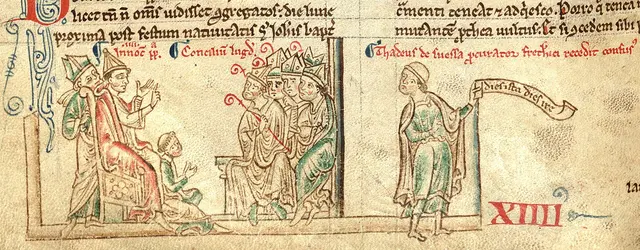
At the council held in June–July 1245, the pope put the situation of the Holy Land, the Mongol threat and the weakness of the Latin Empire on the agenda. On 17 July 1245 Frederick, accused of perjury and crimes against the church, was deprived of his imperial and royal rights.
By the decree Afflicti corde the council proclaimed a new expedition to the Holy Land. It was decided that the clergy would give a twentieth of their revenues to the crusade for three years, that participants would receive the traditional privileges, and that there would be a four-year peace among Christians.
Outcome and significance
The council's decrees gave legal and financial support to Louis IX's preparations; most of the taxes collected from the French clergy were used for the king's crusade. The papacy's granting of crusade privileges against Frederick as well spread the use of the crusade idea in political conflicts within Europe.
With its decision to send envoys to the Mongols, the council also forms the background to John of Plano Carpini's famous journey to Karakorum.
Sources and debates
The council's decrees are published in Tanner's collection. Matthew Paris reports the council's debates and the defence made by Frederick's representative Thaddeus of Suessa. Sources on how the crusade tax was collected and spent in different countries are limited.
Dates, places and figures in this record compare the principal narrative sources with modern scholarship. Where the sources disagree this is stated in the text; for a thesis or publication, consult the relevant edition and page reference.