20 August 1191 · Ayyadiya / Acre
Killing of the Acre prisoners
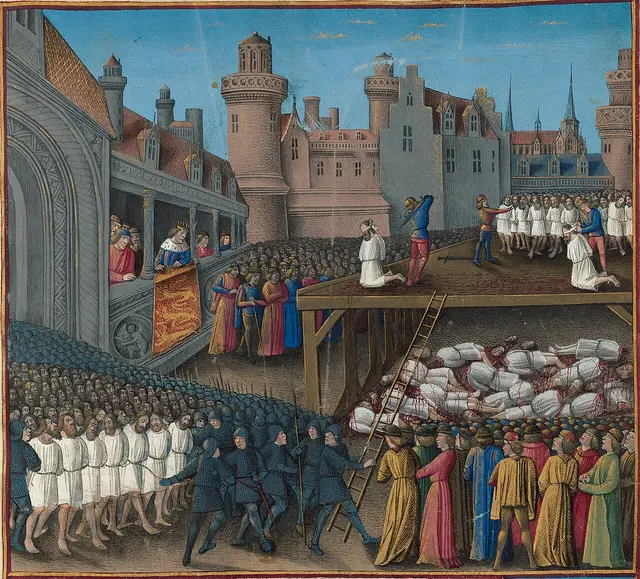
Because of delays in fulfilling the terms of Acre's surrender, Richard ordered on 20 August 1191 that some 2,600–3,000 Muslim prisoners be killed near the hill of Ayyadiya before the crusader army. The episode became one of the most controversial treatments of prisoners in the crusades.
RESEARCH DOSSIER
Historical analysis of the event
Background
Under the terms of Acre's surrender on 12 July 1191, in return for the garrison's lives Saladin was to pay 200,000 dinars, release 1,500 Christian prisoners and return the True Cross. Payment was set in instalments, with a month allowed for the first. Philip Augustus had returned to France in early August, leaving his share of the prisoners to Conrad.
Course of events
In negotiations between the two sides, disputes arose over the list of Christian prisoners to be released and over who should be paid first. Saladin wanted the garrison released, or hostages given, before paying the first instalment; Richard refused. When the deadline passed, Richard decided to kill the prisoners before beginning his march south.
On the afternoon of 20 August the prisoners were led out of Acre to the plain near the hill of Ayyadiya and killed in full view of Saladin's army. Only commanders of high ransom value and some notables were spared. Saladin's troops tried to intervene but failed.
Outcome and significance
After the massacre Saladin had some of his Christian prisoners killed and did not return the True Cross. Two days later Richard's army began its march south toward Jaffa.
Latin sources attribute the episode to Saladin's delays and the army's need to advance, while Muslim sources cite it as an example of bad faith. It is a key case for studying how violence against prisoners in the crusades was justified on military, logistical and political grounds.
Sources and debates
A letter written by Richard himself gives the number killed as about 2,600; Baha al-Din ibn Shaddad gives a figure around 3,000 and describes the event in detail as a witness. The Itinerarium and Ambroise justify the decision. Modern historians stress as its real causes the burden that feeding and guarding the prisoners would have imposed during the march, and mistrust in the negotiations.
Dates, places and figures in this record compare the principal narrative sources with modern scholarship. Where the sources disagree this is stated in the text; for a thesis or publication, consult the relevant edition and page reference.