18 February 1229 · Jaffa – Jerusalem
Treaty of Jaffa
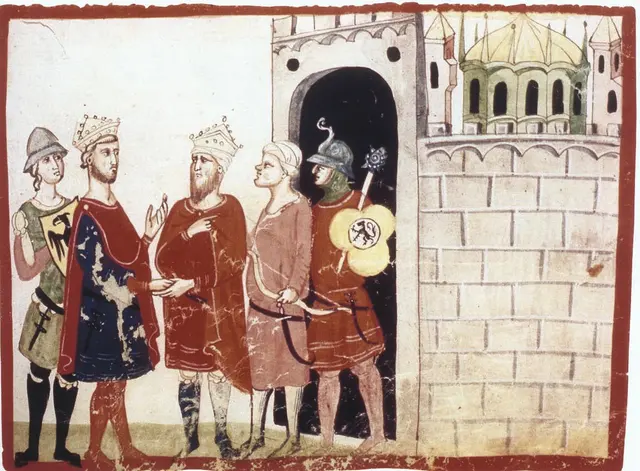
The Treaty of Jaffa, signed on 18 February 1229 between Frederick II and the Ayyubid sultan al-Malik al-Kamil, handed Jerusalem, Bethlehem and Nazareth to the Franks for ten years, together with a corridor to the coast. The Haram al-Sharif remained under Muslim administration.
RESEARCH DOSSIER
Historical analysis of the event
Background
Frederick's army at Acre was small and the institutions of the Latin East did not support him. Al-Kamil, meanwhile, was busy taking Damascus from his nephew al-Nasir Dawud after the death of his brother al-Mu'azzam and did not want a long war with Frederick. In these circumstances the two rulers negotiated through envoys from November 1228.
The terms
The treaty provided for a truce of ten years, five months and forty days. The city of Jerusalem, Bethlehem, Nazareth, a road to Jaffa through Lydda and some villages were handed to the Franks. The Haram al-Sharif, that is the Dome of the Rock and the al-Aqsa Mosque, remained under Muslim control; Muslims could worship there freely and would have their own judge.
Although the details are reported differently in the sources, there are said to have been terms such as a ban on rebuilding Jerusalem's walls. Frederick also agreed not to help other Franks against al-Kamil.
Outcome and significance
The treaty brought Jerusalem to the Latins without war for the first time since 1187. But the Latin church and the military orders rejected it because the Haram al-Sharif stayed in Muslim hands and the city was left defenceless. In the Muslim world, too, al-Kamil was harshly criticised for giving Jerusalem to a Christian ruler.
Jerusalem remained under Latin rule until the Khwarazmian attack of 1244, but throughout this period it lived as a defenceless, thinly populated city exposed to regional rivalries.
Sources and debates
The full text of the treaty does not survive. Frederick's letter to the king of England, Patriarch Gerold of Jerusalem's critical letter to the pope and, on the Muslim side, Ibn Wasil and Sibt ibn al-Jawzi report the terms differently. The ban on wall-building and the limits of the territory handed over are disputed.
Dates, places and figures in this record compare the principal narrative sources with modern scholarship. Where the sources disagree this is stated in the text; for a thesis or publication, consult the relevant edition and page reference.