1228–1229 · Cyprus, Acre and Jerusalem
Sixth Crusade
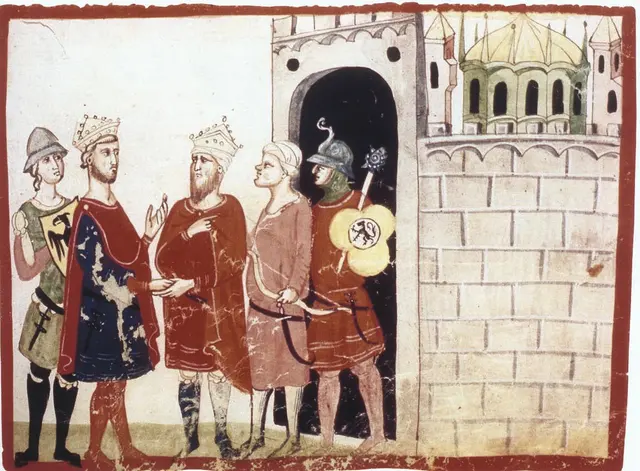
The excommunicated emperor Frederick II reached Acre via Cyprus in 1228. Without fighting a major battle, his negotiations with al-Malik al-Kamil led to the Treaty of Jaffa in February 1229, which handed Jerusalem, Bethlehem and Nazareth to the Latins for ten years.
RESEARCH DOSSIER
Historical analysis of the event
Background
There was rivalry between al-Kamil and his brother al-Mu'azzam, ruler of Damascus. In 1226 al-Kamil had sent envoys to Frederick offering Jerusalem in return for help against al-Mu'azzam. But al-Mu'azzam died in November 1227, and by the time Frederick reached the East the need for this help had largely disappeared.
Course of the crusade
Frederick set out with a small army in June 1228 and reached Cyprus in July. There he demanded from the regent, John of Ibelin of Beirut, the revenues of the regency and Beirut itself; this demand began a long conflict with the Ibelin family.
Reaching Acre in September 1228, Frederick, being excommunicate, was not supported by the Templars, the Hospitallers or the patriarch of Jerusalem; only the Teutonic Knights and his own soldiers stood with him. After months of negotiation with al-Kamil's envoy Fakhr al-Din ibn al-Shaykh, the Treaty of Jaffa was signed on 18 February 1229. Frederick entered Jerusalem on 17 March and the next day placed the crown on his own head in the Church of the Holy Sepulchre.
Outcome and significance
The treaty regained Jerusalem for the Latins through diplomacy rather than military victory; but the city had no walls, and the Haram al-Sharif remained under Muslim administration. The patriarch of Jerusalem placed the city under interdict. Frederick left Acre in May 1229 because of the papal attack on Sicily; according to the sources the people jeered him in the streets.
The Sixth Crusade stands out as the clearest success of diplomacy in crusading history, while in the Latin world the emperor's agreement with the Muslims was severely criticised.
Sources and debates
Frederick's own letters, Philip of Novara's pro-Ibelin account and the continuations of Ernoul give the Latin view; Ibn Wasil and Sibt ibn al-Jawzi report Muslim reactions. Sibt describes the anger the treaty caused in Damascus and the criticism voiced in sermons.
Dates, places and figures in this record compare the principal narrative sources with modern scholarship. Where the sources disagree this is stated in the text; for a thesis or publication, consult the relevant edition and page reference.