29 August 1179 · Jordan River / Jacob's Ford
Destruction of Jacob's Ford castle
Chastellet, the castle Baldwin IV had the Templars build at Jacob's Ford on the Jordan, was besieged by Saladin in August 1179. Brought down by mining, it fell on 29–30 August; the defenders were killed or captured and the castle was destroyed.
RESEARCH DOSSIER
Historical analysis of the event
Background
Jacob's Ford (Vadum Iacob), north of the Sea of Galilee, was where the main road from Damascus to Acre crossed the Jordan. In October 1178 Baldwin IV began building a strong castle there and gave it to the Templars. Seeing the castle as a threat to Damascus, Saladin offered a large sum to have construction stopped; the offer was refused.
Course of events
After his victory at Marj Uyun, Saladin besieged the castle on 24 August 1179. The inner walls were not yet complete. Saladin's sappers dug a tunnel under the northeast corner; though the fire in it was put out once, it was relit and part of the wall collapsed.
On 29–30 August the castle was taken. Most of the garrison was killed and the rest captured; the Templar commander of the castle threw himself into the fire and died. Baldwin IV's relief army gathering at Tiberias had not yet set out when it learned the castle had fallen. Saladin had the castle demolished.
Outcome and significance
The loss of the castle ended the effort to strengthen the kingdom's northeastern frontier against Damascus. It was one of the first examples showing that Saladin could take great castles quickly. Shortly afterwards the two sides signed a two-year truce.
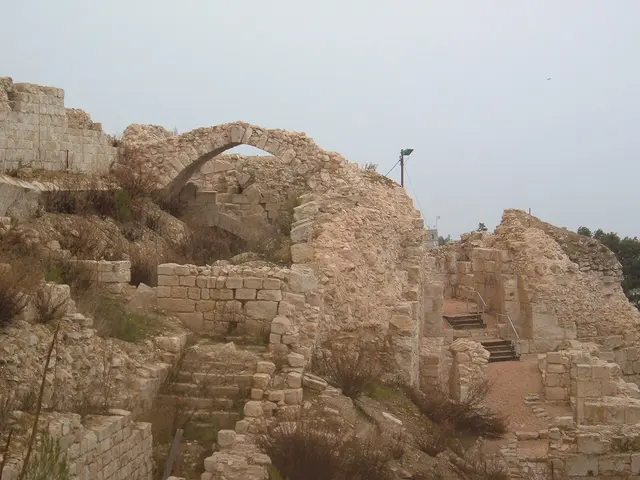
Excavations at the site directly reveal the siege's outcome through burnt layers, arrowheads and unburied human and horse skeletons, making this one of the rare crusader sieges where written sources can be compared with archaeology.
Sources and debates
William of Tyre and Ernoul describe the castle's building and loss; Imad al-Din al-Isfahani and Abu Shama describe the siege in detail. Excavations directed by Ronnie Ellenblum have revealed the castle's building phases and the traces of the siege. The exact day the castle fell is given as 29 or 30 August.
Dates, places and figures in this record compare the principal narrative sources with modern scholarship. Where the sources disagree this is stated in the text; for a thesis or publication, consult the relevant edition and page reference.