29 October 1281 · Homs
Second Battle of Homs
On 29 October 1281 near Homs, the Mamluk sultan Qalawun faced a Mongol, Armenian and Georgian army commanded by Möngke Temür, brother of the Ilkhan Abaqa. Although the Mamluk left wing broke, Qalawun won thanks to the resistance of his centre and the withdrawal of the wounded Möngke Temür.
RESEARCH DOSSIER
Historical analysis of the event
Background
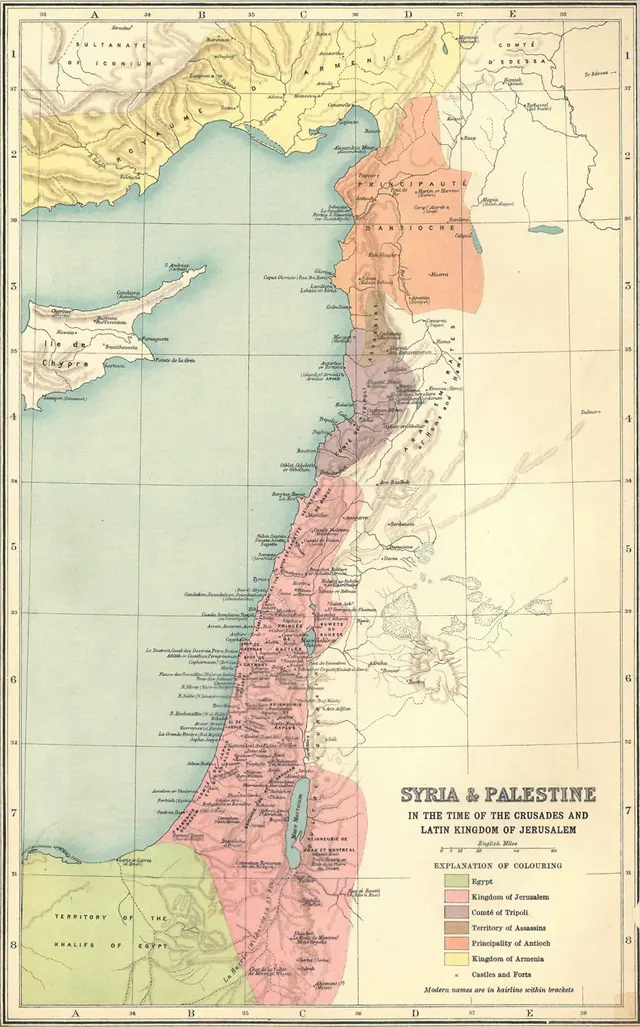
Seeking to exploit the turmoil in Mamluk government after Baybars's death, the Ilkhanids entered Syria with a large army in 1281. The army included King Leo III of Armenian Cilicia and Georgian contingents. A group of Hospitaller knights from Marqab also joined the Mongols. The Latin barons of Acre, keeping the truce they had made with Qalawun in 1281, stayed neutral.
Course of events
The two armies met north of Homs. The Mongol right wing routed the Mamluk left and pursued the fugitives as far as Homs.
But the centre under Qalawun and the Mamluk right wing managed to hold against the Mongol centre. Möngke Temür's wounding and fall from his horse caused panic in the Mongol ranks, and the centre withdrew. The victorious Mongol right wing, finding itself isolated, also withdrew.
Outcome and significance
The victory at Homs reaffirmed Mamluk supremacy in Syria and halted major Mongol attacks on the region for a time. Abaqa's death in 1282 and the internal strife among the Ilkhanids that followed strengthened the Mamluk position further.
The Hospitallers' fighting alongside the Mongols was among the reasons for Qalawun's siege of Marqab in 1285. For the Latin states, the battle showed once again that the hope of a Mongol alliance had not materialised militarily.
Sources and debates
Mamluk sources, especially Ibn Abd al-Zahir's son Fath al-Din and Baybars al-Mansuri, describe the battle in detail. Armenian sources and the Templar of Tyre also provide information. Army sizes and the circumstances of Möngke Temür's wounding differ between sources.
Dates, places and figures in this record compare the principal narrative sources with modern scholarship. Where the sources disagree this is stated in the text; for a thesis or publication, consult the relevant edition and page reference.