24 November 1202 · Zara / Zadar
Sack of Zara
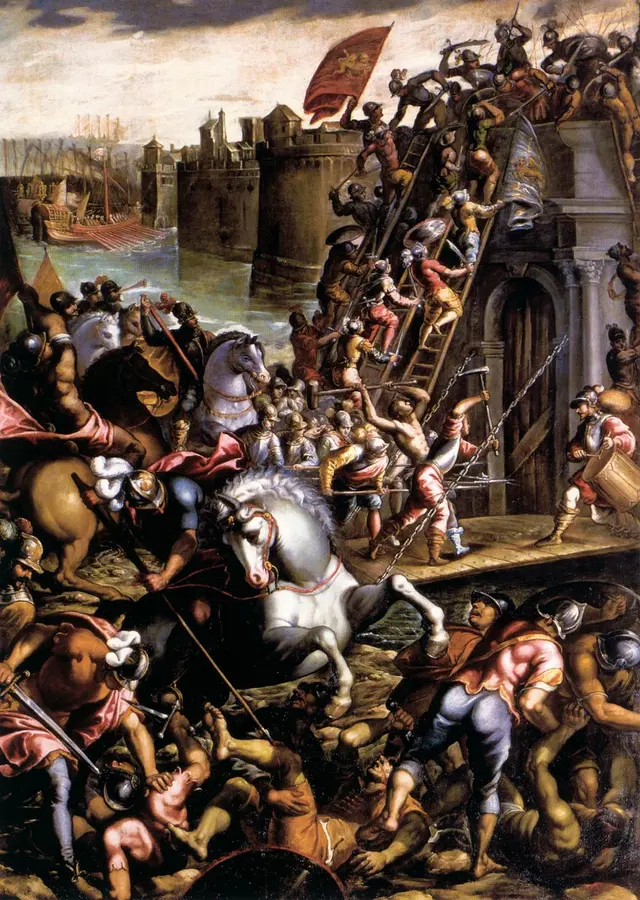
Unable to pay its transport debt to Venice, the army of the Fourth Crusade besieged the Christian city of Zara (Zadar) on the Adriatic at Doge Enrico Dandolo's suggestion. The city surrendered on 24 November 1202 and was sacked; the pope excommunicated those who took part in the attack.
RESEARCH DOSSIER
Historical analysis of the event
Background
Under the Venice contract of 1201, Venice would transport an army of 33,500 men and their horses for 85,000 marks of silver and provide naval support for a year. But in summer 1202 only about a third of that number gathered at Venice, and the debt could not be paid. Zara, meanwhile, had rebelled against Venice and placed itself under the protection of King Emeric of Hungary, who had himself taken the cross.
Course of events
Dandolo proposed that the army retake Zara for Venice in exchange for postponing the debt. Pope Innocent III forbade an attack on a Christian city. Some participants, such as Simon de Montfort and Abbot Guy of Vaux-de-Cernay, refused to take part and left the army.
The fleet reached Zara on 10 November 1202. After a short siege the city surrendered on 24 November and was sacked. Soon afterwards fighting broke out between the Venetians and the Franks over the division of the booty. The army wintered at Zara.
Outcome and significance
Innocent excommunicated those who took part in the attack; he later lifted the excommunication of the Frankish participants but maintained that of the Venetians. At Zara the army met envoys of Alexios IV Angelos, who wanted the Byzantine throne. Alexios promised that if restored he would pay the debt, support the Egyptian expedition and bring the Greek church under the papacy.
Zara was the Fourth Crusade's first major diversion against a Christian city and the beginning of the road to Constantinople.
Sources and debates
Villehardouin presents the attack as a necessary compromise to pay the army's debt; Robert of Clari gives a plainer testimony. The account of Peter of Vaux-de-Cernay reflects the view of those who opposed the attack. The pope's letters clearly show his opposition to the siege.
Dates, places and figures in this record compare the principal narrative sources with modern scholarship. Where the sources disagree this is stated in the text; for a thesis or publication, consult the relevant edition and page reference.