21 October 1096 · Civetot / Nicaea region
Defeat at Civetot
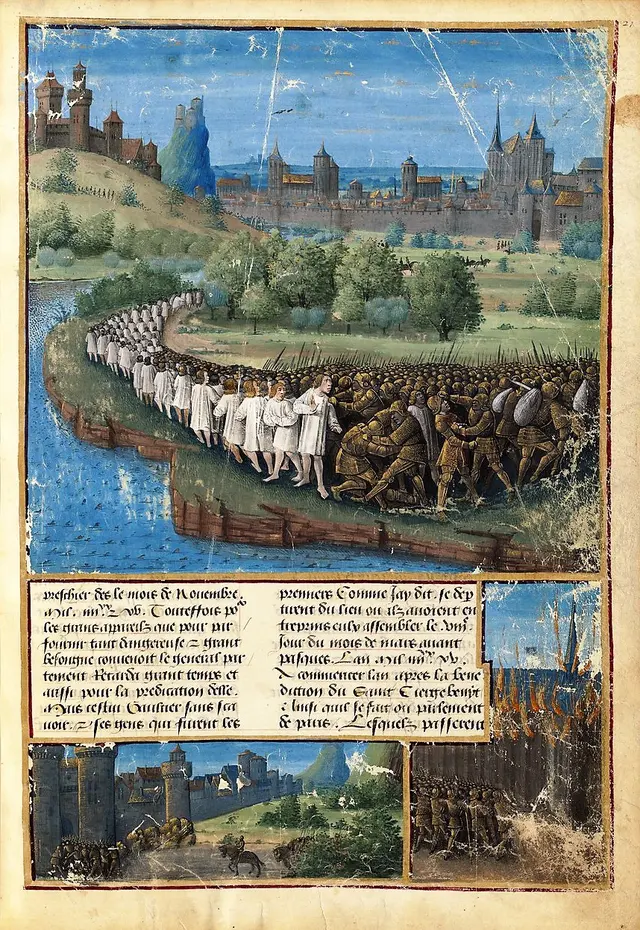
On 21 October 1096 the main force of the People's Crusade, leaving Kibotos (Civetot), was ambushed on the road to Nicaea by the Seljuk forces of Kilij Arslan I. The army was destroyed; some survivors were captured and others rescued by Byzantine ships.
RESEARCH DOSSIER
Historical analysis of the event
Background
In September 1096 the bands at Kibotos began raiding around Nicaea. After the French plundered villages near the city, a German and Italian group under a commander named Rainald seized the castle of Xerigordos beyond Nicaea. The Seljuks besieged it and cut its water supply; after eight days the defenders surrendered, and those who agreed to convert were taken east as captives while the rest were killed.
Course of events
A rumour spread through the camp that the crusaders had taken Nicaea; then came news that Xerigordos had fallen. Peter the Hermit was in Constantinople at the time seeking support. Although commanders such as Walter Sans-Avoir advised waiting, the majority in the camp decided to march out for revenge.
On the morning of 21 October the column left the camp and, on a narrow road toward the Drakon valley, fell into an ambush by Seljuk archers. When the front ranks broke, the retreat turned into a rout; Seljuk units pursued the fugitives to the camp. Many commanders, including Walter Sans-Avoir, were killed. One group held out in an old fort on the shore and was rescued by ships sent by Alexios.
Outcome and significance
Civetot ended the People's Crusade as a military force. Some survivors stayed in Constantinople and joined the princes' armies the following year. For Kilij Arslan this easy victory led him to underestimate Western armies; his absence from Nicaea when the princes' army arrived in 1097 is linked to this judgement.
The fate of the captives is among the first examples of early crusade captivity narratives: those who converted are said to have been sent east as slaves or soldiers, the others killed.
Sources and debates
Albert of Aachen describes the events in detail; Anna Komnene offers a striking image, writing that the crusaders' bones formed a hill. The numbers of dead and captives are greatly exaggerated and vary between sources. The lack of a contemporary source giving the Seljuk view means the episode is reconstructed almost entirely from Latin and Byzantine accounts.
Dates, places and figures in this record compare the principal narrative sources with modern scholarship. Where the sources disagree this is stated in the text; for a thesis or publication, consult the relevant edition and page reference.